You’ll find espresso generally less acidic than regular drip coffee, with a pH around 5.5 compared to drip’s 4.85 to 5.10. This is because its short, high-pressure extraction limits how much acid gets dissolved.
Darker roasts, which are commonly used for espresso, break down organic acids during roasting. That further reduces the acidity in your cup.
This combination produces a smoother, milder espresso with less bitterness. Understanding how brewing methods and roast levels affect acidity can give you clearer insights into espresso’s flavor and health impacts.
Espresso Acidity Compared to Regular Coffee
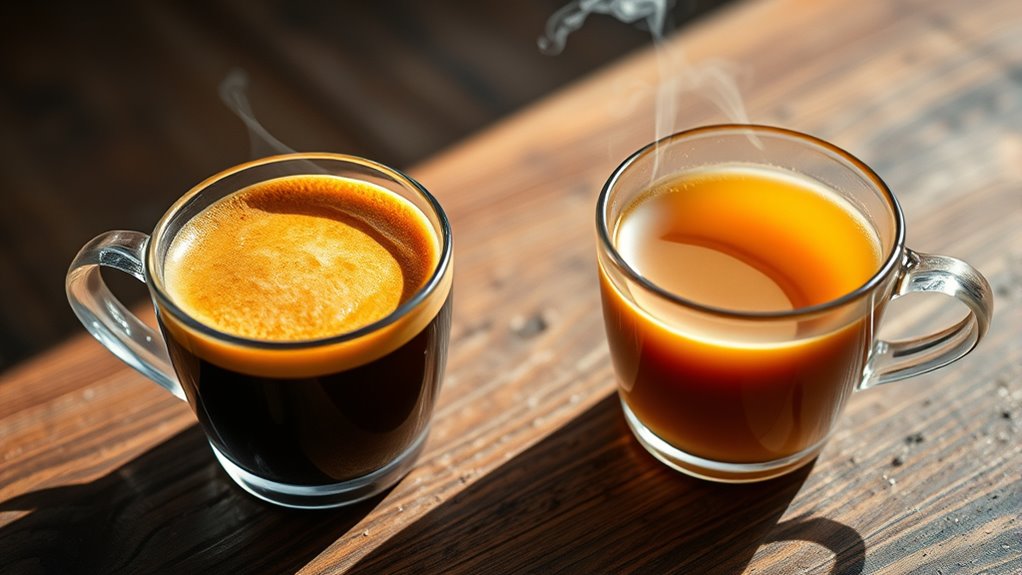
Although both espresso and regular drip coffee come from the same beans, espresso generally contains less acidity due to its high-pressure extraction and shorter brewing time.
When you pull an espresso shot, the rapid, pressurized extraction limits the dissolution of organic acids, resulting in a pH around 5.5.
In contrast, drip coffee’s longer brewing time extracts more acids, with pH values between 4.85 and 5.10, making it noticeably more acidic.
Additionally, espresso often uses dark roasted beans, which undergo prolonged roasting that breaks down many organic acids, further reducing acidity.
While factors like bean origin and roast level can affect acidity in both methods, the combination of espresso’s brewing technique and typical roast choice consistently yields a beverage with lower acidity compared to regular drip coffee.
Espresso also delivers a higher concentration of caffeine in a smaller volume compared to drip coffee, contributing to its potent effect despite lower acidity.
How Brewing Methods Influence Espresso Acidity
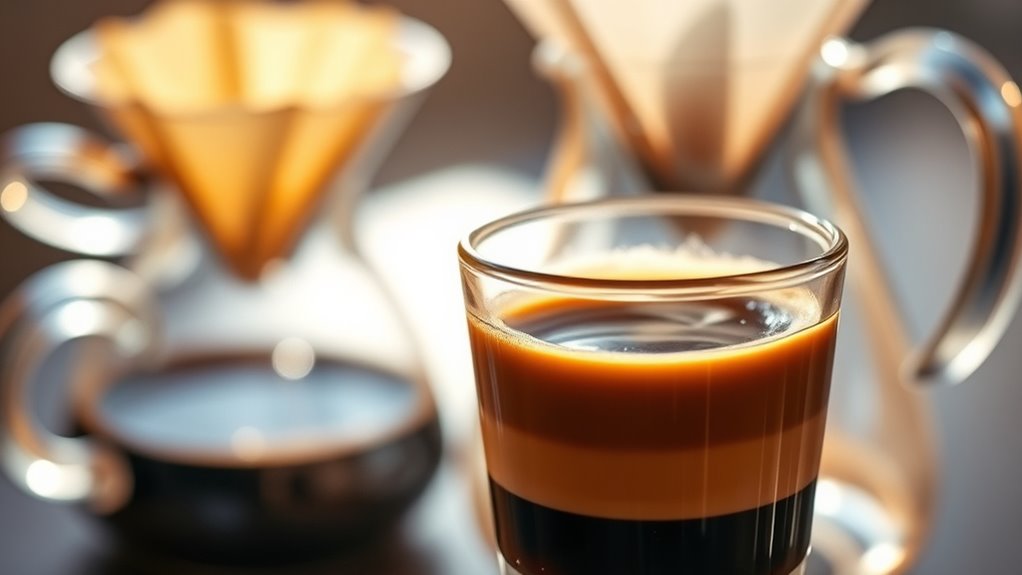
When you brew espresso, the high pressure and brief extraction time considerably influence its acidity by limiting the dissolution of organic acids. Unlike drip coffee’s longer, lower-pressure process, espresso’s rapid extraction under intense heat and pressure reduces acid solubility, resulting in a smoother profile.
The fine grind size further restricts acid extraction, as the short contact time prevents many organic acids from fully dissolving into the shot. This contrasts with slower methods where acids have more time to leach out, increasing perceived acidity.
Maintaining optimal extraction time between 25-30 seconds is crucial to balancing acidity and flavor in espresso.
Roast Levels and Their Impact on Espresso Acidity
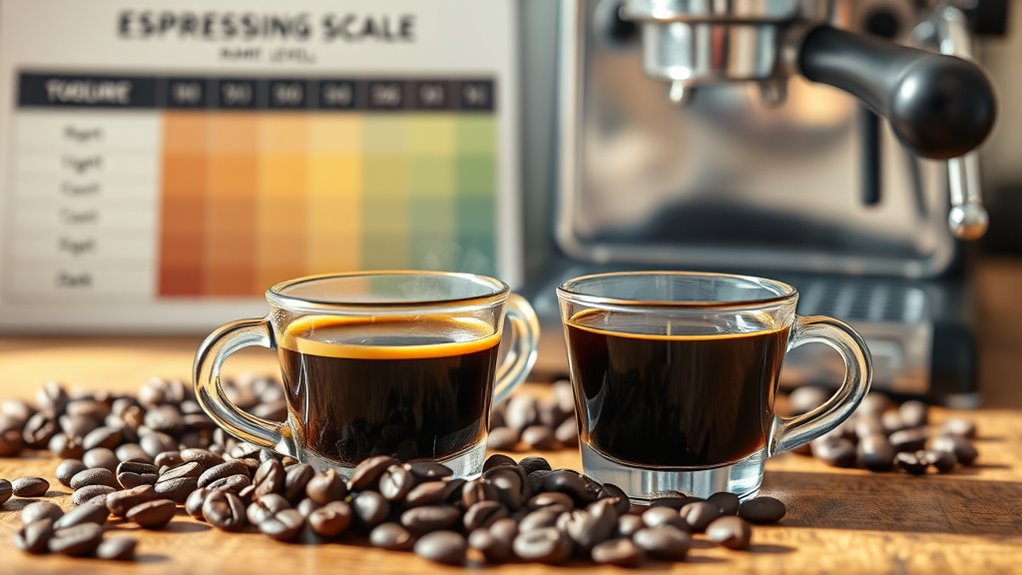
Since roasting directly alters the chemical composition of coffee beans, it plays a crucial role in determining espresso acidity. Darker roasts, commonly used for espresso, undergo longer roasting at higher temperatures, which breaks down organic acids like chlorogenic acids. This degradation reduces the overall acid content, resulting in a smoother, less tart espresso flavor.
Conversely, lighter roasts retain more of these natural acids, leading to higher acidity in the final shot. If you prefer an espresso that’s gentler on your stomach, opting for darker roasts is beneficial.
The roasting level directly correlates with acidity: increasing roast depth decreases acid levels, altering both taste and digestive impact.
Understanding this allows you to tailor your espresso experience based on acidity preferences and sensitivity. So, whether you like your coffee bright and tangy or smooth and mellow, knowing about roast levels helps you make the perfect choice.
Additionally, lighter roasts like Blonde Espresso preserve floral and citrus notes due to their shorter roasting time, contributing to their higher acidity and vibrant flavor profile.
Slow Roasting: Reducing Acidity in Espresso
Building on how roast levels affect espresso acidity, slow roasting offers a refined approach to further reduce acid content. By roasting beans at lower temperatures over a longer time, you break down natural acids like chlorogenic acid. This results in fewer organic acids and a smoother flavor.
This process minimizes acid precursors, producing espresso with a pH closer to 4.7, which is notably less acidic than standard roasts. Slow roasting also transforms acids into less volatile compounds. That makes it gentler on sensitive stomachs without sacrificing richness.
Additionally, the extended roasting enhances caramelization, which balances bitterness and further masks acidity, contributing to a fuller, richer espresso experience.
| Factor | Effect on Acidity |
|---|---|
| Roasting Temperature | Lower temps reduce acid formation |
| Roasting Duration | Longer times break down acids |
| Acid Precursors | Minimized during slow roasting |
| pH Level | Closer to 4.7, less acidic |
| Flavor Profile | Smoother, less tart |
Modern Light Roast Espresso Trends and Acidity
Although traditional espresso favors darker roasts for their reduced acidity, modern trends increasingly embrace light roasts to highlight vibrant, complex flavors. You’ll notice that light roasted espresso beans preserve more natural acids, resulting in a brighter, fruitier profile with wine-like and tea-like notes.
Techniques like third wave and Nordic roasting focus on lighter roasting to emphasize the bean’s original acidity and intricate flavor compounds. Because light roasts retain higher levels of chlorogenic acids, they exhibit increased perceived acidity and a crisp, lively taste.
This shift aligns with consumer demand for nuanced coffee experiences, making light roast espressos distinctly more acidic than darker traditional styles. Understanding this trend helps you appreciate how roast level directly affects espresso acidity and flavor complexity. Additionally, when pairing espresso with alcohol, the alcohol content in drinks like the Espresso Martini can influence the overall taste experience.
Choosing Low-Acid Coffees for Sensitive Stomachs
While light roast espressos highlight higher acidity through preserved chlorogenic acids, not everyone can enjoy these bright, vibrant flavors without discomfort. If you have a sensitive stomach, choosing low-acid coffees can help minimize irritation.
Focus on these evidence-based strategies: select beans from low-acid regions like Brazil, Sumatra, or Nicaragua, which naturally contain fewer organic acids.
Opt for dark roast levels since prolonged roasting considerably reduces chlorogenic acids and acidity.
You might also want to consider cold brew methods that extract fewer acids, resulting in a gentler cup.
Choosing beans processed via natural or extended drying methods can lower acid content even more.
Additionally, decaffeinated or specially formulated low-acid coffees can ease digestion without sacrificing flavor quality.
Because espresso is brewed under high pressure and extracted rapidly, adjusting the roast profile can also influence acidity and flavor balance.
Espresso Acidity and Your Health: What to Know
Because espresso undergoes a high-pressure, short extraction process combined with darker roasting, it generally contains fewer organic acids than regular drip coffee. This means you’re drinking something that’s less likely to irritate your stomach lining.
Dark roasts, which are usually used for espresso, have reduced chlorogenic acids. These acids are the main contributors to coffee acidity, so their reduction helps lower potential digestive discomfort.
Everyone’s sensitivity is different, but espresso’s lower acidity often makes it easier on those who struggle with acid reflux or heartburn. If you’re sensitive to acid, choosing espresso made from dark roasted beans and making sure it’s brewed properly can help minimize unpleasant symptoms.
Knowing these things lets you make smarter choices about your coffee. You can support your digestive health without giving up the flavor you love.
Additionally, the short extraction time of about 20-30 seconds in espresso brewing helps limit acid extraction, contributing to its smoother taste and lower acidity.
Frequently Asked Questions
Can Espresso Acidity Affect the Taste of Espresso-Based Drinks?
Yes, espresso acidity directly affects espresso-based drinks’ taste. You’ll notice it influences brightness, bitterness, and how well milk blends. This all shapes the overall flavor balance and complexity.
Adjusting acidity lets you tailor your drink to your exact preferences. It’s a simple way to make your espresso experience just right.
How Does Water Temperature Impact Espresso Acidity?
You’ll find that higher water temperatures (around 200°F) reduce espresso acidity by breaking down more acids.
On the other hand, lower temperatures lead to under-extraction, which increases sourness. Precise temperature control is really key to balancing both acidity and flavor.
Getting this right can make a big difference in your espresso’s taste.
Does Grind Size Influence the Acidity of Espresso?
If you use a very fine grind, you’ll extract more acids quickly, making your espresso sharper. Adjusting grind size lets you balance acidity; coarser grinds reduce acid extraction, producing a smoother, less acidic shot.
It’s pretty simple when you think about it. Finer grounds mean more surface area, so the water pulls out flavors faster. On the other hand, coarser grounds slow things down, mellowing the taste. So, playing around with grind size is a great way to find the acidity level you like best.
Can Espresso Machines Alter the Acidity Level in Espresso?
Yes, you can alter espresso acidity by adjusting your machine’s pressure, temperature, and extraction time. Calibrating these variables precisely lets you control flavor balance, producing smoother, less acidic shots or brighter, more acidic profiles.
It’s all about finding the right combo that suits your taste. Play around with the settings and you’ll notice the difference in every cup. It’s pretty cool how small tweaks can change the whole experience.
What Role Does Bean Origin Play in Espresso Acidity?
Bean origin directly influences espresso acidity by determining inherent acid levels. You’ll find low-altitude beans from Brazil or Sumatra yield smoother, less acidic espresso.
On the other hand, high-altitude beans from Kenya produce brighter, more acidic shots due to slower maturation. It’s all about how the beans develop based on where they grow.
Conclusion
You might be surprised to learn that espresso often has a lower pH level, around 4.5, making it less acidic than regular drip coffee. Drip coffee usually averages closer to 5.0. This difference comes from brewing time and temperature.
Roast levels and brewing methods play a big role in acidity. Knowing how these factors influence acidity can help you pick the right espresso for your taste and stomach sensitivity.
With this knowledge, you can enjoy espresso without worrying about excess acidity or discomfort. It’s pretty handy if you’re sensitive to acidity but still want your coffee fix.