Six shots of espresso contain about 378 mg of caffeine, putting you close to the FDA’s recommended daily limit of 400 mg. Each 1 oz shot typically has 63 mg, but factors like bean type, roast, and extraction can cause variation.
Drinking this much caffeine might boost alertness but can also cause jitters, rapid heartbeat, or insomnia if consumed quickly. Spacing your shots and understanding their caffeine content helps manage intake safely. There’s more to contemplate if you want to optimize your espresso experience.
How Much Caffeine Is in One Shot of Espresso?
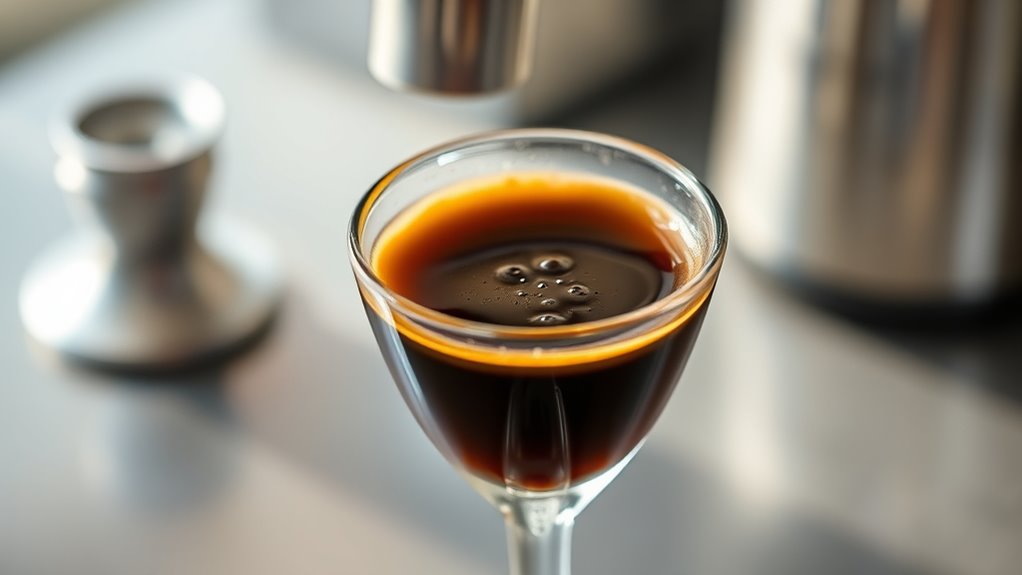
How much caffeine does one shot of espresso really pack? Typically, a standard 1-ounce (30 mL) shot contains about 63 milligrams of caffeine. However, this amount can range from 47 to 70 milligrams depending on several factors.
A standard 1-ounce espresso shot typically contains 63 mg of caffeine, varying from 47 to 70 mg.
The type of coffee bean plays a big role. Robusta beans contain nearly twice the caffeine of Arabica beans, which can considerably boost your shot’s caffeine content.
The brewing process also matters. Grind size and extraction time can subtly increase or decrease caffeine levels.
Even if you opt for decaffeinated espresso, you’ll still consume a small amount of caffeine, generally between 1 to 7 milligrams per shot.
Understanding the impact of grind size and extraction variables is crucial for accurately estimating caffeine content in your espresso.
Knowing these details helps you better understand exactly what you’re getting in each espresso shot you enjoy.
Why Does Caffeine Vary Between Espresso Shots?
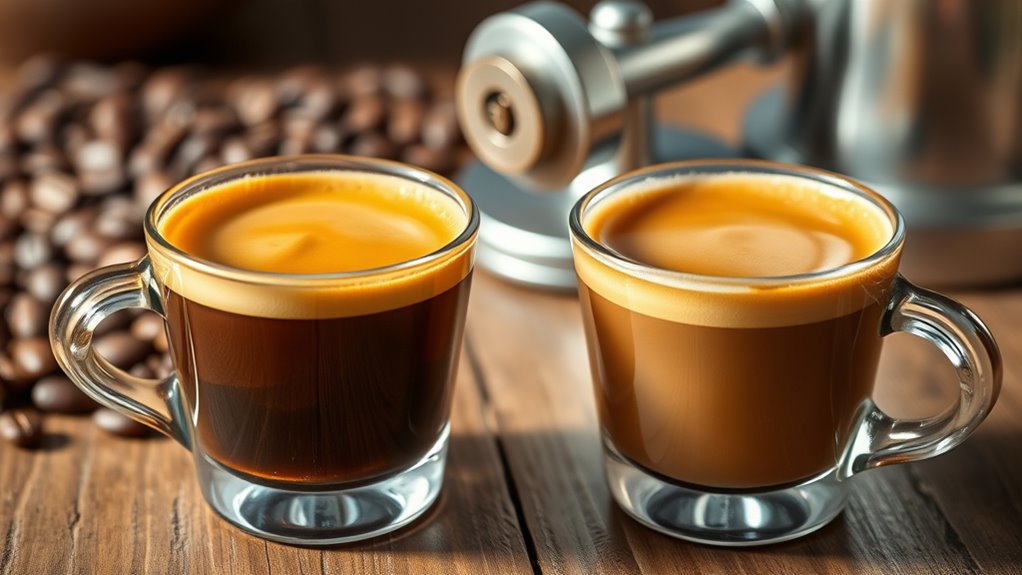
Because espresso shots are influenced by so many variables, you’ll notice their caffeine content can differ considerably from one cup to another. The type of coffee bean plays a huge role. Robusta beans pack nearly twice the caffeine of Arabica beans.
Brewing factors like grind size, water temperature, pressure, and extraction time also affect how much caffeine ends up in your shot.
Don’t forget shot size—larger shots naturally contain more caffeine.
Roast level matters too; lighter roasts tend to retain slightly more caffeine than darker ones.
Plus, commercial practices vary widely. Different coffee doses and brewing techniques lead to inconsistent caffeine levels.
Understanding these factors helps you appreciate why no two espresso shots deliver exactly the same caffeine kick.
Additionally, maintaining consistent extraction time is crucial for ensuring the flavor balance and caffeine content remain stable across shots.
How Does Espresso Compare to Other Coffee Drinks?
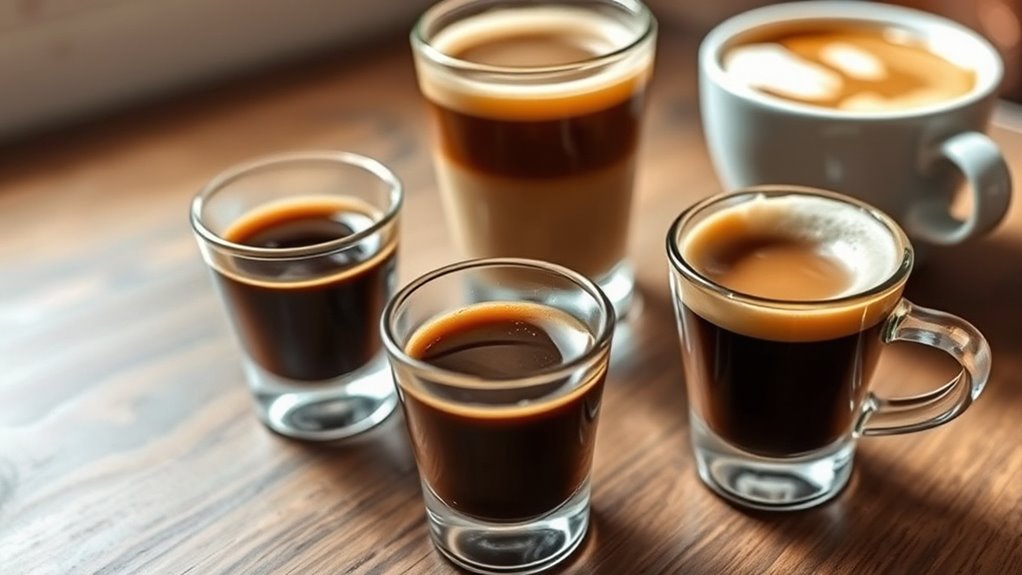
You’ll notice that espresso packs more caffeine per ounce than brewed coffee, so it’s way more concentrated even though the serving size is smaller. A single shot can feel pretty intense because of that.
But when you look at larger brewed coffee cups, they often end up giving you more total caffeine overall. So, comparing shots to brewed coffee is a good way to see how volume and caffeine content work together in your favorite drinks.
Typically, 1 teaspoon of espresso powder provides 30 to 60 milligrams of caffeine, which highlights the caffeine content concentration in espresso-based products.
Caffeine Concentration Differences
Although espresso packs more caffeine per ounce than regular brewed coffee, the total caffeine you consume depends heavily on the drink’s volume. A single espresso shot has about 63 mg of caffeine, while an 8 oz cup of drip coffee contains more overall caffeine due to its larger size. Double shots nearly match a small brewed coffee’s caffeine content.
Keep in mind, espresso’s caffeine varies with bean type, roast, and brewing style. The precise caffeine extraction is influenced by the grind size and extraction time used during brewing.
| Coffee Type | Approximate Caffeine (mg) |
|---|---|
| Single Espresso | 63 |
| Double Espresso | 126 |
| 8 oz Drip Coffee | 144 |
This table helps you see how concentrated espresso really is compared to other coffee drinks.
Volume Versus Caffeine Content
Understanding how espresso stacks up against other coffee drinks means looking beyond just caffeine concentration to take into account the total volume you’re consuming.
A single 1 oz shot of espresso packs about 63 mg of caffeine, making it far more concentrated than regular brewed coffee.
However, when you compare it to an 8 oz cup of drip coffee, which contains roughly 95 mg of caffeine, the larger volume boosts the total caffeine content.
If you order a 16 oz latte with two espresso shots, you’re consuming around 126 mg of caffeine.
That’s significantly more than a standard brewed coffee.
So, while espresso delivers caffeine in a smaller, denser form, the total caffeine you get depends on both the number of shots and the overall drink size.
It’s all about balancing concentration with volume to understand what you’re really drinking.
Regular maintenance, including descaling espresso machines, ensures consistent extraction and optimal caffeine delivery from each shot.
Espresso Shot Versus Brewed
When comparing espresso shots to brewed coffee, it’s important to take into account both caffeine concentration and serving size.
A single 1 oz espresso shot packs about 63 mg of caffeine, making it more concentrated than an 8 oz brewed coffee, which contains roughly 96 mg. However, because brewed coffee is served in larger volumes, your total caffeine intake typically ends up higher with brewed coffee.
Also, espresso’s quick consumption leads to faster caffeine absorption, giving you an immediate energy boost. For example, a 12 oz latte with two espresso shots delivers around 126 mg of caffeine, while a 12 oz drip coffee usually has about 144 mg.
Hot espresso drinks like Venti lattes typically contain 2 shots, but iced versions often have 3 or more shots to maintain flavor and caffeine levels.
What Are the Effects of Drinking 6 Shots of Espresso?
Since 6 shots of espresso deliver around 378 mg of caffeine, just shy of the recommended daily limit for most adults, you can expect a powerful jolt of energy and alertness.
This rapid caffeine intake causes a spike in your blood caffeine levels, intensifying stimulant effects like increased heart rate and heightened focus. You might also feel jittery or restless as your nervous system reacts.
Depending on your sensitivity, side effects such as insomnia, anxiety, or stomach discomfort can set in and last 4 to 6 hours. Your metabolism plays a big role in how long these effects persist.
Consuming this amount regularly may lead to caffeine tolerance, requiring higher doses for the same stimulant effect.
Is It Safe to Drink 6 Shots of Espresso in a Day?
How safe is it to drink 6 shots of espresso in a single day? Six shots pack about 378 mg of caffeine, which is nearly reaching the FDA’s recommended 400 mg limit for most adults.
You might handle this amount without issue, but it can trigger side effects like insomnia, increased heart rate, or anxiety, especially if you’re sensitive.
Drinking this much regularly could lead to caffeine dependence and tolerance. That means you’d need more over time to feel the same effects.
Pregnant women and those with certain health conditions should avoid this intake since it can exceed safe limits.
It’s better to spread your caffeine intake throughout the day rather than consuming all six shots at once. This helps reduce potential health risks and keeps you feeling more balanced.
Spacing shots at least 1-2 hours apart allows for proper caffeine metabolism and reduces the chance of side effects.
How to Manage Your Espresso Caffeine Intake Safely
To manage your espresso caffeine intake safely, you’ll want to keep your total consumption below 400 mg per day and spread it out rather than drinking it all at once.
Keep your espresso caffeine under 400 mg daily and space it out for safer consumption.
Since a single shot of espresso contains about 63 mg of caffeine, you can enjoy up to six shots daily if spaced properly.
Pay close attention to the number of shots in your drinks. It’s the most reliable way to track caffeine.
Also, consider your bean type and roast level. Robusta beans and lighter roasts pack more caffeine, which can affect your total intake.
By pacing your espresso shots throughout the day and choosing your coffee wisely, you’ll maintain steady caffeine levels and minimize side effects like jitters or insomnia.
Just take it easy and listen to your body.
Remember, extraction time significantly impacts caffeine levels, so how long you brew your espresso can change the caffeine content per shot.
Frequently Asked Questions
Can Espresso Shots Affect Sleep Patterns?
Yes, espresso shots can disrupt your sleep patterns. Because caffeine stays active for hours, drinking espresso late can delay sleep onset and reduce quality.
To avoid this, don’t drink espresso within 4-6 hours of bedtime. It’s a simple way to help you get better rest. Just be mindful of when you enjoy your espresso!
Does Espresso Caffeine Impact Heart Rate Differently?
Yes, espresso caffeine impacts your heart rate more quickly due to rapid absorption. You might feel it spike within minutes, especially if you’re sensitive or drink several shots fast.
This increases cumulative effects considerably. So, if you’re having multiple shots in a short time, your heart rate can react more noticeably. Just keep an eye on how your body responds!
How Long Does Caffeine From Espresso Stay in Your System?
Caffeine from espresso stays in your system about 4 to 6 hours, but its effects peak within an hour.
How long it sticks around can depend on things like your metabolism and tolerance. So, for some people, it might linger a bit longer or clear out faster.
Are There Caffeine Alternatives in Espresso for Sensitive Individuals?
Imagine Sarah, sensitive to caffeine, choosing decaf espresso shots with just 1-7 mg caffeine. You can also try herbal infusions like chicory, which mimic espresso’s flavor without caffeine. This way, you get to enjoy coffee’s richness safely.
There are plenty of options if you want to avoid caffeine but still crave that bold espresso taste. It’s all about finding what works best for you. Why miss out when alternatives are right there?
Can Espresso Caffeine Cause Withdrawal Symptoms?
Yes, if you regularly drink espresso, you can experience withdrawal symptoms like headaches and fatigue when you stop suddenly.
To avoid this, gradually reduce your intake, letting your body adjust comfortably over time.
It’s all about giving yourself a little time to ease off rather than quitting cold turkey. That way, you’ll feel better without the rough side effects.
Conclusion
Drinking 6 shots of espresso packs a caffeine punch that could wake the entire city! While it’s tempting to chase that bold energy, you need to be mindful of how your body handles the jolt. Understanding caffeine content and its effects helps you enjoy espresso without overdoing it.
Balance is key. Sip smart, listen to your limits, and keep your caffeine intake safe to fuel your day without the crash.