You’ll find about 63 mg of caffeine in a standard single shot (1 oz) of espresso. This makes it a concentrated source compared to regular brewed coffee. A double shot roughly doubles that amount to around 126 mg.
Factors like bean type, grind size, and extraction time can affect caffeine levels. These also vary between cafés. Understanding these details helps you estimate your intake accurately.
Keep exploring to uncover how brewing methods and health considerations play a role. There’s more to caffeine than just the numbers!
How Much Caffeine Is in a Single Shot of Espresso?
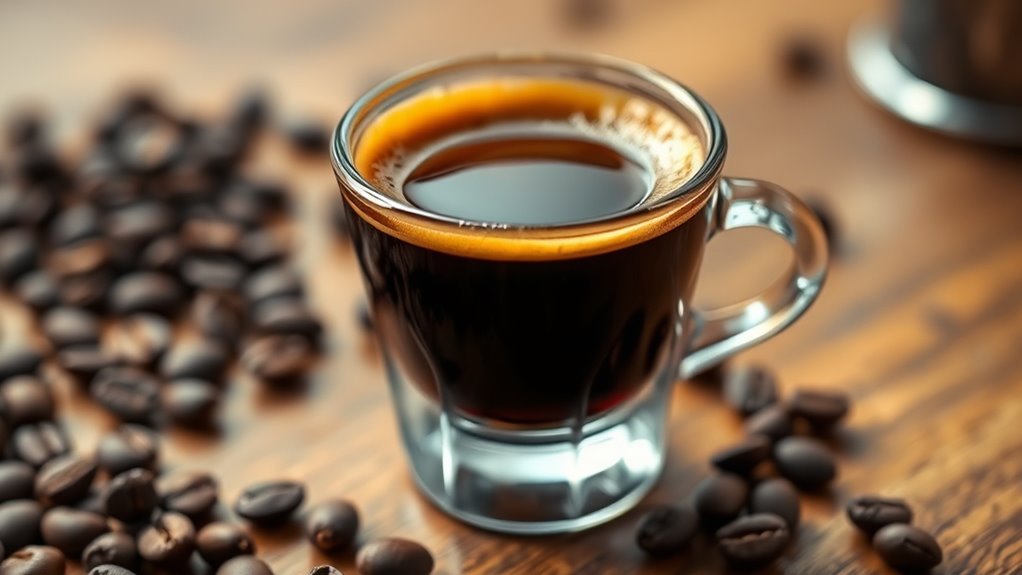
Although the caffeine content in a single shot of espresso can vary, you can generally expect about 63 mg in a standard 1-ounce serving. This amount typically ranges between 55 and 70 mg, influenced by factors like the type of coffee beans, grind size, and brewing method.
Since espresso is a concentrated form of coffee, it delivers roughly 40 mg of caffeine per ounce. The actual caffeine content depends on the coffee dose used and the extraction time during brewing.
A standard single shot contains roughly 63 mg of caffeine, making it easy to estimate caffeine intake by multiplying the number of shots consumed.
How Much Caffeine Is in a Double Shot of Espresso?
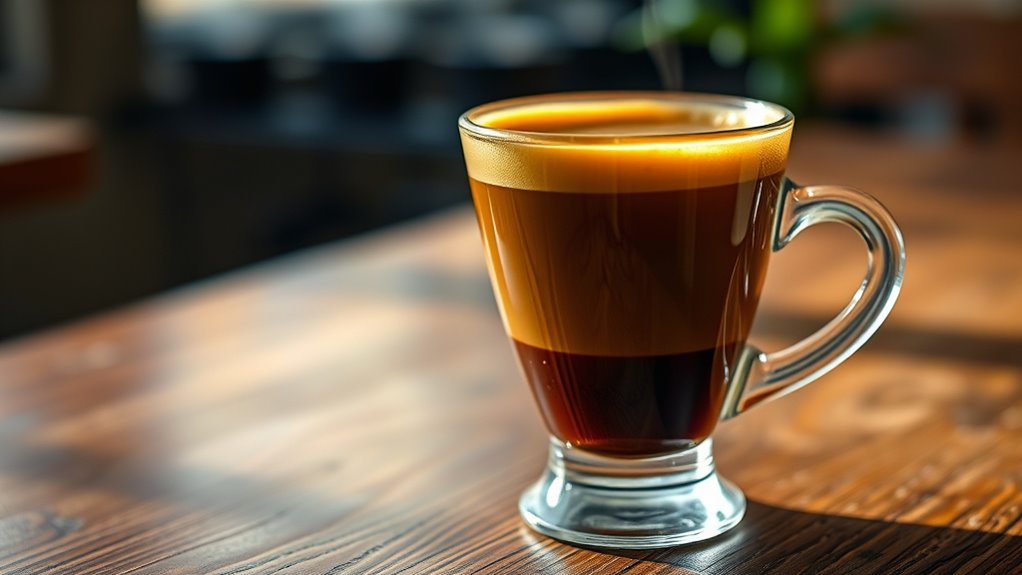
When you order a double shot of espresso, you’re typically getting about 126 mg of caffeine, which is roughly double the amount found in a single shot.
This caffeine content usually ranges between 100 to 150 mg, influenced by factors like the coffee beans, roast, and preparation method.
Caffeine levels vary from 100 to 150 mg, depending on beans, roast, and brewing style.
Most cafes serve a double shot as the standard, making it the common caffeine dose for espresso-based drinks.
Fascinatingly, the caffeine in a double shot is roughly equivalent to half of an 8 oz cup of brewed coffee.
While shot size and brewing technique can cause slight differences, you can generally expect a double shot to provide a solid caffeine boost without the volume of a larger coffee cup.
The caffeine content can also vary depending on factors like bean type, grind size, and extraction time.
What Factors Cause Variation in Espresso Caffeine Levels?
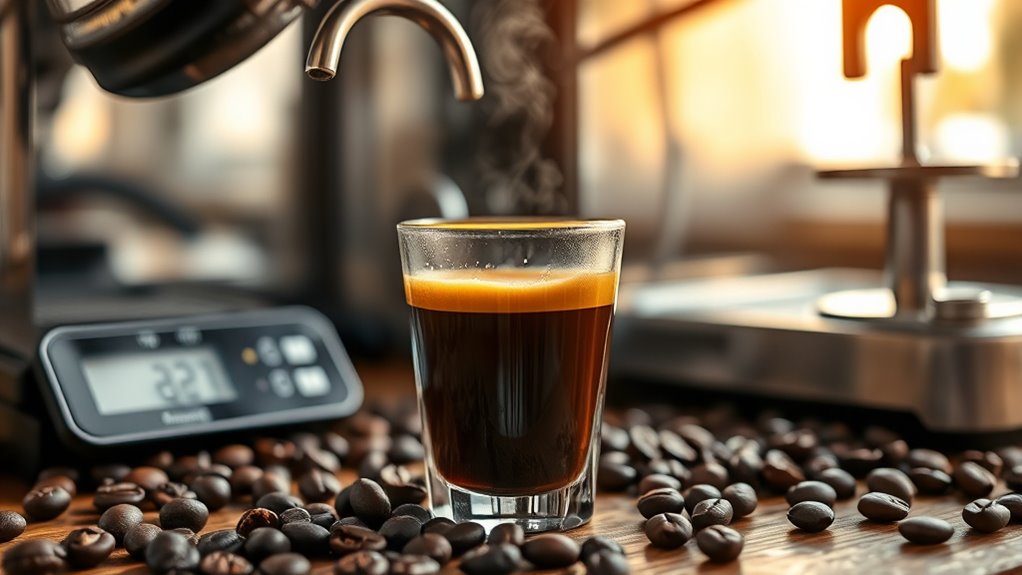
Understanding why caffeine levels in espresso can vary helps you make better choices about your coffee. Several factors influence the caffeine content in your shot.
First, the coffee bean type matters: Robusta beans have about twice the caffeine of Arabica.
The amount of ground coffee you use directly impacts caffeine extraction; more grounds mean more caffeine.
Grind size also plays a role. Finer grinds increase surface area, which boosts extraction efficiency and caffeine yield.
Brewing parameters like water temperature, pressure, and extraction time also determine how much caffeine dissolves into your espresso.
These variables all interact to create variations in caffeine levels. So, adjusting them can help you control your espresso’s strength and caffeine content precisely.
Additionally, maintaining a consistent shot timing of 25–30 seconds is crucial for optimizing caffeine extraction and achieving a balanced espresso.
Why Do Espresso Caffeine Levels Vary Between Cafés?
Because each café has its own approach to making espresso, caffeine levels can vary considerably from one place to another. When you order a shot, several key factors influence how much caffeine you actually get.
First, the coffee grounds amount. More grounds usually mean more caffeine per shot. Then, the bean type plays a role. Arabica beans have less caffeine than Robusta, so cafés using different beans affect your caffeine intake.
Shot volume and preparation matter too. Some cafés serve single or double shots, and inconsistent measuring or preparation techniques alter caffeine levels.
Understanding these differences helps you make informed choices about your espresso. So next time you visit a café, remember that the caffeine content you get isn’t always the same, even if the shot size looks identical. Additionally, factors like extraction time and pressure during brewing significantly impact the caffeine concentration in your espresso.
How Brewing and Grind Size Affect Espresso Caffeine
Although espresso caffeine content depends on multiple factors, brewing technique and grind size play essential roles in determining how much caffeine ends up in your cup. Finer grinds increase surface area, speeding up caffeine extraction, while coarser grinds slow extraction due to less water contact.
Adjusting grind size controls flow rate and extraction efficiency, which impacts caffeine levels. However, too fine a grind risks bitterness from over-extraction. On the other hand, too coarse a grind results in under-extracted, weaker shots. Consistent extraction timing is crucial to balance flavor and caffeine content effectively.
| Grind Size | Extraction Speed | Caffeine Content |
|---|---|---|
| Very Fine | Very Fast | High (risk bitter) |
| Fine | Fast | High |
| Medium Fine | Moderate | Moderate High |
| Coarse | Slow | Low |
| Very Coarse | Very Slow | Very Low |
Comparing Espresso Caffeine to Brewed Coffee and Other Drinks
You’ll find that a single shot of espresso packs about 63 mg of caffeine, while an 8 oz cup of brewed coffee averages 95 mg.
So, espresso definitely has a higher caffeine concentration per ounce. But because brewed coffee usually comes in a bigger size, it often delivers more caffeine overall.
Just remember, the total caffeine you get depends on how many espresso shots you have and how big your coffee drink is.
Variations in bean type and roast can significantly influence the caffeine content in your espresso.
Espresso Versus Brewed Coffee
When comparing espresso to brewed coffee, it’s important to take into account both caffeine concentration and serving size. Espresso packs about 63 mg of caffeine per 1 oz shot, while brewed coffee averages 95 mg in an 8 oz cup. This means:
- Espresso delivers more caffeine per ounce (around 40 mg) but less overall caffeine per serving.
- Brewed coffee’s larger volume results in a higher total caffeine intake despite lower concentration (about 10 mg/oz).
- Drinking espresso quickly leads to rapid caffeine absorption, giving you a fast boost.
- However, making authentic espresso requires high-pressure extraction, which cannot be replicated by machines like Keurig that use lower pressure pressure limitations.
Caffeine Concentration Differences
Because espresso contains about 63 mg of caffeine per 1 oz shot, it delivers a much higher caffeine concentration than brewed coffee, which averages around 10 mg per ounce. This means espresso has roughly four times the caffeine concentration of brewed coffee.
You’ll notice espresso feels stronger per sip due to this concentration, even though a typical 8 oz brewed coffee contains about 95 mg of caffeine overall.
The potency of espresso comes from its dense caffeine content per volume, not from a higher total caffeine amount. Other drinks vary widely in caffeine concentration, but espresso remains one of the most concentrated.
Understanding this helps you gauge how much caffeine you’re consuming relative to volume, especially when comparing espresso to larger coffee servings or other caffeinated beverages.
Since espresso is extracted under high pressure, it also offers rapid caffeine absorption that provides a quick energy boost.
Beverage Size Impact
Although a single shot of espresso contains less total caffeine than an 8 oz brewed coffee, its smaller volume means you absorb caffeine more rapidly. This impacts how you experience its effects compared to other drinks. Consider these points:
A single espresso shot (1 oz) has about 63 mg of caffeine, while an 8 oz brewed coffee averages 96 mg.
Double shots, common in espresso-based drinks, deliver roughly 126 mg, which is similar to a small brewed coffee.
Espresso’s caffeine concentration is nearly 40 mg per ounce, much higher than brewed coffee’s 10-12 mg per ounce.
The timing and pace of drinking influence how caffeine affects alertness, sleep, and side effects.
Espresso Caffeine Content in Popular Drinks
Since espresso forms the base of many popular coffee drinks, understanding its caffeine content can help you make informed choices. A standard single shot of espresso contains about 63 mg of caffeine, while a double shot doubles that to approximately 126 mg.
When you order a grande espresso-based drink at Starbucks, expect around 150 to 180 mg of caffeine, thanks to those two shots. Flavored drinks like mochas might have slightly more caffeine, ranging from 90 to 180 mg depending on their size and shot count.
If you prefer larger options, venti-sized espresso beverages can pack as much as 300 mg of caffeine due to multiple shots. Knowing these numbers helps you pick a drink that fits your caffeine needs without surprises.
The exact caffeine content can vary based on factors like bean type and roast level, which influence how much caffeine is extracted in each shot.
How to Estimate Your Total Espresso Caffeine Intake
To estimate your total espresso caffeine intake, just multiply the number of shots by about 63 mg per shot.
Keep in mind, though, that factors like the type of bean, the roast level, and even the brewing method can make caffeine levels vary a bit.
Calculating Espresso Shot Caffeine
When you want to figure out how much caffeine you’re getting from your espresso, start by counting the number of shots in your drink.
Each 1 oz shot typically contains about 63 mg of caffeine, so you can easily calculate your intake by multiplying the shots by 63 mg.
For example: a single shot has roughly 63 mg of caffeine. A double shot contains about 126 mg. A triple shot delivers nearly 189 mg.
Keep in mind these are approximate values since caffeine content can slightly vary based on bean type, grind size, and brewing method.
Always confirm how many shots your drink contains to get an accurate estimate of your total caffeine intake from espresso.
This straightforward method helps you monitor your caffeine consumption effectively. It’s pretty simple once you get the hang of it!
Factors Affecting Caffeine Amount
Understanding the factors that influence caffeine content can help you better estimate your total espresso caffeine intake beyond just counting shots.
While a standard 1 oz shot typically contains about 63 mg of caffeine, this varies with bean type, roast level, and brewing method.
Using beans with higher caffeine content or more coffee grounds increases caffeine per shot.
Also, grind size, brew ratio, and extraction time affect how much caffeine is pulled out during brewing.
If you order a double shot or a larger espresso drink, your caffeine intake doubles or even more.
To get a precise estimate, consider both the number of shots and the specific preparation details at your café or home.
That way, you’ll know exactly how much caffeine you’re consuming.
Health Considerations for Espresso Caffeine
Although espresso offers a convenient caffeine boost, it’s important to be mindful of how much you consume daily. For most adults, up to three shots, about 189 mg of caffeine, are generally safe.
However, pregnant individuals should limit their intake to less than 200 mg daily, roughly three shots, to avoid risks.
Keep in mind that excessive caffeine can trigger unpleasant side effects. Here are key health considerations to remember:
- Too much espresso caffeine may cause anxiety, jitters, sleep problems, and increased heart rate.
- If you have health conditions or are sensitive to caffeine, it’s a good idea to talk with your healthcare provider before increasing your intake.
- Pay close attention to how your body reacts, since tolerance varies widely between individuals.
Staying informed helps you enjoy espresso without compromising your well-being.
Tips for Choosing Espresso Drinks by Caffeine Level
When you’re picking out your espresso drink, a good place to start is by thinking about how many shots you want. Each shot usually adds about 75 mg of caffeine, so it really adds up.
Also, keep in mind the size of your drink. Bigger sizes, like a venti latte, can pack in as much as 300 mg of caffeine depending on how many shots and how much milk or water you add.
And here’s a handy tip: choosing Arabica beans usually means you’ll get less caffeine compared to Robusta beans. So if you want to manage your caffeine intake more precisely, that’s something to consider.
Understand Shot Counts
Since the caffeine content in espresso drinks directly depends on the number of shots, knowing your shot count helps you control your intake precisely. Each shot carries about 63 mg of caffeine, so understanding this lets you customize your drink to fit your caffeine needs.
Here’s why counting shots matters:
- One shot offers a moderate 63 mg, perfect for light caffeine boosts.
- Two shots double that to around 126 mg, common in many espresso drinks for a stronger kick.
- Three or more shots, hitting nearly 189 mg or more, considerably increase your caffeine intake and energy.
It’s pretty simple once you get the hang of it. Just keep track of your shots, and you can easily manage how much caffeine you’re getting every time.
Consider Drink Size
How much caffeine you consume from an espresso drink depends greatly on its size. A standard single shot (1 oz) contains about 75 mg of caffeine, but larger drinks, like a venti, can pack up to 300 mg, depending on how many shots they include.
Double shots, which are 2 oz, typically provide around 150 mg of caffeine.
When you choose smaller-sized espresso drinks with fewer shots, you effectively reduce your caffeine intake. Conversely, larger sizes or specialty drinks such as mochas and lattes often have more caffeine due to additional shots.
To manage your caffeine levels, pay close attention to both the number of espresso shots and the cup size when ordering. This simple step helps you control how much caffeine you consume.
Know Bean Varieties
Although the roast level might seem like the main factor affecting caffeine content, the type of bean you choose plays a much bigger role. Robusta beans contain about twice as much caffeine as Arabica beans, making them your go-to for a stronger caffeine kick.
Here’s how to tailor your espresso by bean variety:
- Choose Robusta or blends with Robusta for higher caffeine content.
- Don’t assume dark roasts have less caffeine. Lighter roasts often retain more caffeine.
- Ask your barista about the bean type to customize your caffeine intake effectively.
Frequently Asked Questions
How Does Espresso Caffeine Affect Sleep and Anxiety Levels?
Espresso caffeine can disrupt your sleep by blocking adenosine receptors. This makes it harder to fall asleep.
It also increases alertness, which can be a good thing when you need a boost. But it may raise anxiety, causing jitters or a rapid heartbeat.
This is especially true if you’re sensitive to caffeine or consume it late in the day. So, it’s good to be mindful of when and how much you drink.
Can Pregnant Women Safely Consume Espresso Caffeine?
Pregnant? Prioritize prudence: limit espresso to two shots daily, as caffeine can cause complications. Since sensitivity varies, consult your healthcare provider to safely sip without risking miscarriage, preterm birth, or low birth weight.
It’s all about keeping both you and your baby safe. So, when in doubt, ask your doctor what’s best for your unique situation. Better safe than sorry, right?
Does Espresso Caffeine Tolerance Develop Over Time?
Yes, you develop espresso caffeine tolerance over time as your brain reduces receptor sensitivity. Regular daily intake for weeks increases your tolerance, meaning you’ll need more caffeine to feel the same alertness and mood benefits.
What Are the Signs of Espresso Caffeine Overdose?
You’ll notice signs like rapid heartbeat, tremors, dizziness, and gastrointestinal discomfort if you overdose on espresso caffeine. You might also feel jittery, anxious, have headaches, or insomnia.
In severe cases, you could even experience arrhythmias. It’s important to pay attention to these symptoms and take them seriously. They’re your body’s way of telling you to slow down on the caffeine.
How Does Decaf Espresso Differ in Caffeine Content?
Decaf espresso’s caffeine content is a whisper compared to regular espresso, usually 1-5 mg per shot. Though not caffeine-free, it’s markedly lower, thanks to decaffeination methods like Swiss water or solvent-based extraction.
Conclusion
Now that you know a single espresso shot packs about 63 mg of caffeine, you can navigate your coffee choices like a pro. Remember, factors like grind size and brewing time can tip the caffeine scales, so your cup’s punch might vary café to café.
Keep track of your intake to stay energized without overdoing it. Think of your espresso as a caffeine compass, guiding your day with precision and power.