You get about 126 mg of caffeine in two shots of espresso, averaging 63 mg per shot. This amount can vary based on bean type, roast level, grind size, and brewing technique. Robusta beans and lighter roasts typically deliver higher caffeine.
Brewing time and pressure also affect extraction. Compared to other coffee drinks, espresso packs more caffeine per ounce. If you want to understand how these factors influence your espresso’s caffeine content and how it compares to other brews, keep exploring.
How Much Caffeine Is in 2 Shots of Espresso?
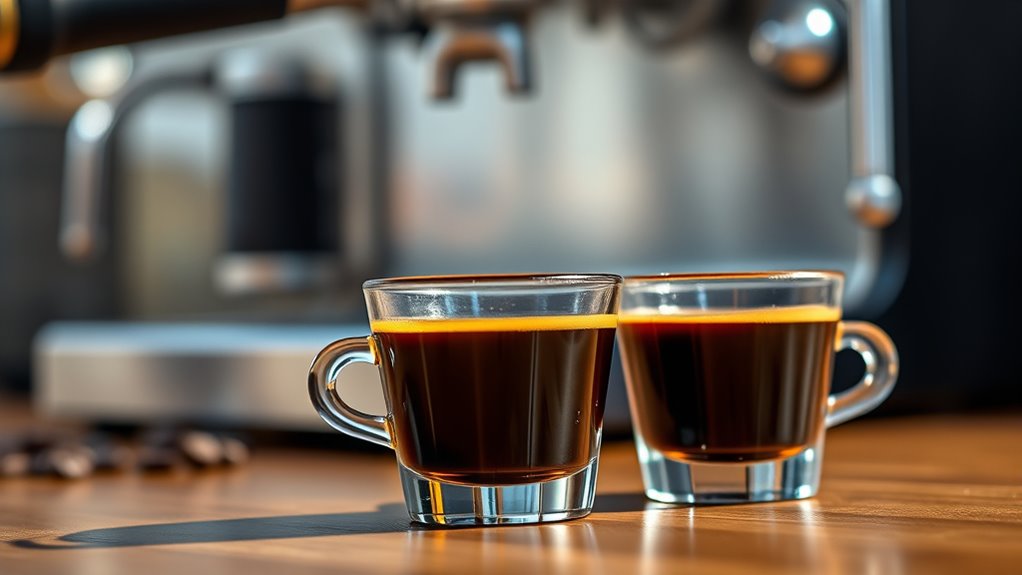
How much caffeine do you get from two shots of espresso? Typically, you consume about 126 mg of caffeine, considering an average of 63 mg per shot. However, this amount can range from roughly 114 mg to 130 mg due to factors like bean variety and brewing technique.
For instance, if your espresso is made with Robusta beans, expect caffeine content closer to 140 mg for two shots, as Robusta beans contain more caffeine than Arabica. Variations in shot size, coffee dose, and extraction process also influence caffeine levels slightly.
Generally, a standard double espresso delivers about twice the caffeine of a single shot, so you can reliably estimate around 126 mg of caffeine in two shots. This amount provides a precise benchmark for your caffeine intake from espresso.
It is important to note that extraction time can significantly affect the caffeine content extracted in your espresso shots.
Why Does Caffeine Vary in Double Espresso Shots?
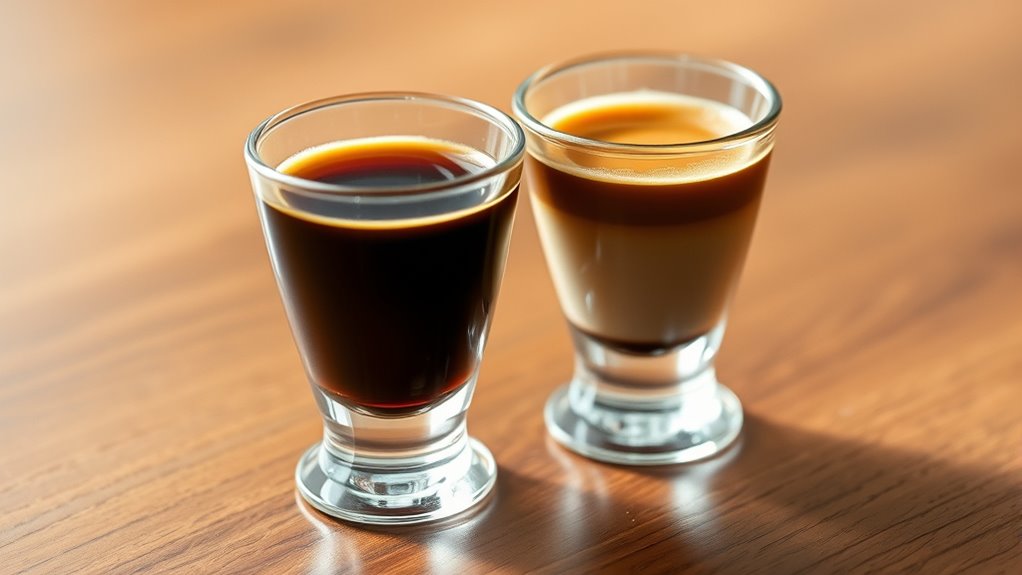
The caffeine content you find in two shots of espresso doesn’t stay the same because several factors influence its extraction and concentration. The amount of coffee used usually ranges from 14 to 18 grams, which directly affects caffeine levels. Variations in grind size, extraction time, and brewing pressure also change how much caffeine gets extracted during brewing.
Plus, barista practices like dosing accuracy and equipment calibration can introduce inconsistencies. While the type of bean and roast level do impact caffeine, those will be discussed separately.
Understanding these variables helps you see why caffeine in double espresso shots can fluctuate, even if the volume looks identical. This variability shows how complex your espresso’s caffeine content is and why it’s important to have precise control over preparation to get consistent caffeine delivery. Proper extraction time control is essential to balance flavor and caffeine concentration consistently.
How Do Coffee Beans and Roast Level Affect Espresso Caffeine?
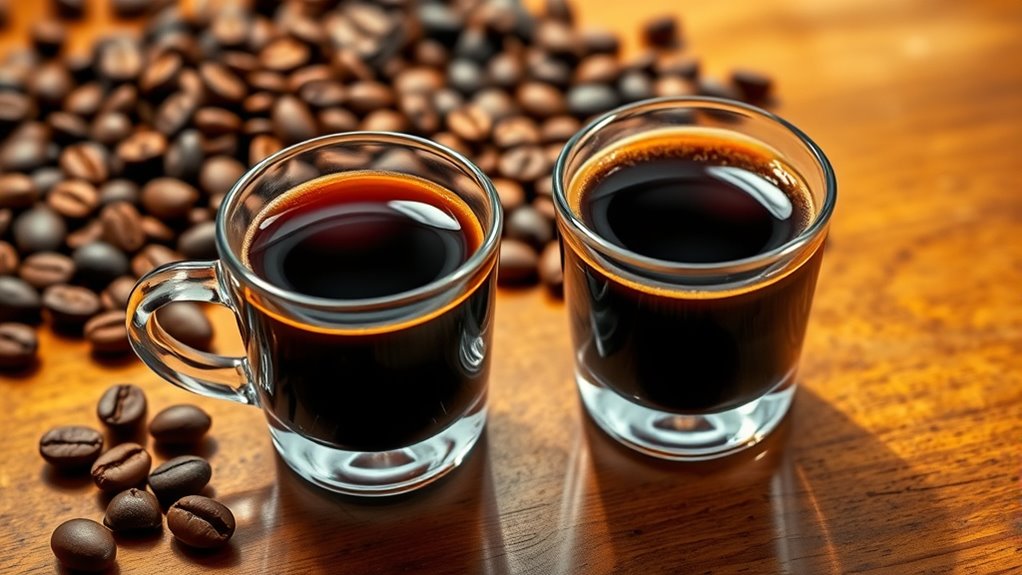
Because caffeine content varies considerably between coffee bean species and roast levels, these factors play a crucial role in determining the caffeine concentration in your espresso. Understanding these differences helps you predict how strong your double shot can be.
Robusta beans contain about twice the caffeine (2.2–2.7%) compared to Arabica (1.2–1.5%), which notably boosts caffeine levels.
Lighter roasts retain slightly more caffeine (~1.3%) than darker roasts (~1.1%) due to minimal caffeine loss during roasting.
Roasting doesn’t destroy caffeine; lighter roasts have higher caffeine concentration by weight because of less degradation.
Combining Robusta-rich beans with lighter roasts yields the highest caffeine content in your espresso shot.
These factors together precisely influence the caffeine you consume in each double espresso. So, knowing your beans and roast can really help you control the caffeine kick you’re after.
Additionally, freshness and grind size consistency also affect extraction and ultimately the caffeine strength of your espresso shot.
How Do Brewing Methods Impact Caffeine in Double Espresso?
Understanding the bean type and roast level sets the stage, but the brewing method you choose ultimately determines how much caffeine ends up in your double espresso. Traditional espresso machines use high pressure and fine grounds, extracting more caffeine per shot than stovetop moka pots or AeroPress.
Standard doubles involve about 14 grams of coffee with a 25-30 second extraction, balancing caffeine yield. Longer extractions, like a lungo, increase caffeine, while shorter ones, like ristretto, decrease it.
Commercial machines maintain precise pressure and temperature, ensuring consistent caffeine levels. On the other hand, manual or alternative methods can cause variability.
Capsule systems standardize caffeine amounts, but differences in brewing pressure and time still affect the final caffeine content in your two shots of espresso. So, the method you pick really shapes that caffeine kick. Maintaining stable brew temperature during extraction is crucial, as even minor fluctuations can alter caffeine solubility and overall flavor balance.
How Does Double Espresso Caffeine Compare to Other Coffee Drinks?
When you compare caffeine content across coffee drinks, two shots of espresso pack about 126 mg. That means it delivers a much higher caffeine concentration per ounce than an 8-ounce brewed coffee, which typically contains around 95 mg.
Here’s how double espresso stacks up:
- It offers a rapid, intense caffeine boost due to its concentration.
- Lattes and Americanos with two shots have more caffeine overall because of larger volumes.
- Its caffeine level is comparable to a standard energy drink but with a richer flavor.
- Larger brewed or cold brew coffees often exceed 200 mg per serving, surpassing double espresso.
- The caffeine concentration in espresso is about 2.1 mg/mL, significantly higher than drip coffee’s 0.4 mg/mL.
How Can You Measure Caffeine in Your Espresso at Home?
Knowing how much caffeine is in your espresso can help you manage your intake more effectively. At home, you can estimate caffeine content by multiplying the number of shots by approximately 63 mg per shot.
Using a digital scale to measure coffee grounds—about 14 grams for a double shot—ensures consistency in caffeine levels.
While laboratory testing and specialized caffeine kits provide precise measurements, they’re costly and impractical for everyday use.
Instead, focus on controlling variables like coffee bean type, roast level, and brewing parameters to better approximate caffeine content in your espresso.
This scientific approach allows you to maintain accuracy without needing complex equipment, making it feasible to monitor your caffeine intake at home reliably.
For an added boost, consider that a double shot of espresso contains about 126 mg caffeine, providing a concentrated caffeine kick.
How Much Double Espresso Is Safe to Drink Daily?
How much double espresso can you safely drink each day without risking negative effects? Most adults can consume up to 400 mg of caffeine daily, which equals about 3-4 double shots of espresso. Two double shots provide roughly 126 mg, well within this limit.
Most adults can safely enjoy 3-4 double shots of espresso daily without adverse effects.
However, tolerance varies, so consider these guidelines:
- Stick to 3-4 double shots daily to avoid side effects like insomnia and jitteriness.
- Two double shots are generally safe for most people and provide moderate caffeine.
- If you’re pregnant or have health concerns, limit intake below 400 mg and consult a healthcare provider.
- Monitor your body’s response, as some may be sensitive to less caffeine and should reduce consumption accordingly.
Following these points helps you enjoy espresso safely every day. Adjusting your espresso dose can also influence not only flavor but caffeine concentration per shot.
Frequently Asked Questions
Can Decaf Espresso Shots Contain Any Caffeine?
Yes, decaf espresso shots contain a small amount of caffeine, usually between 0.3 to 7 mg per shot. You should know it’s not completely caffeine-free due to the decaffeination process’s incomplete removal.
Does Milk or Cream Affect Caffeine Absorption in Espresso?
Milk or cream don’t change caffeine absorption in espresso. They’re just window dressing.
While fats may slow gastric emptying, they don’t reduce caffeine’s total uptake or speed. So, you’ll still get that full caffeine kick.
How Does Espresso Caffeine Affect Sleep Quality?
Espresso caffeine delays your sleep onset, reduces total sleep time, and lowers sleep quality, especially if consumed within six hours of bedtime. Its stimulating effects peak quickly and can disrupt REM sleep and overall restfulness.
Are There Health Benefits Specific to Espresso Caffeine?
Like a modern-day Panacea, espresso caffeine boosts your alertness, supports cardiovascular health, and may lower neurodegenerative risks. Its antioxidants combat oxidative stress, while caffeine enhances physical performance by increasing adrenaline. This benefits both mind and body efficiently.
Can Caffeine Tolerance Change With Regular Espresso Consumption?
Yes, your caffeine tolerance changes with regular espresso consumption. Your body adapts by increasing enzymes that metabolize caffeine, which reduces its stimulatory effects.
Conclusion
Think of your double espresso as a finely tuned engine. Its caffeine content powers your day with precision. Just like fuel varies by quality and quantity, caffeine levels shift with beans, roast, and brewing methods.
By understanding these variables, you control your energy output safely and effectively. Measure wisely, just like calibrating an instrument. You’ll harness espresso’s full potential without overloading your system.
Balance is key to keeping your daily drive smooth and energized.
Pingback: How To Make Starbucks Shaken Espresso – Copycat Recipe