You’ll want to tamp espresso grounds with a firm and consistent pressure between 20 and 30 pounds. This range guarantees even compaction, prevents channeling, and promotes balanced extraction for a flavorful shot with rich crema.
Avoid tamping too lightly, which leads to weak flow, or too hard, which causes bitterness and slow extraction. Applying steady pressure while leveling the puck sets the stage for quality espresso.
Keep following for tips on perfecting your tamping technique.
What Is the Ideal Tamping Pressure for Espresso?
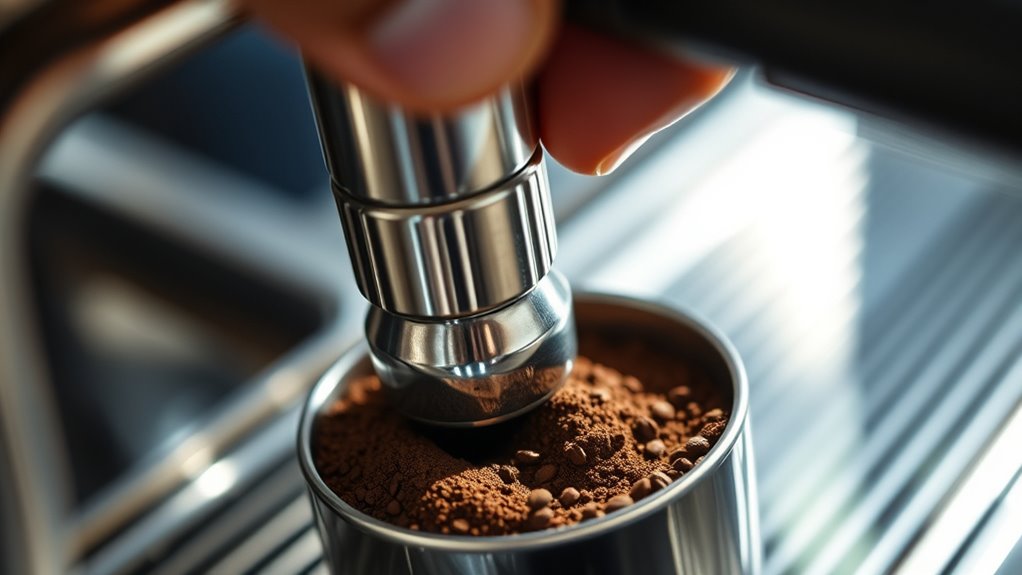
Although tamping may seem straightforward, applying the right pressure, typically between 20 and 30 pounds, is crucial for ideal espresso extraction. You want to compact the coffee grounds evenly without over-pressing.
Pressing within this range ensures a uniform density, which is critical for consistent water flow through the puck.
Applying consistent pressure creates uniform density, essential for even water flow through the coffee puck.
When you apply pressure, stop once the tamper no longer moves, indicating you’ve reached the necessary compression. Avoid exceeding 30 pounds, as too much force can over-compress the coffee bed, increasing resistance and causing uneven extraction or channeling.
The goal is a flat, level puck that’s firm yet porous enough to allow water to pass evenly. Staying within this pressure range helps you achieve the perfect balance between compaction and flow for a perfect espresso shot. Regular practice using a bathroom scale can help you develop consistent 30-pound pressure and improve your tamping technique.
Why Does Consistent Espresso Tamping Pressure Matter?
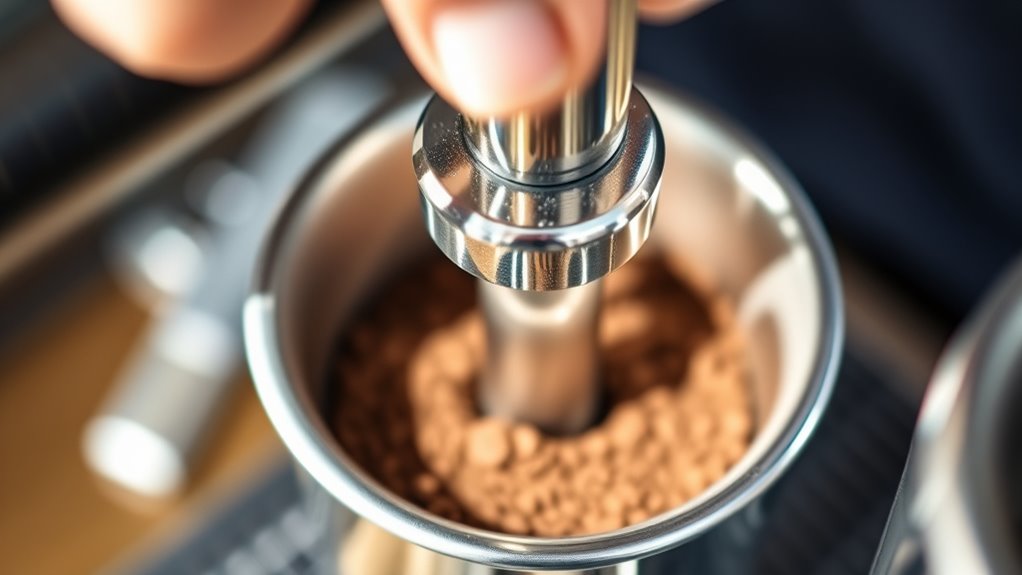
When you maintain consistent tamping pressure, you create a uniform coffee puck that allows water to flow evenly during extraction. This uniformity prevents channeling, ensuring balanced flavor and shot quality. Applying around 20-30 pounds of force consistently compacts the puck precisely, offering the right resistance for water flow.
Without steady pressure, you risk variations that lead to uneven extraction and weaker shots. Consistent tamping also promotes reproducibility, so each espresso shot matches your desired taste profile. Adjusting tamping pressure works hand in hand with selecting the proper grind size to optimize extraction time and flavor balance.
| Pressure Range (lbs) | Effect on Puck | Resulting Extraction |
|---|---|---|
| Below 20 | Under-compacted | Channeling, weak flavor |
| 20-30 | Optimal compaction | Even extraction, rich flavor |
| Above 30 | Over-compacted | Slow flow, bitter taste |
Which Tamper Helps You Apply Perfect Pressure?
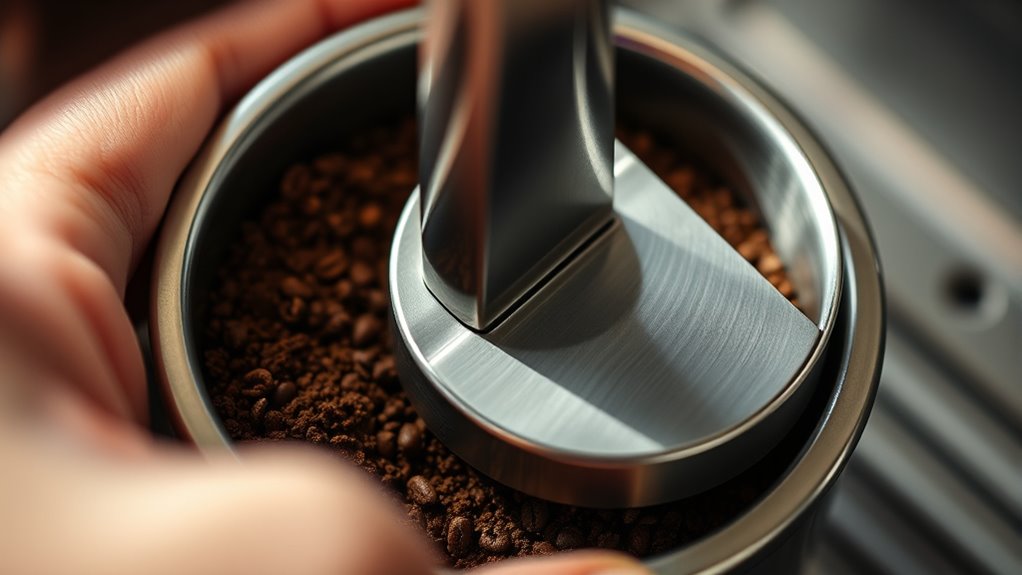
Choosing the right tamper plays a crucial role in consistently applying the perfect pressure for espresso tamping. A calibrated tamper with a built-in pressure gauge helps you hit the recommended 20-30 pounds every time, eliminating guesswork.
Dual-head tampers offer flexibility, letting you switch pressure settings or tamping styles to suit your needs.
Ergonomic handles reduce hand fatigue and improve your control, allowing for even, steady pressure.
If you want focused sealing, a convex tamper concentrates pressure on the edges, enhancing consistency.
For beginners, tampers with a level base and guides or scales provide valuable feedback, making it easier to learn the right pressure.
Selecting the tamper that fits your technique ensures you consistently achieve ideal extraction and espresso quality. It’s all about finding the tool that feels right and helps you nail that perfect tamp every time.
Consistent tamping pressure is essential because pressure affects extraction quality and the development of crema in your espresso shot.
How to Level and Distribute Coffee Grounds Before Tamping
Before you tamp, make sure to spread the coffee grounds evenly. You can do this with a gentle tap or by using a distribution tool to break up any clumps and avoid air pockets.
Next, level the grounds by either visually inspecting them or gently tilting the portafilter. This helps create a flat, uniform bed.
Doing this prep work is really important because it ensures consistent water flow and even extraction, which means better-tasting coffee.
Proper brewing involves precise grind size, tamping, and extraction time to optimize caffeine extraction and flavor.
Even Coffee Distribution
Although tamping compresses the coffee grounds, you need to distribute them evenly first to guarantee a uniform puck density. Start by breaking up clumps using a WDT needle or a similar thin tool to prevent uneven spots.
Use a distribution tool or gently tap the portafilter to settle the grounds and eliminate air pockets.
Carefully level the coffee bed with your finger or a flat tool, making sure the surface is smooth and even across the entire basket. After distributing, take a moment to visually inspect the puck to confirm it’s flat and free from loose particles or bumps.
Proper even distribution minimizes channeling during extraction, which leads to a consistent flow and a more balanced, flavorful espresso shot. This step is essential before you apply your tamping pressure. It really sets you up for a great shot!
Consistent tamping pressure of about 30 pounds after even distribution is crucial to ensure balanced flavor and prevent channeling.
Leveling Techniques Explained
When you level and distribute coffee grounds properly, you set the stage for a uniform extraction and a balanced espresso shot. This crucial step ensures water flows evenly through the coffee bed, preventing channeling and uneven flavors.
To master leveling techniques, focus on these key actions:
- Use a distribution tool or your finger to spread grounds evenly across the basket.
- Gently tap the portafilter’s side to settle grounds and remove air pockets.
- Visually check or gently rock the basket to confirm the coffee bed is flat and level.
- Break up clumps with a WDT tool to avoid uneven water flow.
- Confirm all grounds are uniformly distributed before tamping with consistent pressure.
Proper leveling also supports maintaining an optimal extraction time, which is critical for flavor balance and crema development.
Preparing Grounds Uniformly
How do you guarantee your espresso shot extracts evenly every time? Start by preparing your grounds uniformly. Use a distribution tool or gently tap the portafilter’s sides to spread coffee grounds evenly and settle them, preventing air pockets and uneven density.
Break up clumps with a WDT tool or small fork to create a consistent, free-flowing coffee bed. Visually inspect the surface, manually adjusting any uneven areas to ensure the bed is perfectly level. Confirm there are no loose grounds or peaks before tamping.
This careful preparation forms a flat, even coffee puck. That way, your tamping pressure compresses the grounds uniformly, which is super important for balanced extraction. It helps you pull a flawless espresso shot every time you brew.
For best results, aim to apply consistent pressure around 30 pounds, as recommended by many espresso brewing techniques.
How to Tamp With Consistent Pressure: Step-by-Step
To achieve a consistent tamp, you’ll want to apply between 20 and 30 pounds of pressure using a steady, downward motion. Here’s how to tamp with consistent pressure step-by-step:
Use a scale or calibrated tamper to get a feel for the right force.
Position the tamper level and perpendicular to the coffee bed.
Press down steadily until the tamper stops moving, applying 20-30 pounds of pressure.
Finish with a gentle polishing motion to smooth the surface.
Practice this routine consistently to maintain uniform puck density across shots.
Following these steps guarantees even compression, preventing channeling and promoting uniform extraction.
Mastering consistent pressure is key to achieving balanced espresso flavor every time.
Maintaining consistent tamp pressure helps regulate extraction and yield consistency through uniform puck density.
What Happens When You Tamp Too Hard or Too Light?
Although tamping might seem straightforward, applying too much or too little pressure can seriously affect your espresso’s quality.
If you tamp too hard, you risk over-compacting the coffee puck, creating a brick-like barrier that restricts water flow and causes under-extraction. This results in a weak, flat shot.
Excessive force also increases the chance of channeling, where water finds uneven paths, leading to inconsistent flavors.
On the other hand, tamping too lightly leaves the coffee bed loosely packed, allowing water to rush through quickly. This causes over-extraction, often producing sour, harsh notes and a thin crema.
Insufficient tamping also creates inconsistent puck density, which leads to variable shot quality.
Sticking to around 20-30 pounds of pressure guarantees balanced extraction and consistent flavor.
Maintaining proper tamp pressure helps ensure even extraction, which is essential for balanced flavor and rich crema.
How Can You Tell When Your Coffee Is Tamped Just Right?
When you apply consistent pressure and the tamper stops moving, you know you’ve reached the ideal 20-30 pounds needed for a proper tamp.
To tell if your coffee is tamped just right, check these key indicators:
Look for firmness, even surface, and no tamper movement to confirm perfect coffee tamping.
The puck feels firm and level, with no looseness or crumbling when tapped lightly. The coffee surface is smooth and even, showing uniform compression. The tamper doesn’t shift once you reach the target pressure.
Water flows evenly through the puck during extraction, without channeling or bypassing. The puck’s surface remains flat and undisturbed after tamping.
These signs help ensure a great espresso shot every time. Proper tamping is essential to preserve the crema and enhance the espresso’s rich flavor.
Tamping Mistakes That Can Ruin Your Espresso
Even with the right pressure and a level tamp, mistakes during tamping can still spoil your espresso. If you tamp at an angle, you create uneven coffee beds that cause channeling and inconsistent extraction.
Twisting the tamper after pressing disrupts the puck’s surface, leading to cracks and uneven density.
Applying too much force on an unlevel puck only makes sloped beds worse, which impairs water flow and flavor.
Skipping the essential step of distributing or leveling grounds before tamping increases the risk of uneven tamping and channeling.
Inconsistent routines and improper technique result in variable shot quality because uneven or improperly compressed coffee beds don’t extract evenly.
Tips for Practicing and Maintaining Consistent Tamping Pressure
To master tamping pressure, you need consistent practice combined with mindful technique. Focus on building muscle memory and maintaining even, level tamping to achieve optimal espresso extraction.
Here’s how you can practice and maintain consistent tamping pressure:
Use a calibrated scale to apply steady pressure around 20-30 pounds until the tamper stops moving.
Develop a routine: keep your wrist straight, apply force steadily, then finish with a gentle twist.
Record your pressure and technique to track what yields the best results.
Practice regularly, gradually increasing pressure to ensure full compaction.
Inspect and adjust your technique frequently to avoid uneven tamping.
Frequently Asked Questions
How Often Should You Replace Your Tamper?
You should replace your tamper every 1 to 2 years, especially if you notice dents, scratches, or uneven surfaces. Regularly inspecting and updating it guarantees consistent pressure and ideal espresso extraction quality.
It’s a good idea to keep an eye on how your tamper looks and feels. If it starts showing signs of wear, swapping it out will help keep your espresso game strong. After all, a fresh tamper means better coffee every time!
Can Tamping Pressure Vary by Coffee Roast Type?
Of course, you should tamp lighter for fragile dark roasts and harder for dense light ones. But honestly, just aim for consistent pressure.
Minor tweaks help, but overthinking tamping pressure won’t magically fix your shot. Keep it simple and steady.
Does Water Temperature Affect Tamping Pressure Needs?
Water temperature doesn’t considerably change how hard you should tamp. Stick to firm, consistent pressure around 20-30 pounds.
Focus more on grind size and technique to manage extraction rather than adjusting tamp based on temperature. It’s really about dialing in those other factors to get the best shot.
How Does Grind Size Influence Tamping Technique?
Don’t tamp fine grounds like you’re building a fortress. They don’t need it. You’ll press coarser grinds firmer to avoid loose pucks.
Adjust your tamp’s pressure smartly. Grind size demands your finesse for perfect extraction.
Are There Differences in Tamping for Single vs. Double Shots?
Yes, when tamping single shots, you’ll want to focus more on even distribution. Use slightly gentler pressure because there’s less coffee to work with. This helps avoid over-compression.
For double shots, it’s important to maintain consistent, firm tamping. That way, you guarantee uniform extraction across the larger dose. It’s all about balancing the pressure to get the best flavor out of the coffee.
Conclusion
Getting your tamping pressure just right, usually around 30 pounds, makes all the difference in espresso quality. Too hard or too light, and your shot suffers from uneven extraction or bitterness.
Consistency is key, so use a good tamper and level your grounds before pressing firmly and evenly. With practice, you’ll nail the perfect tamp every time.
It turns espresso-making from guesswork into a reliable skill that really elevates your coffee experience.