You can enjoy plain espresso during your fast without breaking it since it contains almost no calories and barely impacts insulin or autophagy. Its caffeine actually supports fat burning and mental clarity if timed right, especially earlier in the day or 60 to 90 minutes after waking.
Just avoid additives like sugar, cream, or milk, which can disrupt fasting benefits. Understanding the best timing and choices can help you maximize your fast’s effectiveness.
Why Fasting Type Matters for Your Coffee
Because the effects of espresso on fasting depend largely on your fasting goals, understanding the type of fast you’re following is essential before enjoying your coffee.
If your fast focuses on calorie restriction, plain black espresso with just 1 to 5 calories and negligible carbs is generally safe. However, adding milk or sugar introduces calories that can break your fast.
For insulin stabilization, pure espresso usually won’t trigger insulin release, but sweetened or creamed versions might.
If your fast aims for autophagy, even small calorie additions could interrupt this cellular cleanup process.
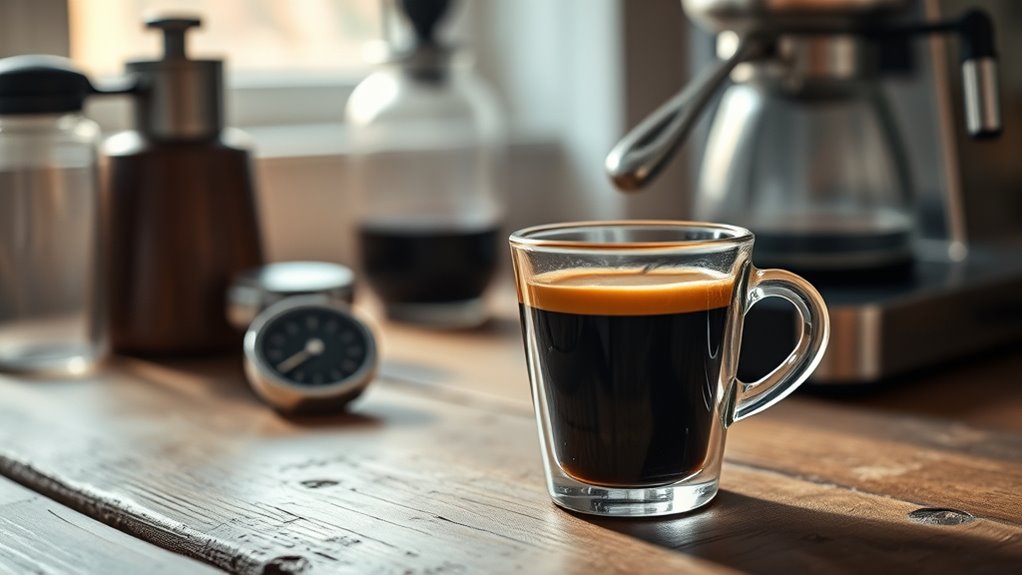
Additionally, the presence of crema in espresso enhances its aromatic compounds without adding calories, making plain espresso a flavorful choice that typically does not break a fast.
How Many Calories Does Plain Espresso Have?
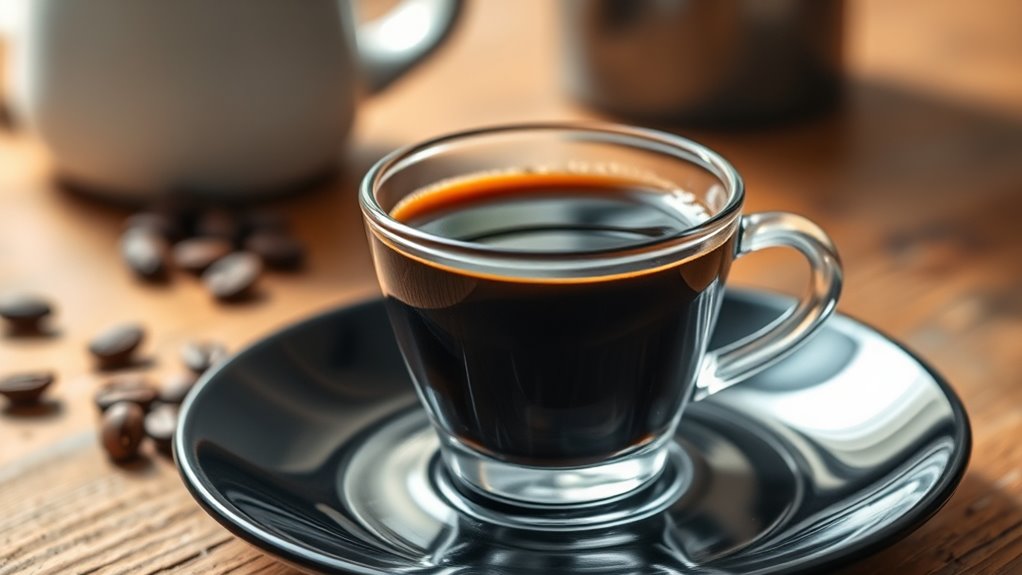
A standard 1-ounce shot of plain espresso contains roughly 1 to 2 calories, mostly from tiny amounts of protein and fats naturally found in coffee beans. Since espresso is highly concentrated but served in small amounts, its calorie count stays really low.
A 1-ounce shot of plain espresso has about 1 to 2 calories from natural coffee bean proteins and fats.
Here’s what you should know:
- The calories come almost entirely from natural compounds in coffee beans, not from any additives.
- Because the serving size is so small, espresso adds barely any calories to your diet.
- Pure black espresso is often considered calorie-free for practical purposes.
- But if you add milk, sugar, or syrups, the calories can go up quite a bit — and that definitely matters if you’re fasting.
- Variations in brewing styles and serving size can subtly affect the calorie content of your espresso.
Does Espresso Break Your Fast?
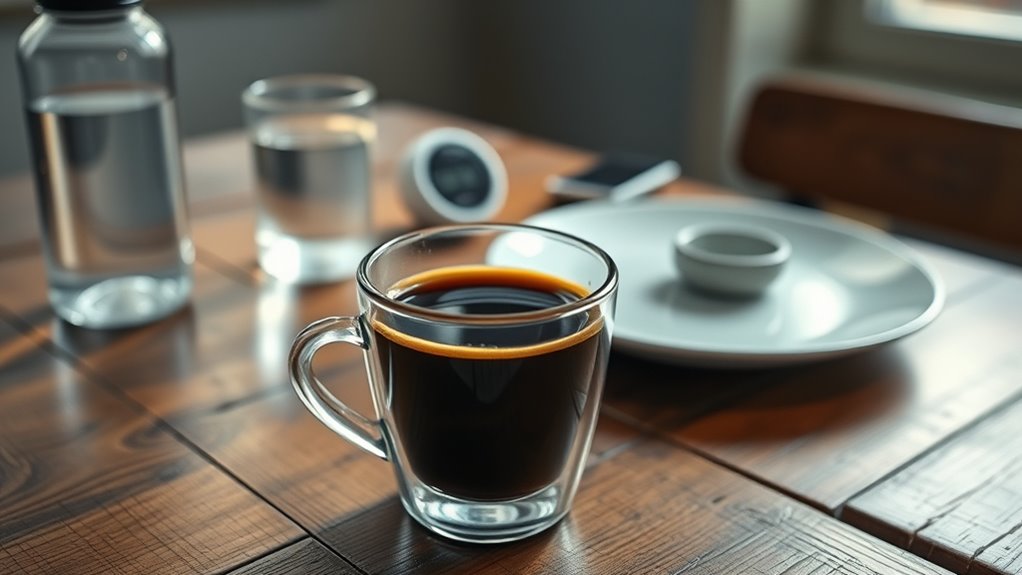
You’re probably wondering if that shot of espresso interrupts your fast. Well, since it contains very few calories and doesn’t really raise insulin levels much, plain espresso usually won’t mess with the benefits of fasting, like autophagy.
That said, it’s important to pay attention to how your body reacts.
Also, think about whether you add anything to your espresso—like sugar or cream—that could break your fast.
Additionally, the extraction time and preparation method can influence the flavor and strength of your espresso, which might affect your fasting experience.
Espresso Calorie Content
Although espresso contains a small number of calories, typically just one to two per shot, it generally won’t break your fast. Its minimal calorie content means you can enjoy it plain without worrying about disrupting your fasting state. Here’s why:
A standard shot of espresso has roughly 1-2 calories, making it virtually calorie-free during fasting. The brewing process doesn’t add calories or macronutrients that could interfere with your fast.
Pure espresso doesn’t markedly raise blood sugar or insulin levels, unlike sweetened or milk-based drinks.
To keep it fasting-friendly, just avoid adding sugar, milk, or flavored syrups. That way, you get to enjoy your espresso without any interruptions to your fast. Simple and effective!
Additionally, the fresh espresso used in drinks like the Espresso Martini contains essential oils and crema that contribute to its flavor without adding calories.
Insulin Response Impact
Since espresso has such a low calorie content, it rarely triggers a significant insulin response that would break your fast. Pure espresso contains almost no carbohydrates or sugars, so your blood insulin levels stay stable.
However, adding sweeteners or flavorings can cause a slight insulin increase, potentially breaking your fast. The caffeine in espresso may raise cortisol and adrenaline but doesn’t directly cause insulin spikes without carbs or sugar. The aeration and flavor development in espresso enhance its texture and smoothness without altering its fasting impact.
| Factor | Insulin Response Impact |
|---|---|
| Pure espresso | Minimal to none |
| Added sweeteners/flavors | Possible mild increase |
| Caffeine alone | No direct insulin spike |
Autophagy and Fasting
While fasting, your goal is often to promote autophagy, the body’s process of cleaning out damaged cells and regenerating new ones. Drinking black espresso won’t break your fast or disrupt autophagy because it contains minimal calories, usually under 5 per shot. It also lacks additives that trigger insulin or mTOR pathways.
To keep autophagy intact, remember these points:
- Pure espresso has negligible calories and no sugars, so it doesn’t interfere with fasting benefits.
- Black espresso doesn’t stimulate insulin release, preserving autophagy.
- Adding milk, cream, or sweeteners provides calories and nutrients that can break your fast and inhibit autophagy.
- Enjoy espresso plain to maintain the cellular cleanup process during fasting.
In short, black espresso supports your fast, but additives can undermine it. So, keep it simple and enjoy your espresso straight up! For those making espresso at home, using freshly roasted, high-quality beans and proper brewing methods ensures you get the purest flavor without unnecessary additives, which is crucial during fasting to avoid breaking it through hidden calories or sweeteners in your cup of coffee. This is especially important when using brewing methods without an espresso machine.
Which Espresso Add-Ins Can Break Your Fast?
If you add sugar or flavored syrups to your espresso, you introduce calories and sugars that can raise your blood glucose and insulin levels. This effectively breaks your fast.
Similarly, adding milk, cream, or milk alternatives brings calories and proteins that may trigger insulin responses. This can disrupt your fasting goals.
On the other hand, stirring in butter, MCT oil, or other fats won’t markedly raise blood sugar. But these can break certain fasting protocols by halting autophagy.
Using zero-calorie sweeteners like stevia or erythritol generally won’t break your fast. Though some people might experience increased hunger or slight insulin responses.
Finally, small amounts of flavored additives like vanilla extract or cinnamon contain negligible calories and are unlikely to break your fast. That makes them safer choices for flavor without compromising fasting benefits.
It’s also important to consider that the caffeine content, such as the higher caffeine in blonde espresso, can affect metabolism and alertness during fasting.
How Espresso Impacts Autophagy
Although espresso contains virtually no calories, it plays an active role in supporting autophagy during fasting. Since it lacks significant nutrients, espresso doesn’t raise insulin levels, allowing autophagic processes to continue uninterrupted. Its caffeine content can actually stimulate cellular activity, promoting metabolic stress that encourages autophagy.
Unlike protein-rich foods, espresso doesn’t activate mTOR, a pathway that suppresses autophagy. Here’s how espresso impacts autophagy:
- Contains almost no calories, so it doesn’t break your fast.
- Minimally affects insulin, supporting ongoing autophagy.
- Caffeine promotes cellular stress, which can enhance autophagy.
- Doesn’t activate mTOR, preserving cellular cleanup benefits.
Drinking black espresso during fasting can consequently support autophagy without compromising its effectiveness. It’s a simple addition that helps keep things moving inside your cells while you fast. Additionally, the caffeine concentration in espresso is significantly higher than in regular drip coffee, which may intensify its metabolic effects during fasting.
When Is the Best Time to Drink Espresso While Fasting?
You’ll get the most from your espresso by drinking it in the morning. Ideally, have it about 60–90 minutes after waking up—that way, you won’t mess with your cortisol levels.
Plus, sipping espresso before you break your fast can help curb your appetite and give your metabolism a little boost.
Just keep in mind to skip the afternoon espresso. Caffeine later in the day might mess with your sleep and the benefits you’re getting from fasting.
For the best results, make sure your espresso is prepared with the correct extraction time to maximize flavor and avoid bitterness.
Optimal Espresso Timing
When you time your espresso intake thoughtfully during fasting, you can enhance both its metabolic and cognitive benefits. To get the most from your espresso without breaking your fast, consider these guidelines:
- Drink espresso 60 to 90 minutes after waking to avoid interfering with your natural cortisol peak.
- Consume espresso during the latter half of your fasting window to maximize appetite suppression and fat oxidation.
- Have espresso just before your eating window to support ketosis without disrupting it.
- Avoid espresso after 2 p.m. to prevent sleep disturbances, given its roughly 5-hour half-life.
Following these timing strategies helps you enjoy increased energy, improved focus, and metabolic advantages. Plus, it minimizes side effects like jitters or poor sleep quality.
Morning Versus Afternoon
Timing your espresso intake during fasting can really influence how it affects your body and mind. Drinking espresso in the morning, about 60-90 minutes after waking, helps maximize cortisol levels without messing with the benefits of fasting. This timing supports alertness and keeps your metabolism running efficiently.
Alternatively, having espresso in the afternoon, ideally before 2 p.m., can boost fat-burning and keep your energy up during fasting.
But since caffeine’s half-life is around five hours, drinking espresso too late might mess with your sleep. And poor sleep can interfere with how well your body recovers while fasting.
Late-day caffeine can also cause jitters, which isn’t great if you want to stick to your wellness goals.
So, by choosing morning or early afternoon espresso, you can boost mental clarity and enjoy metabolic benefits without breaking your fast.
Finding the right timing helps you get the most out of both your espresso and your fasting routine.
Additionally, understanding the importance of espresso crema can enhance your appreciation of the drink’s quality and freshness even while fasting.
Pre-Breakfast Benefits
How can you maximize the benefits of espresso during your fasting window? Timing is key. Drinking espresso about 60-90 minutes after waking helps you avoid disrupting your morning cortisol peak, which naturally boosts alertness.
Enjoying espresso before your fast ends can enhance fat burning and mental clarity without significantly affecting autophagy. To get the most out of espresso’s appetite-suppressing effects, consume it closer to the end of your fasting period.
However, avoid espresso after 2 p.m. to prevent caffeine from impairing sleep quality. Here’s how to optimize your espresso intake while fasting:
- Drink espresso late morning or early afternoon, 60-90 minutes after waking.
- Consume it before breaking your fast to support fat burning.
- Use espresso near fasting’s end to curb appetite.
- Stop espresso intake after 2 p.m. to protect sleep.
Ordering Espresso Out: What to Avoid to Keep Your Fast
Although espresso itself contains virtually no calories, you need to be careful about what you add when ordering out to keep your fast intact. Avoid sugar, flavored syrups, or sweetened creamers because these introduce calories that can break your fast.
Specialty drinks like lattes or mochas often contain milk and sweeteners, which can also mess with the benefits of fasting. To stay within fasting guidelines, go for plain espresso shots or an Americano, which is just espresso diluted with hot water.
Always make sure to specify no milk, sugar, or flavorings when you order at cafes. That way, you keep your drink calorie-free and avoid triggering an insulin response. Staying mindful of these extras helps you maintain a true fast without accidentally breaking it.
Frequently Asked Questions
Can Espresso Affect Hydration Levels During Fasting?
Yes, espresso can affect your hydration during fasting because it acts as a diuretic, increasing urine output.
To stay hydrated, you should drink water alongside your espresso and avoid excessive consumption, especially later in the day.
It’s all about balance—enjoy your espresso, but keep an eye on how much water you’re drinking too.
Does Espresso Influence Electrolyte Balance While Fasting?
Espresso doesn’t directly affect your electrolyte balance since it lacks significant minerals. However, its caffeine can increase urine output, so you should stay hydrated and consider electrolyte-rich drinks to maintain balance while fasting.
Just keep an eye on how much you’re drinking. Staying hydrated is key, especially when fasting. Adding a drink with electrolytes can really help keep things steady.
Is Espresso Safe for Fasting With Acid Reflux Issues?
If your stomach’s a stormy sea, espresso might stir waves of acid reflux. While it won’t break your fast, its acidity can irritate you.
Consider low-acid coffee or pairing it with food to stay comfortable. It’s all about finding what works best for your body. Don’t be afraid to experiment a little!
How Does Espresso Impact Sleep Quality During Fasting?
Espresso can disrupt your sleep quality during fasting by delaying sleep onset and reducing duration due to caffeine. To protect fasting benefits, avoid espresso late afternoon or evening, especially if you’re sensitive to caffeine’s effects on sleep.
Basically, that late caffeine hit can keep you tossing and turning when you’d rather be resting. So, it’s a good idea to time your espresso earlier in the day. That way, you get the boost without messing up your shut-eye.
Can Espresso Cause Cravings That Disrupt Intermittent Fasting?
Espresso can be a double-edged sword during fasting; it might ignite cravings by stimulating hunger hormones and conditioned responses. But if you’re sensitive, those signals could disrupt your fast. So, keep an eye on how your body reacts.
Listen to what your body is telling you. If espresso makes you feel hungrier or tempted to eat, it might be worth cutting back or skipping it during your fasting window. Everyone’s different, so finding what works best for you is key.
Conclusion
So, does espresso break your fast? If you’re just sipping plain espresso, you’re safe. Zero calories, zero guilt.
But add sugar or cream, and you might as well snack on a cake. Autophagy? Espresso might help, but don’t expect miracles.
Bottom line: if you want your fast to stay fast, keep it simple. Otherwise, you’re just enjoying a hot, bitter dessert, and that’s a whole different kind of break.