Starbucks Blonde Espresso uses lightly roasted Arabica beans from Latin America and Africa. This gives you bright, citrusy, and floral flavors with a smooth, sweet finish. It’s less bitter and more acidic than regular espresso, with a thinner, golden crema.
It also has a slightly higher caffeine kick, about 85 mg per shot. Perfect for lighter, vibrant coffee lovers, it pairs beautifully with milk and syrups. Keep exploring to uncover brewing tips and taste comparisons that enhance your experience.
What Is Blonde Espresso and How Is It Made?
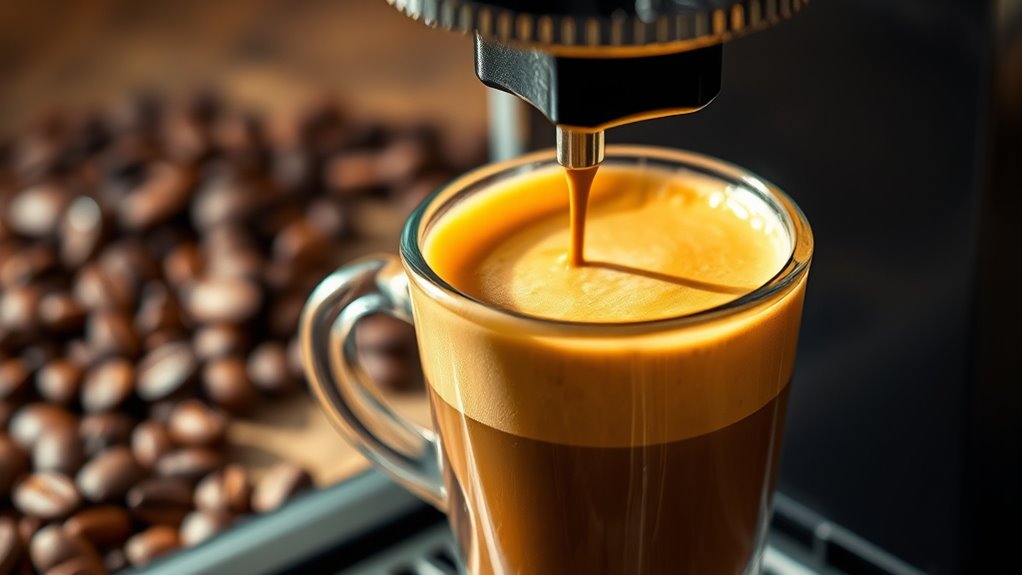
Although you might be familiar with traditional espresso, Starbucks Blonde Espresso offers a unique twist by using light-roast beans roasted under ten minutes at temperatures between 355-400°F. They stop just before the first crack. This careful roasting preserves bright, fruity, and floral notes while maintaining higher caffeine and natural sugars. It delivers a sweeter, more vibrant flavor.
When brewed, hot water at around 88°C is forced through finely ground coffee at 9 bars of pressure, extracting a lighter-bodied shot. You’ll notice its crisp acidity and clean, citrusy finish, which really highlight the coffee’s origin characteristics.
This method creates an espresso experience that’s invigorating and nuanced. It’s perfect if you enjoy a lively, less intense coffee with complex flavor layers. The caffeine content in Blonde Espresso can be higher than traditional espresso due to the light roast’s caffeine retention, offering a unique energy boost.
Which Beans Are Used for Blonde Espresso?
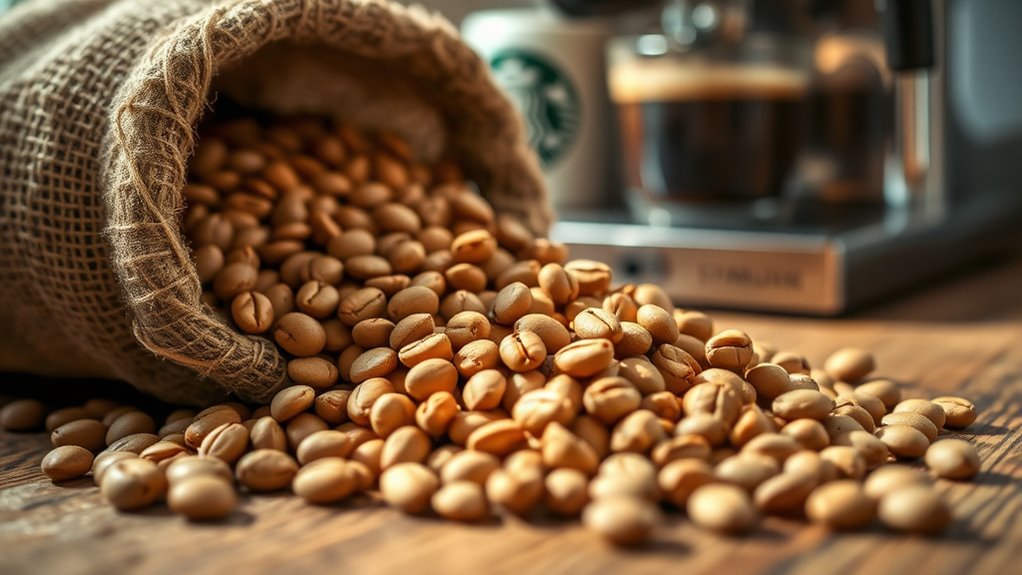
What makes Starbucks Blonde Espresso stand out starts with the beans themselves. These aren’t just any beans; they’re lightly roasted Arabica beans from select regions in Latin America and Africa. The careful choice of these beans gives Blonde Espresso its signature bright and smooth flavor.
Starbucks Blonde Espresso shines with lightly roasted Arabica beans from Latin America and Africa for a bright, smooth taste.
Here’s what you should know about the beans used:
- They’re sourced primarily from Ethiopian Yirgacheffe, Colombia, and Central America, which are known for their floral and fruity notes.
- The beans are roasted lightly, under ten minutes at 355-400°F, to preserve their natural sweetness and acidity.
- Roasting stops before the first crack to keep the bean structure denser and the flavors vibrant.
- The beans are selected to emphasize citrus, floral, and caramel tones, creating that bright, smooth profile unique to Blonde Espresso.
All these choices come together to shape the delicious experience you get with every cup. Since Blonde Espresso uses Arabica beans, it generally contains moderate caffeine content compared to other espresso varieties.
How Much Caffeine Does Blonde Espresso Contain?
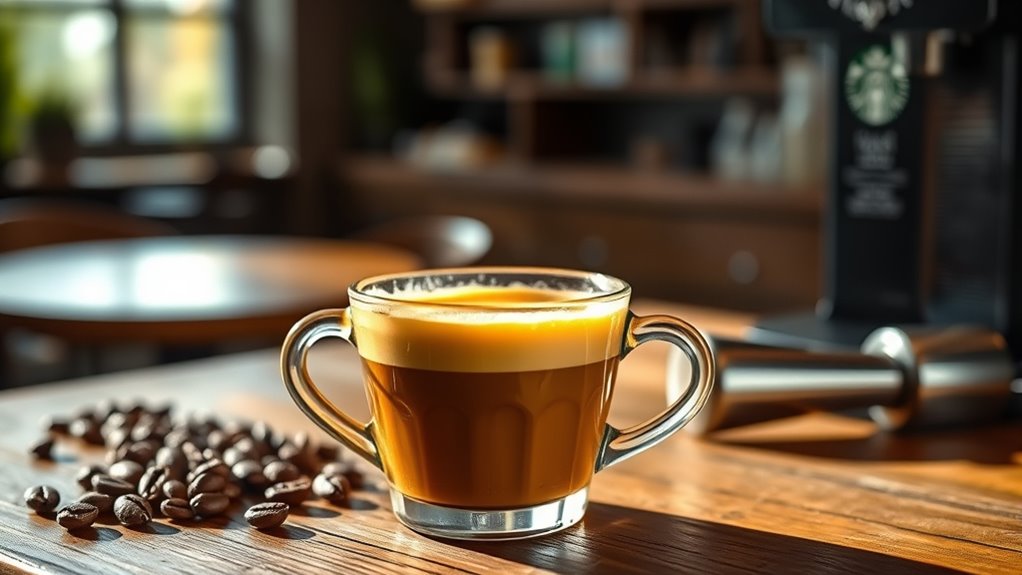
You might be surprised to learn that Starbucks Blonde Espresso actually packs a bit more caffeine per shot than regular espresso. It’s not just because it’s a lighter roast. Factors like bean density and the dose size play a big role too. The caffeine content is influenced by the coffee dose and extraction process, which determines the final caffeine amount in each shot.
Caffeine Content Comparison
How much caffeine does Starbucks Blonde Espresso actually pack? If you’re curious how it stacks up against regular espresso, here’s a clear comparison to guide you:
Blonde Espresso contains about 4.7 mg of caffeine per milliliter, which is slightly more than regular espresso.
A standard Blonde Espresso shot (1 ounce) delivers roughly 85 mg of caffeine. Regular espresso shots typically have around 75 mg per shot.
The lighter roast in Blonde Espresso preserves more caffeine, giving you a marginally stronger caffeine kick.
The difference in caffeine content is minor because caffeine remains chemically stable across roast levels unless exposed to extremely high temperatures.
Caffeine Impact Factors
Although Blonde Espresso’s lighter roast plays a key role in its caffeine content, several other factors influence how much caffeine ends up in your cup.
For starters, Blonde Espresso contains about 4.7 mg of caffeine per milliliter, slightly more than regular espresso because light roasting retains more caffeine in the beans.
The amount of coffee used per shot, typically 7 to 9 grams, also impacts your total caffeine intake. Bean density and dosage affect caffeine levels more than roast alone.
So, your caffeine boost can vary depending on these variables.
Despite the lighter roast, Blonde Espresso delivers a caffeine punch comparable to traditional espresso shots. That means you get a strong, consistent energy kick every time you sip.
Consistent shot timing of 25–30 seconds also influences the caffeine extraction and overall strength of your Blonde Espresso.
How Does Blonde Espresso Taste Compared to Regular Espresso?
When comparing Starbucks Blonde Espresso to regular espresso, you’ll notice a distinct difference in flavor profiles that sets them apart. Blonde espresso delivers a lighter, smoother taste with bright citrus and floral notes.
Regular espresso, on the other hand, offers a richer, bolder flavor featuring chocolate, nutty, and caramel hints.
Here’s what to expect: Blonde espresso has less bitterness and more acidity, emphasizing brightness and sweetness. It finishes crisp and clean, with lemony or bergamot-like clarity.
Regular espresso presents a deep, roasted flavor with a fuller body and complex crema.
Blonde espresso often tastes more like tea or juice, which is quite different from the traditional, intense coffee flavor of regular espresso.
These differences give you distinct experiences depending on your flavor preference. Additionally, blonde espresso contains slightly more caffeine due to the lighter roast preservation of caffeine content.
How Do You Brew Blonde Espresso at Home for the Best Flavor?
To brew the best Blonde Espresso at home, you’ll want to start with freshly roasted light-roast beans ground to a fine consistency perfect for espresso machines. Use about 18-20 grams of coffee and aim for an extraction time of 20-25 seconds at 94-96°C (201-205°F). Even distribution and firm tamping guarantee a balanced shot without bitterness or sourness.
| Step | Key Detail |
|---|---|
| Grind | Fine, suitable for espresso |
| Temperature | 94-96°C (201-205°F) |
| Extraction Time | 20-25 seconds |
If your shot tastes off, try adjusting the grind size or temperature. This will help highlight the coffee’s natural brightness and sweetness. That way, you get that signature Blonde Espresso flavor you love. Maintaining consistent timing during extraction is key to achieving the best flavor balance in your espresso.
How Does Blonde Espresso Taste in Milk-Based Drinks?
Since blonde espresso boasts a lighter body and bright citrus notes, it brings a smooth, sweet flavor that perfectly complements the creaminess of milk-based drinks. When you try it, you’ll notice how its nuanced profile enhances milk’s natural sweetness, creating a balanced, less bitter taste.
The floral and citrus hints shine through, adding an invigorating vibrancy. Here’s what you can expect:
- A smooth, sweet flavor that blends seamlessly with milk’s creaminess.
- Bright citrus and floral notes that add a lively, fresh dimension.
- Crisp acidity that keeps the drink from feeling heavy or overly roasted.
- Versatility with flavored syrups and various milk options, ideal for specialty drinks.
Blonde espresso really elevates your latte or cappuccino with brightness and delicate sweetness. It’s a great way to add a little extra lift without overpowering the milk.
You’ll find it’s perfect if you like your coffee smooth but still full of flavor. Its lighter roast profile also means it typically has slightly less bitterness and acidity, making it ideal for those who prefer a gentler espresso experience.
What’s the Difference Between Blonde Espresso and Signature Espresso at Starbucks?
Although both Blonde and Signature espressos come from Starbucks, they offer distinctly different experiences that cater to various taste preferences.
Blonde espresso uses lightly roasted beans, giving you a brighter, citrusy flavor with floral and fruity notes.
Blonde espresso features lightly roasted beans, delivering bright, citrusy flavors with delicate floral and fruity hints.
Signature espresso relies on darker roasted beans for a richer, chocolatey, and full-bodied taste.
You’ll notice Blonde espresso has a thinner, golden crema and a slightly higher caffeine kick, about 85 mg per shot, compared to Signature’s thicker, darker crema and roughly 75 mg of caffeine.
Blonde espresso is less bitter and more acidic, making it smooth and bright.
Signature espresso delivers that traditional, bold roast flavor.
Your choice depends on whether you prefer a lighter, vibrant profile or a deep, robust espresso experience.
So, if you want something easy and bright, go Blonde.
But if you’re after a classic, strong coffee, Signature’s the way to go.
Both types of espresso can serve as a strong base for drinks like lattes and cappuccinos, showcasing their versatility as espresso bases.
Frequently Asked Questions
Can Blonde Espresso Be Used for Iced Coffee Drinks?
Yes, you can use blonde espresso for iced coffee drinks. It keeps bright, vibrant flavors and smooth sweetness, making your iced latte revitalizing and flavorful.
Plus, it gives you a nice caffeine boost with its lighter, less bitter profile. So, if you’re looking for something fresh and tasty, blonde espresso is a great choice.
Is Blonde Espresso Suitable for Espresso Martinis or Cocktails?
You’ll love how blonde espresso brightens your espresso martini with its smooth, citrusy notes and lively caffeine kick. It adds a delicate sweetness that dances effortlessly, elevating your cocktail to a vibrant, invigorating experience.
It’s like giving your drink a fresh twist that wakes up your taste buds in the best way. Plus, the lighter roast means it’s less bitter, so your cocktail stays balanced and easy to enjoy. Give it a try—you might just find your new favorite espresso martini ingredient!
How Long Does Blonde Espresso Stay Fresh After Opening?
You’ll get the best flavor from blonde espresso within 7-14 days after opening.
Just make sure to keep it airtight and stored away from light, heat, and moisture. That way, you can preserve its freshness and enjoy those bright, smooth notes in every cup.
Are There Any Dairy-Free Milk Pairings That Enhance Blonde Espresso?
You’ll love pairing blonde espresso with oat or almond milk. Oat’s creamy texture balances the citrusy notes, while almond’s nuttiness highlights the floral flavors.
Coconut milk adds a tropical sweetness, making your dairy-free latte bright, flavorful, and invigorating.
Give them a try and see which one matches your taste buds best!
Does Blonde Espresso Have Any Special Seasonal or Limited Editions?
Like a fleeting sunrise, Starbucks’ Blonde Espresso shines in special seasonal and limited editions, featuring unique flavors and exclusive packaging.
You’ll find these bright blends during holidays or summer, offering fresh, exciting coffee moments you won’t want to miss.
They really bring something new to your cup, making each season a little more special.
Conclusion
Now that you know the secrets behind Starbucks Blonde Espresso, you can savor its smooth, subtly sweet sip anytime. Its bright, balanced beans bring a bold break from the usual dark roasts, delivering delightful depth with every drop.
Whether brewed at home or blended in your favorite milk-based drink, Blonde Espresso offers a fresh, flavorful twist that’s perfect for those craving a lighter, lively lift. Immerse yourself in the delicious difference today!