A lungo espresso uses the same coffee grounds as a standard espresso but pushes more water, around 60ml, through them. This results in a larger, milder shot with increased bitterness and roasted flavors.
You’ll notice a longer extraction time, usually about a minute. This pulls more aromatic oils and caffeine from the coffee.
Adjusting grind size and machine settings is key to balancing flavor and avoiding over-extraction. If you want to get the best taste, it’s worth experimenting a bit. Explore further to understand its unique brewing nuances and taste profile.
What Is a Lungo Espresso and How Is It Different From Regular Espresso?
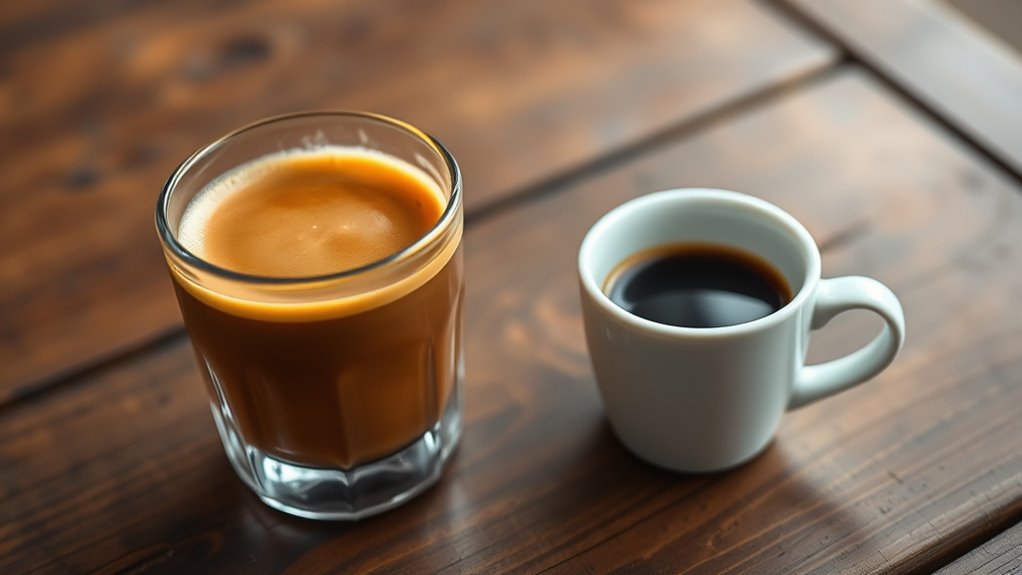
How does a lungo espresso differ from a regular espresso? You use the same amount of coffee grounds but extract with more water, typically 60-80ml compared to the standard 30ml.
A lungo uses the same coffee grounds but twice the water, yielding a longer, milder shot.
This longer extraction time results in a brew ratio around 1:3 or 1:4, doubling the volume of the shot.
The increased water contact pulls more compounds from the grounds, producing a milder yet more bitter and roast-forward flavor profile.
Both use high-pressure brewing, but a lungo emphasizes extended contact between water and coffee, which affects strength and taste.
So, while a regular espresso is concentrated and intense, a lungo offers a larger, diluted shot with distinct bitterness due to the prolonged extraction process.
It’s like getting more coffee flavor, but in a different way.
Because lungo extraction times typically exceed the usual 25-30 seconds, adjusting the grind size is essential to maintain balance and prevent over-extraction.
What’s the Right Coffee-to-Water Ratio for a Lungo?
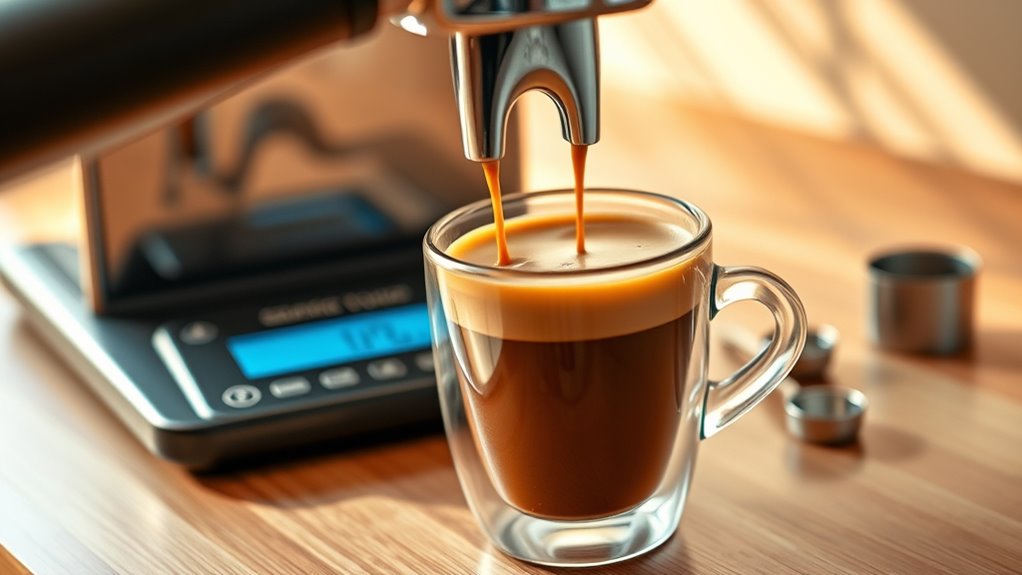
You’ll want to use a coffee-to-water ratio between 1:3 and 1:4 for a proper lungo. That usually means doubling the water volume compared to a standard espresso.
This ratio is important because it affects the extraction time and, in turn, the flavor profile.
With this balance, you get a milder, less concentrated cup. Plus, if you keep precise control over the water volume and timing, you can extract just the right mix of oils and acids without going too far and over-extracting.
Maintaining this ratio alongside the ideal brew time of 25–35 seconds helps avoid bitterness and sourness in your espresso.
Standard Brew Ratios
Although the coffee-to-water ratio for a lungo espresso varies slightly depending on preference and equipment, it generally falls between 1:3 and 1:4. This means you’ll use about 18 grams of coffee brewed with 54 to 72 ml of water. The resulting volume typically reaches 80-110 ml, depending on your machine’s settings and personal taste.
Most espresso machines double the water volume compared to a standard espresso shot, which uses a 1:2 ratio (18 grams to 36 ml).
By extending the water during extraction, you increase the brew ratio, creating a longer shot. Maintaining these precise ratios guarantees proper extraction, preventing under-extraction that yields weak coffee or over-extraction that can lead to bitterness.
Accurate water dosing is key to achieving a consistent lungo brew. So, paying attention to these details really makes a difference in your cup. The process often requires a slightly coarser grind to ensure smooth water flow and avoid bitterness during the longer extraction.
Impact On Flavor
When you increase the water volume during a lungo extraction, you dilute the coffee’s concentration, resulting in a milder flavor profile compared to a standard espresso. The coffee-to-water ratio for a lungo typically ranges from 1:3 to 1:4, contrasting with the espresso’s 1:2 ratio. This adjustment impacts flavor markedly.
Higher water ratios reduce intensity, producing a lighter, less concentrated taste. Using about 60-80ml of water for a double shot balances dilution with flavor clarity. More water extracts additional compounds, which can subtly alter bitterness and body without overpowering.
Tailoring this ratio allows you to fine-tune the lungo’s profile, achieving the desired mildness or richness. Adjusting the coffee-to-water ratio is key to mastering your ideal lungo flavor balance. It is also important to consider the caffeine content variations that come with different extraction volumes and methods to manage your caffeine intake effectively.
Extraction Time Effects
How does extraction time influence the coffee-to-water ratio in a lungo? You’ll find the typical ratio ranges from 1:3 to 1:4, meaning more water passes through the coffee grounds than in a standard espresso.
Extending the extraction time to about 40-50 seconds allows this larger water volume to interact fully with the grounds. This longer contact extracts more compounds, including bitter elements and pronounced roast flavors.
If you extract for too long, the bitterness intensifies, resulting in a harsh taste. Conversely, a shorter extraction yields a weak, underdeveloped cup.
So, keeping your extraction time within that 40-50 second window helps you balance flavor intensity and avoid unwanted bitterness.
That way, you get the ideal lungo profile with the correct coffee-to-water ratio. Adjusting grind size and tamping pressure during extraction is essential to prevent over-extraction and maintain flavor balance.
How Longer Espresso Extraction Affects Lungo’s Flavor and Aroma
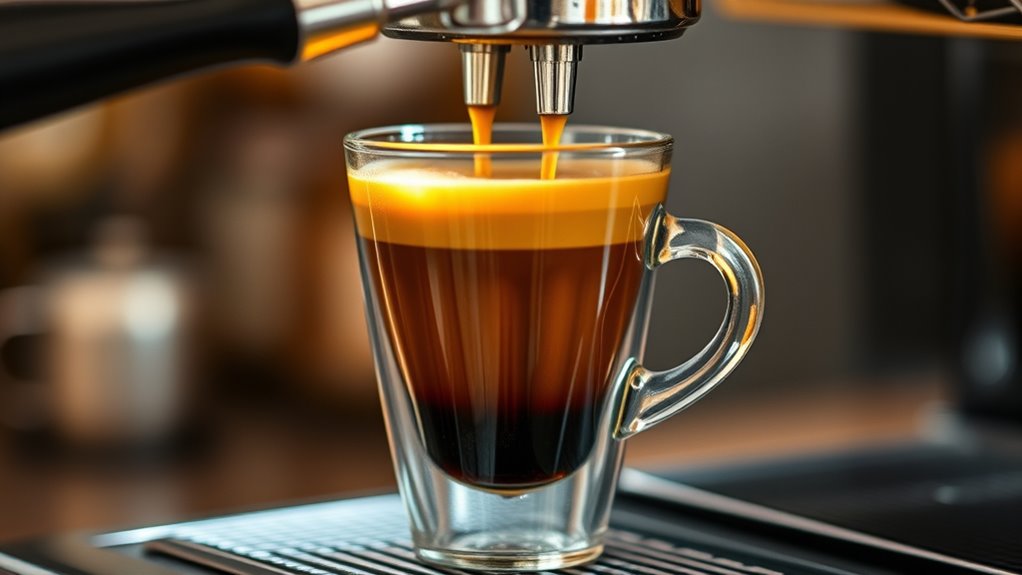
Because a lungo espresso undergoes a longer extraction, more water passes through the coffee grounds, drawing out a wider range of soluble compounds that shape its flavor and aroma. You’ll notice these key effects:
Increased extraction pulls out roasted and bitter notes, overshadowing delicate fruity and acidic flavors. Extended contact releases more caffeine and complex aromatic oils, intensifying both strength and fragrance.
Over-extraction risks introducing a slightly bitter or tart taste, which subtly alters the aroma profile.
Precise control of extraction time balances flavor intensity with aromatic complexity. This balance is vital for achieving your desired sensory outcome.
Measuring espresso yield by weight rather than volume is essential to accurately control extraction and maintain flavor consistency during the lungo process.
Why Lungo Tastes Milder Yet Bittersweet
Although a lungo espresso uses more water and a longer extraction time, it results in a milder flavor because the coffee concentration is diluted. The increased water volume reduces the intensity and softens the overall taste compared to a standard espresso.
But here’s the thing: the extended extraction pulls more caffeine and bitter compounds from the grounds. That’s why you get those pronounced roasted and bittersweet notes.
At the same time, the longer contact with water extracts fewer of the coffee’s intense oils and aromatic compounds, which means less sharpness and complexity. However, unlike true espresso, brewing methods like Keurig cannot produce the high-pressure extraction necessary to replicate the crema and full-bodied texture of an authentic lungo.
How to Adjust Grind Size and Machine Settings for the Perfect Lungo
To craft the perfect lungo, start by adjusting your grind size to be a bit coarser than what you’d use for a standard espresso. This helps avoid over-extraction during the longer brewing time.
Next, set your machine’s water volume to about 60ml and aim for an extraction time close to one minute.
Keep the pressure steady around 9 bars to get the best results.
From there, it’s all about fine-tuning. Make small adjustments and taste after each change until you find that balanced, smooth lungo flavor you’re after.
Remember that grind size directly affects extraction time and flavor balance, so precise adjustments are key to achieving optimal results.
Grind Size Adjustment
When dialing in your grind size for a lungo, you’ll want to use a slightly coarser setting than for a standard espresso. This helps avoid over-extraction during the extended extraction time. Fine-tuning grind size is critical to balance extraction and flavor.
Follow these steps:
- Start with a grind slightly coarser than your espresso setting.
- Extract about 60ml of water over roughly one minute.
- Taste and adjust: if bitter, coarsen the grind; if weak, grind finer.
- Monitor and tweak grind size carefully to prevent over- or under-extraction.
This approach optimizes the longer brewing process inherent in a lungo. It produces a smoother, well-balanced cup without unwanted bitterness or thinness. Just take it step by step, and you’ll nail the perfect lungo every time. Remember that grind size affects extraction time and flavor balance, so precise adjustments are key to achieving the ideal lungo shot.
Machine Settings Calibration
Since achieving the perfect lungo depends on a delicate balance of variables, you’ll need to carefully calibrate your machine settings alongside your grind size.
Start by setting the grind slightly coarser than a standard espresso to avoid over-extraction during the longer brew. Adjust your machine’s water volume to about 60ml or select the lungo preset if available.
Set the extraction time to roughly one minute, ensuring a steady water flow through the grounds. If your machine allows, maintain pressure near 9 bars to optimize crema and flavor.
Continuously monitor your results and fine-tune these parameters.
This precise calibration guarantees a balanced, milder lungo, highlighting nuanced flavors without bitterness or over-extraction. It’s all about achieving that ideal lungo espresso experience.
How Nespresso and Other Machines Brew Lungo
Although brewing a lungo requires more water than a standard espresso, Nespresso machines handle this automatically by increasing the water volume to about 60ml and extending extraction time to 40-50 seconds.
When you brew a lungo, here’s what happens technically:
- The machine doubles water volume compared to a standard 30ml espresso shot.
- Water flow rate is adjusted to maintain consistent extraction over the longer duration.
- Capsules designed for lungo contain blends optimized for extended extraction, preserving flavor balance.
- On manual or semi-automatic machines, you control water volume or stop extraction manually to achieve the lungo specification.
This precise control guarantees a lungo’s characteristic intensity without over-extracting. It delivers a balanced, smooth cup every time. The increased water volume in a lungo results in a lower caffeine concentration per ounce compared to a standard espresso shot.
How Lungo Compares to Ristretto and Traditional Espresso Shots
Understanding how lungo differs from other espresso variations helps you appreciate its unique brewing parameters and flavor profile. Lungo uses the same coffee grounds as traditional espresso but with more water (around 60ml) and a longer extraction time. This yields a larger, milder brew that’s easy to enjoy.
Ristretto, on the other hand, uses less water (15-20ml) and a shorter extraction. This results in a concentrated, intense shot that’s full of flavor. Traditional espresso strikes a balance between strength and taste with a 1:2 coffee-to-water ratio and a 25-30 second extraction time.
| Variation | Water Volume | Extraction Time | Flavor Profile |
|---|---|---|---|
| Ristretto | 15-20 ml | Shorter | Intense, concentrated |
| Espresso | ~30 ml | 25-30 seconds | Balanced, robust |
| Lungo | ~60 ml | Longer | Milder, diluted |
When and Why to Choose a Lungo Over Other Espresso Variations
When you want a larger coffee with a milder flavor that still delivers caffeine, choosing a lungo makes sense. This espresso variation offers a longer extraction time, producing a more diluted yet complex cup.
Opt for a lungo when you desire a larger, milder espresso that still packs a caffeine punch.
You should pick a lungo over other espresso shots when:
- You prefer a less intense, more drinkable coffee that maintains caffeine levels.
- You want to highlight lighter roasts and subtle aromatic notes through extended extraction.
- You need a versatile base for diluted coffee drinks like Americanos or long black.
- You seek a balanced bitterness and prolonged flavor experience, especially aligned with European traditions.
Selecting a lungo efficiently balances volume and taste. It’s ideal for those who want more than a traditional espresso’s concentrated punch.
Popular Lungo Coffee Drinks to Try at Home
Exploring popular lungo coffee drinks at home allows you to tailor the extended extraction process to your taste preferences. You can adjust your espresso machine’s water volume to about 60ml, doubling a standard shot for a milder, more aromatic cup. Using capsules like Linizio Lungo or Vivalto Lungo guarantees consistent flavor extraction.
Feel free to experiment with roast levels and grind size to control bitterness and strength. While many enjoy lungo black to appreciate nuanced flavors, you can also add milk or flavorings to customize your drink.
| Drink Name | Flavor Profile |
|---|---|
| Vivalto Lungo | Balanced floral and fruity |
| Fortissio Lungo | Rich, roasted |
| Linizio Lungo | Smooth, mild |
| Custom Blend | Variable, based on roast/grind |
Frequently Asked Questions
Can I Use a Lungo Espresso for Iced Coffee Recipes?
Yes, you can use a lungo espresso for iced coffee recipes. It offers a milder, less concentrated flavor and blends well with ice. This means it produces a smoother taste overall.
For the best results, chill it beforehand. Or, you can brew it directly over ice—it’s totally up to you! Both ways work great.
How Does Water Temperature Impact Lungo Extraction?
You might think hotter water always means better extraction, but it’s a balance. Using 93-96°C optimizes aromatic oils and solids. This helps avoid under-extraction’s sourness or over-extraction’s bitterness.
That way, you get your lungo’s rich, smooth flavor every time. It’s all about finding that sweet spot with the temperature.
Are There Specific Coffee Beans Ideal for Lungo Espresso?
You should choose medium to dark roasted Arabica beans for balanced clarity during longer extraction. Single-origin or espresso-labeled beans work well. Adding Robusta boosts body and caffeine, enhancing your lungo’s strength and complexity.
It’s all about finding that sweet spot between flavor and intensity. If you like a bit more kick, a touch of Robusta can really do the trick. But if you prefer smoother, cleaner notes, sticking with quality Arabica is the way to go.
What Is the Best Cup Size for Serving a Lungo?
You should use a 3 to 4-ounce (80 to 120 ml) cup for serving a lungo. This size keeps the flavor balanced just right and helps prevent any spills. It’s perfect for handling the extra volume of a lungo without messing with the espresso’s aroma or strength.
Choosing the right cup really makes a difference. It ensures you get the full experience of the coffee without it being too strong or too weak. Plus, it looks good and feels comfortable to hold.
Can Lungo Espresso Help Reduce Espresso Machine Maintenance?
Yes, brewing lungo espresso reduces machine wear by using gentler water flow and longer extraction. This helps minimize residue buildup and strain on components.
By doing this, you can extend cleaning intervals and keep your machine running smoothly. It also helps maintain consistent pressure for the ideal espresso machine performance.
Conclusion
Now that you know a lungo is an espresso pulled with more water and time, you can tailor your grind size and machine settings for that perfect, bittersweet balance. Remember, it’s not just about quantity but quality. Slow and steady wins the race in revealing its unique flavor profile.
Whether you’re using a Nespresso or a traditional machine, mastering lungo brewing elevates your coffee game beyond the regular espresso shot. Give it a try and see how it changes your coffee experience!