A standard double shot of espresso is about 2 ounces, roughly twice the volume of a single shot. It uses 14–18 grams of finely ground coffee, producing a rich, concentrated espresso with 60 to 100 milligrams of caffeine.
Keep in mind, shot sizes can vary depending on the café, machine, and technique, which can affect the flavor and strength. If you want to master the art of the perfect double shot, exploring grind, extraction, and measurement details will make all the difference.
What Is a Double Shot of Espresso?
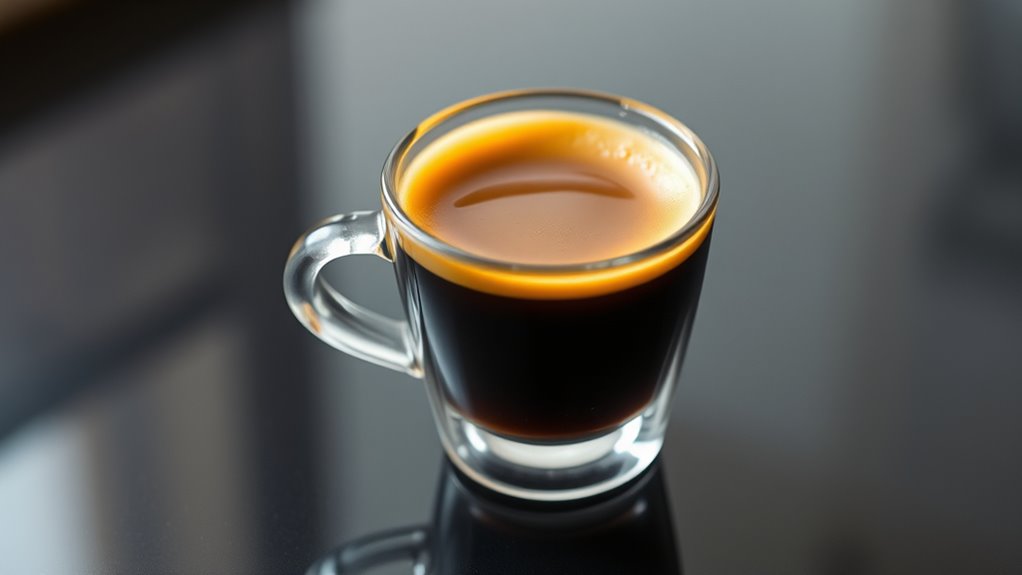
Although espresso shots come in various sizes, a double shot is the standard you’ll encounter most often. When you order one, you’re getting about 14–18 grams of finely ground coffee extracted through a standard espresso machine.
Most cafes stick to around 14 grams, but some use up to 20 grams for a stronger brew.
This process produces approximately 2 fluid ounces (60 ml) of rich, concentrated espresso. You’ll find double shots as the base for many popular drinks like lattes and cappuccinos.
Plus, a double shot packs a caffeine punch, generally ranging from 60 to 100 milligrams.
Measuring espresso by weight in grams ensures greater precision and consistency in your brew.
Standard Size: How Many Ounces Are in a Double Shot
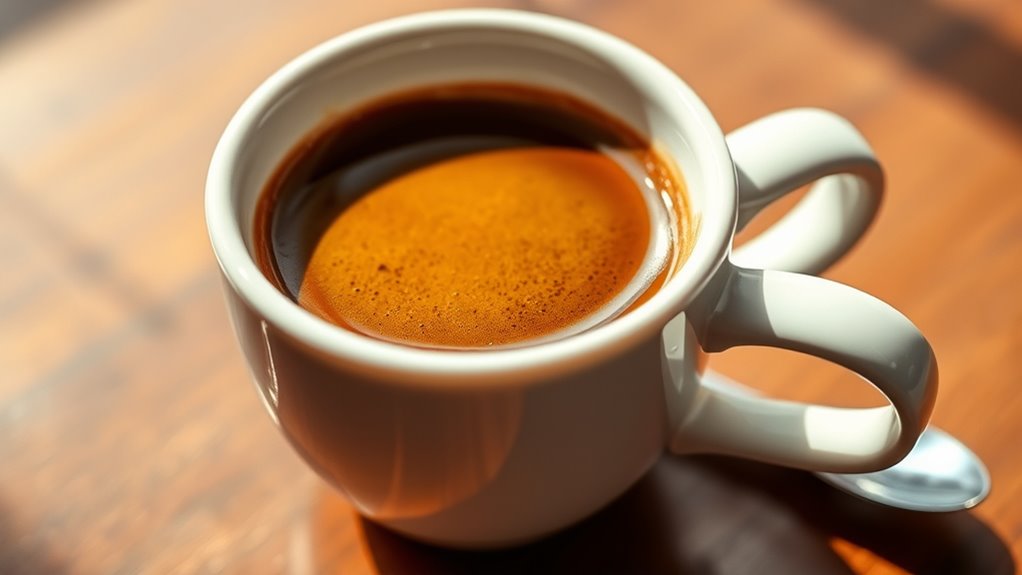
When you order a double shot of espresso, you’re typically getting about 2 ounces of liquid, made from 14 to 18 grams of finely ground coffee.
This size is roughly twice that of a single shot, which is about 1 ounce.
A double shot is approximately twice the size of a single, about 1 ounce.
The double shot serves as the standard for most espresso-based drinks like lattes and cappuccinos, providing a balanced, robust flavor and caffeine kick.
While some cafés might pull a slightly smaller or larger shot, the typical range for a double shot falls between 1.75 and 2.25 ounces.
Knowing this standard size helps you understand what to expect when you order, making sure your espresso experience matches your taste and strength preferences every time.
Regular maintenance such as descaling your espresso machine is essential to preserve the quality and flavor of your espresso over time.
Why Double Shot Sizes Vary Between Cafes and Machines
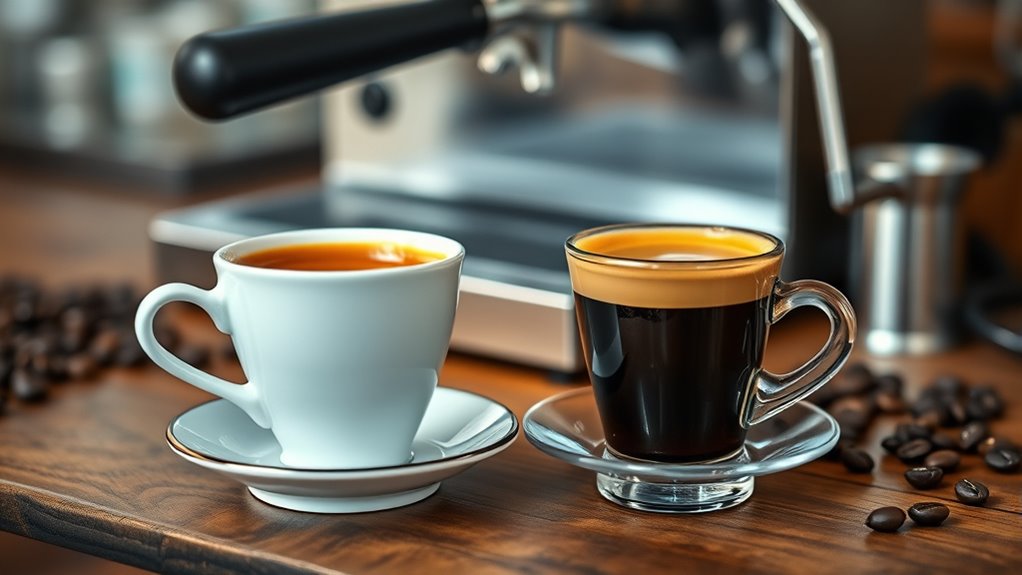
Because espresso machines and café practices vary widely, the size of a double shot can differ considerably from one place to another. You might find a double shot ranging from 1 to 2 ounces depending on the café’s standards or machine settings. Many cafés stick to 2 ounces, while others prefer about 1.5 ounces, reflecting their measurement methods.
Factors like machine pressure, basket size, and water volume play a big role in this variation. Plus, baristas often tweak shot sizes to fit local tastes or specific drink recipes.
When you order a double shot, its volume isn’t just about a fixed number. It’s shaped by equipment differences and the barista’s technique, making each experience a bit unique. Additionally, maintaining temperature stability during extraction is crucial for consistent flavor and shot quality.
The Difference Between Volume and Weight in Espresso Shots
Understanding the difference between volume and weight in espresso shots helps you appreciate why two double shots may look similar but taste quite different. Volume measures the liquid amount in fluid ounces, usually around 2 ounces for a double shot.
Weight, on the other hand, refers to the grams of coffee grounds and brewed espresso.
Here’s why this matters:
- A double shot uses about 14-18 grams of coffee grounds, but the brewed espresso weighs roughly 28-36 grams.
- Crema affects volume by adding to the liquid’s appearance without increasing weight.
- Measuring by weight ensures you get consistent strength and flavor, unlike relying solely on volume, which can vary.
Consistent extraction timing, typically between 25-30 seconds from pump start, is essential to maintain that balance in flavor and strength by controlling factors like grind size and tamping pressure, which directly influence the shot’s weight and quality during brewing. This principle is fundamental to espresso extraction time and flavor consistency.
How Grind and Extraction Affect Your Double Shot Espresso
You’ll find that grind size is super important when it comes to how your double shot extracts. It directly affects the flavor and strength of your espresso.
Extraction time usually falls between 20 to 30 seconds, and it works together with grind consistency to help you nail that perfect balance.
Slight adjustments in grind size within the ideal range of 200-400 microns can dramatically impact your shot timing and flavor clarity.
Grind Size Importance
Although it might seem subtle, the grind size plays an essential role in shaping the flavor and texture of your double shot espresso. You want a very fine grind, similar to powdered sugar, to guarantee proper resistance during extraction.
Here’s why it matters: Fine grinds increase resistance, extending extraction time and concentrating flavors. Too coarse grinds cause under-extraction, leading to sourness and a weak shot. Overly fine grinds risk over-extraction, creating bitterness and slow flow.
Consistency is fundamental. Uneven grind sizes lead to inconsistent volume, strength, and flavor. Using a properly calibrated grinder helps you hit the sweet spot.
Typically, you want to extract your double shot in 25-30 seconds, securing the rich, balanced espresso you’re aiming for every time.
Adjusting grind size in conjunction with tamping pressure is key to balancing flow rate and achieving optimal extraction.
Extraction Time Impact
When you adjust the grind size, you directly control the extraction time, which dramatically influences your double shot’s flavor and strength. A fine grind slows water flow, extending extraction time. But if it’s too fine, you risk over-extraction and bitterness.
On the other hand, a coarser grind speeds up water flow and shortens extraction. This can cause under-extraction, leaving your espresso weak and sour.
Ideally, your double shot should extract within 20 to 30 seconds.
If it’s faster or slower than that, it’s a sign you need to tweak your grind or tamping pressure. Balancing these factors ensures consistent extraction, ideal shot volume, and the rich, bold taste you expect from a well-pulled double shot.
Maintaining the proper espresso extraction ratio is also crucial for achieving the desired flavor and body in your double shot.
Flavor Variation Factors
Because grind size and extraction time play such essential roles, they directly shape the flavor profile of your double shot espresso. You must regulate these factors carefully to avoid bitterness or sourness. Here are key points to keep in mind:
- Finer grinds increase resistance, producing a more concentrated espresso, but too fine can cause over-extraction and bitterness.
- Coarser grinds let water flow too fast, leading to under-extraction, sourness, and weak flavor.
- Maintaining proper extraction time (20-30 seconds) ensures balanced strength and flavor.
Additionally, grind consistency and tamping pressure affect how evenly your espresso extracts, influencing taste uniformity. Adjusting these elements lets you tailor your double shot to your preferred flavor. That way, every sip is satisfying.
Remember, factors like extraction time not only influence flavor but also impact the caffeine content in your espresso.
Comparing Single, Double, Ristretto, and Lungo Shot Sizes
You’ll notice that single, double, ristretto, and lungo shots differ not just in size but also in flavor intensity.
For example, a ristretto gives you a smaller, more concentrated taste.
On the other hand, a lungo delivers a larger, milder cup.
Understanding the impact of extraction quality is essential to achieving the best flavor from each type of espresso shot.
Shot Size Differences
How do espresso shot sizes differ, and what impact do these differences have on your coffee experience? Understanding shot sizes helps you choose the right espresso strength and volume. Here’s a quick comparison:
- Single Shot: About 1 fluid ounce (30 ml). It’s a smaller, more concentrated serving, ideal if you want a quick, strong espresso.
- Double Shot: Typically 2 fluid ounces (60 ml). This is the standard in many cafés and doubles the volume of a single shot, offering a balanced espresso experience.
- Ristretto and Lungo Shots: Ristretto is shorter (0.5–0.75 ounces), highly concentrated, while Lungo is longer (1.5–3 ounces), milder with more water.
Knowing these differences helps you tailor your espresso to your taste and caffeine needs. Proper dosing and extraction ensure the flavor and strength of each shot are consistent and well-balanced.
Flavor Profiles Comparison
Understanding the different shot sizes sets the stage for appreciating how each affects flavor. A single shot, about 1 ounce, offers a concentrated but balanced taste.
When you double it to roughly 2 ounces, you get a robust, well-rounded flavor that’s stronger but still smooth.
Ristretto shots, much smaller at 0.5 to 0.75 ounces, pack intense sweetness and bold richness because of their shorter extraction and less water.
On the other hand, lungo shots stretch to 1.5 to 3 ounces, resulting in a milder, more bitter cup with lighter flavor due to longer extraction times.
Each size changes how much flavor and strength you experience, so picking one depends on whether you want intensity, balance, or a gentler sip.
It really comes down to what kind of coffee moment you’re after.
How Double Shots Affect Espresso Flavor and Strength
Although a double shot of espresso uses twice the coffee grounds and yields about 2 ounces of liquid, it delivers a noticeably stronger and more complex flavor than a single shot.
When you choose a double shot, you’ll notice these key effects:
- Enhanced Strength: You get roughly 60-100 mg of caffeine, giving your espresso a powerful boost.
- Richer Flavor: The larger volume extracts a fuller body and more nuanced taste, making it more balanced.
- Intensified Aroma: The double shot amplifies the espresso’s fragrance, heightening your sensory experience.
Why You Should Measure Espresso by Weight, Not Ounces
When you opt for a double shot, you’re already focusing on getting the most flavor and strength from your espresso. Measuring by weight, not ounces, ensures you capture that flavor consistently. Volume can be misleading. Crema, evaporation, and cup size all affect how much liquid you see.
Choosing a double shot means prioritizing flavor—measuring by weight, not volume, ensures consistent espresso quality.
Instead, weighing about 14-18 grams of coffee grounds and monitoring the espresso’s weight gives you precise control over extraction. This accuracy helps you maintain the ideal brew ratio, usually 1:2 coffee to liquid, which is key to balanced taste.
By using a scale, you can replicate the same quality shot every time. That means no more guesswork. Each espresso delivers the rich, bold flavor you’re aiming for.
It’s a simple change that makes a big difference.
Tips for Pulling the Perfect Double Shot Every Time
To pull the perfect double shot every time, you’ll need to focus on several key factors that influence flavor and consistency. Start by using a double basket that holds 14–18 grams of coffee. This guarantees the right dose.
Next, grind your coffee finely, like powdered sugar, to balance extraction and water flow.
Finally, aim for a brew time between 20–30 seconds to capture ideal flavors without bitterness.
Here are three essential tips:
- Distribute and tamp the coffee evenly to avoid channeling and ensure uniform extraction.
- Calibrate your espresso machine to maintain consistent pressure around 9 bars.
- Monitor extraction time closely to prevent over or under-extraction.
Mastering these steps guarantees a rich, balanced double shot every time you brew.
Give it a try and see how much better your espresso gets!
Frequently Asked Questions
Can I Use a Double Shot in Iced Espresso Drinks?
Yes, you can use a double shot in iced espresso drinks. It boosts flavor and caffeine, balancing milk and ice perfectly.
This makes your iced latte or Americano more robust and satisfying every time you enjoy it. It’s a simple way to kick up the taste without any extra fuss. Give it a try next time you want a little extra kick!
How Does Water Temperature Impact a Double Shot?
Like a knight wielding Excalibur, you need the right water temperature, 195°F to 205°F, to extract ideal flavors. Too cold, and it’s sour. Too hot, and it’s bitter.
Keep it steady for a balanced, rich espresso. It’s all about finding that perfect middle ground. That’s what makes your double shot shine.
Are Double Shots Better for Caffeine Content?
Yes, double shots deliver more caffeine, giving you a stronger boost than a single shot.
If you want a consistent, higher caffeine dose, especially in larger drinks, double shots are definitely the better choice for you.
Can I Make a Double Shot With Instant Coffee?
You absolutely can make a double shot with instant coffee, though it won’t fool any barista. Just dissolve about 4 teaspoons in 2 ounces of hot water, adjusting strength to your taste.
Easy and quick! It’s a handy trick when you want something strong without the fuss. Just remember, it’s not quite the same as a real espresso shot, but it does the job in a pinch.
How Long Should a Double Shot Extraction Take?
Your double shot extraction should take about 20 to 30 seconds. If it’s quicker, the flavor might be weak. If it’s slower, it could taste bitter.
You’ll want to adjust the grind size and pressure to hit that perfect timing consistently. It’s all about finding the right balance so your espresso tastes just right every time.
Conclusion
Now that you know a double shot of espresso typically pours around 2 ounces, you’re equipped to savor every drop like a seasoned barista. Remember, espresso’s magic isn’t just in the volume but in the precise weight and extraction. Like a finely tuned instrument, your grind and technique shape the perfect shot.
So, measure carefully, pull confidently, and enjoy the rich, bold flavor that only a well-crafted double shot can deliver.