You can match the caffeine in an 8-ounce cup of brewed coffee with about one and a half to two espresso shots. A single 1-ounce shot packs roughly 63 mg of caffeine, compared to coffee’s 96 mg per cup.
Espresso delivers more caffeine per ounce but comes in smaller servings, so shot count matters more than volume. Factors like shot type and brewing method also influence caffeine levels.
Keep going, and you’ll uncover how to fine-tune your caffeine kick perfectly.
How Many Espresso Shots Equal the Caffeine in a Cup of Coffee?
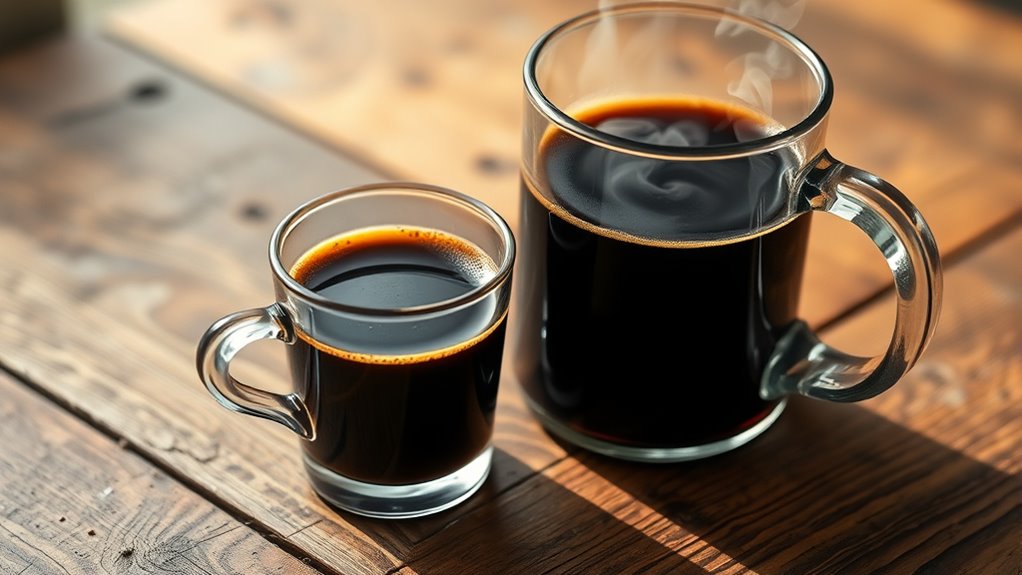
While espresso shots pack a punch in a small volume, you generally need about 1.5 to 2 shots of espresso to match the caffeine in an 8 oz cup of brewed coffee, which contains roughly 96 mg of caffeine.
A single 1 oz shot of espresso delivers around 63 mg of caffeine, so to equal a standard coffee’s caffeine, you’d need about 1.5 double shots. That’s roughly 126 mg of caffeine.
Keep in mind, the caffeine content in brewed coffee can vary depending on strength, but it usually equates to about 1.5 to 2 espresso shots.
Since espresso is concentrated, fewer ounces deliver similar caffeine amounts.
But your total caffeine intake really depends on how many shots or how much coffee you actually drink.
The extraction time of espresso shots, typically 25-30 seconds, plays a key role in determining the caffeine concentration and flavor balance.
Why Espresso Has More Caffeine Per Ounce But Less Per Serving
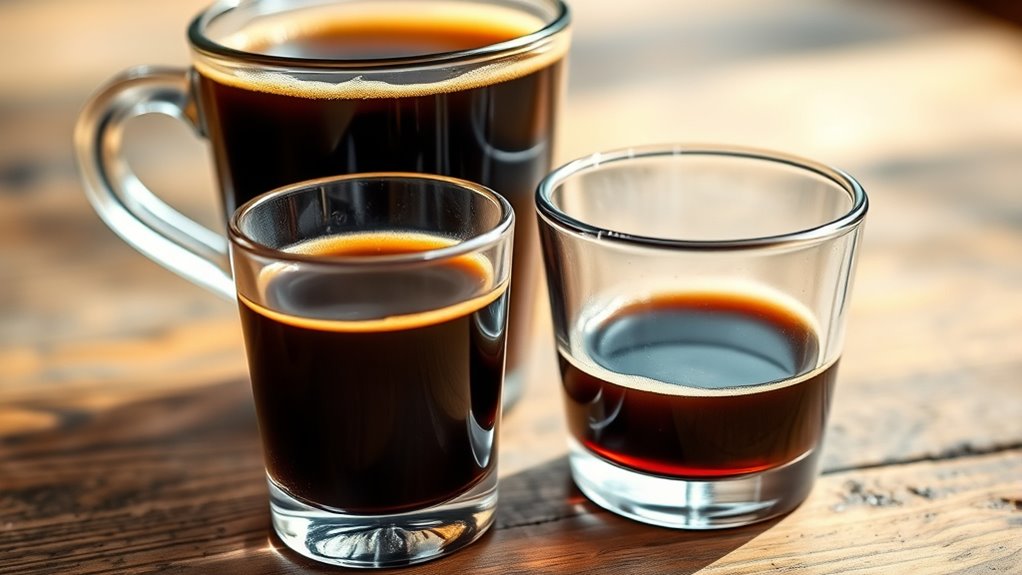
Because espresso is brewed under high pressure and for a shorter time, it packs about 63 mg of caffeine per ounce, which is a lot more than drip coffee’s 12 mg per ounce. This means espresso is highly concentrated and delivers a quick, intense caffeine boost.
Espresso’s high-pressure brew yields 63 mg of caffeine per ounce, far more than drip coffee’s 12 mg.
But since a typical espresso serving is just one ounce, the total caffeine in a shot is roughly the same as in an 8-ounce cup of drip coffee.
So, you get more caffeine per ounce, but less caffeine overall per serving because the volume is much smaller.
Even though espresso feels stronger, the total caffeine you consume depends on how many shots you drink.
Knowing this helps you understand your caffeine intake better without overestimating espresso’s punch.
Additionally, the extraction time of espresso, typically 25-30 seconds, plays a key role in its caffeine concentration and flavor profile.
How Brewing Method and Shot Size Affect Espresso Caffeine
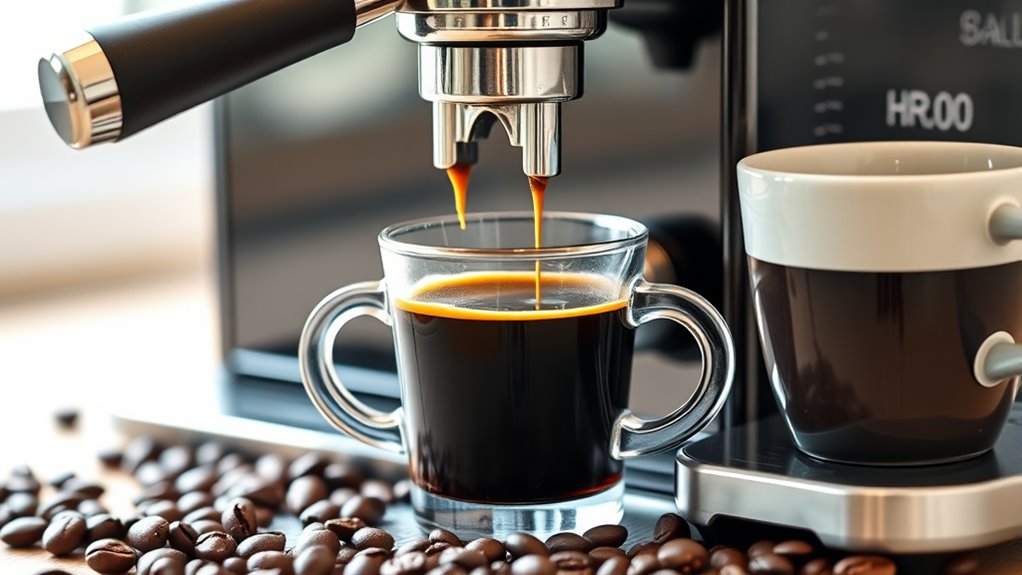
If you want to understand how much caffeine you’re getting from your espresso, you need to take into account both the brewing method and shot size. A standard 1-ounce shot packs about 63 mg of caffeine, but this varies considerably.
When you increase shot volume, like in a lungo, you boost total caffeine but lower concentration per ounce. The brewing method also matters. Espresso’s short extraction time (20-30 seconds) pulls less caffeine than longer methods like cold brew.
You can raise caffeine levels without changing shot size by using more coffee grounds or a finer grind. Plus, factors like brewing pressure, temperature, and grind consistency play vital roles in caffeine yield.
Knowing this helps you tailor your espresso to your caffeine needs. So, depending on what you want, you can tweak your brew for just the right caffeine kick.
Comparing Single, Double, Ristretto, and Lungo Shots for Caffeine
Understanding how different espresso shot types compare in caffeine content can help you choose the right option for your energy needs.
A single shot of espresso, about 1 ounce, packs roughly 63 mg of caffeine, while a double shot doubles that to approximately 126 mg, which is slightly more than a typical 8-ounce cup of coffee.
Ristretto shots, though smaller and more concentrated, contain about the same caffeine as a single shot but deliver a richer flavor because they use less water.
Lungo shots use more water, around 2 ounces, extracting between 80 to 100 mg of caffeine. Sometimes, that’s even more than a standard coffee cup.
Keep in mind that factors like bean type and brewing method impact caffeine levels.
But generally, 1 to 2 espresso shots align closely with coffee’s caffeine content.
How to Estimate Your Caffeine Intake From Espresso Drinks
To figure out how much caffeine you’re getting from espresso drinks, just multiply the number of shots by about 63 mg each. It’s pretty straightforward.
Keep in mind, a double shot can actually have more caffeine than a regular 8 oz cup of brewed coffee. So, counting the shots is way more important than just looking at the size of your drink.
Also, things like the type of beans and how the espresso is brewed can change the caffeine amount a bit. But overall, using the shot count gives you the best starting point to estimate your intake.
Espresso’s extraction techniques can subtly influence both caffeine and calorie content, so proper brewing is key to consistency.
Calculating Espresso Caffeine
How much caffeine are you really getting from your espresso drink? To calculate it, start with the fact that a standard 1 oz shot of espresso contains about 63 mg of caffeine. Multiply the number of shots in your drink by 63 mg to estimate your total caffeine intake.
For example, if your espresso drink has two shots, you’re consuming roughly 126 mg of caffeine. Comparing this to an 8 oz cup of coffee, which contains about 96 mg, you can see that just 1.5 shots of espresso roughly equal a full cup of coffee’s caffeine.
Keep in mind, these numbers are approximate since factors like bean type and grind can cause variation. Still, knowing your shot count helps you track caffeine intake accurately.
Factors Affecting Intake
Since the caffeine content in espresso isn’t fixed, you’ll need to take into account several factors to estimate your intake accurately. A single espresso shot averages about 63 mg of caffeine, but this can vary widely. The type of coffee bean, grind size, and brewing time all influence how much caffeine gets extracted.
For example, a ristretto shot uses less water and may have a more concentrated caffeine level, while a lungo uses more water and can alter the caffeine content. To estimate your intake, multiply the number of shots by 63 mg, but remember, preparation methods can cause fluctuations.
Always check your drink’s shot count because volume alone won’t tell you how much caffeine you’re consuming. It’s a good habit to keep in mind so you don’t accidentally take in more caffeine than you want. Keep in mind that espresso powder typically contains 30 to 60 milligrams of caffeine per teaspoon, which can contribute to your overall caffeine intake when used in recipes.
Choosing Between Espresso and Drip Coffee for Caffeine Needs
Although espresso packs a stronger caffeine punch per ounce, you’ll find that a standard 8 oz cup of drip coffee generally delivers more caffeine overall due to its larger volume. If you want a quick, intense boost, espresso is your go-to. However, the extraction pressure used in espresso brewing is key to its concentrated flavor and caffeine content.
But for steady, longer-lasting energy, drip coffee works better.
| Beverage | Caffeine Content (mg) | Serving Size |
|---|---|---|
| Drip Coffee | ~96 | 8 oz cup |
| Single Espresso | ~63 | 1 shot (1 oz) |
| Double Espresso | ~126 | 2 shots (2 oz) |
Frequently Asked Questions
Does Decaffeinated Espresso Have Any Caffeine?
Yes, decaffeinated espresso still contains a small amount of caffeine, usually around 1 mg per shot. It’s much less than regular espresso, but you should check labels or ask your barista for exact content.
Just so you know, it’s not completely caffeine-free, but the amount is pretty minimal. So if you’re sensitive to caffeine, decaf is still a good option!
How Does Caffeine Affect Sleep After Drinking Espresso?
You know what they say: “Early to bed, early to rise.” Caffeine from espresso can keep you alert, delaying sleep and reducing quality.
Can Espresso Shots Cause Caffeine Addiction?
Yes, espresso shots can cause caffeine addiction if you drink them regularly. Their high caffeine content stimulates your brain intensely, making you more likely to develop dependence.
You might also experience withdrawal symptoms if you suddenly cut back. So, it’s something to be aware of if you’re a daily espresso drinker. Just keep an eye on how much caffeine you consume.
What Are the Health Benefits of Espresso Caffeine?
You’ll enjoy espresso’s caffeine boosting your focus, physical performance, and insulin sensitivity. It also delivers antioxidants that reduce inflammation and lower risks of neurodegenerative and cardiovascular diseases when you consume it moderately.
Does Adding Milk Affect Caffeine Absorption From Espresso?
Oh sure, adding milk to your espresso will magically block caffeine like a superhero shield. Except it doesn’t.
You’ll still absorb the same caffeine amount. Milk just slightly slows the buzz, not the total caffeine kick.
Conclusion
Think of espresso shots as tiny, powerful sparks. Each one packs a punch, but it takes several to light up the same caffeine fire as a full cup of coffee.
Knowing how brewing methods and shot sizes shift your caffeine load helps you choose the right spark for your day. Whether you want a quick jolt or a steady burn, understanding these differences lets you fuel your energy just right. It’s like striking the perfect balance between flame and warmth.