Yes, you can make espresso without a machine by using tools like a Moka pot, AeroPress, portable manual espresso makers, or a French press. Start with freshly roasted, finely ground coffee for the best flavor.
Each method uses pressure or steeping techniques to extract rich, concentrated coffee, mimicking espresso’s intensity. Whether you’re brewing at home or on the go, these options offer convenient ways to enjoy strong espresso-style coffee.
Give these methods a try and explore them further to perfect your craft. It’s easier than you might think!
Choose the Right Coffee Beans for Homemade Espresso
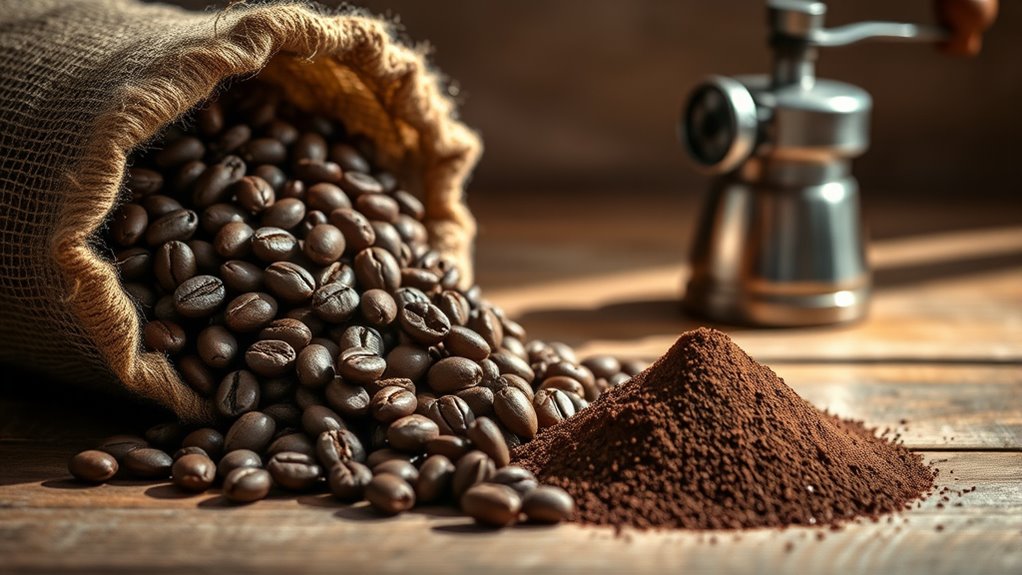
When making espresso at home, choosing the right coffee beans is essential for achieving that rich, bold flavor you expect. You should use freshly roasted, high-quality beans, ideally labeled as espresso or dark roast.
Opt for medium to dark roasts because they unlock the deep, intense flavors characteristic of espresso.
Pay attention to grind size. Beans ground uniformly ensure even extraction, which makes your espresso smooth and balanced.
Single-origin beans or carefully crafted espresso blends can elevate your cup with complex, nuanced flavors.
To keep your beans fresh, store them in an airtight container, away from light and moisture.
This preserves their aromatic oils, which are crucial for a vibrant espresso shot.
Selecting beans with care sets the foundation for a satisfying homemade espresso every time.
Using a burr grinder is recommended to achieve the consistent grind size necessary for optimal extraction and flavor.
Make Espresso With a Moka Pot: Classic Pressure Brewing
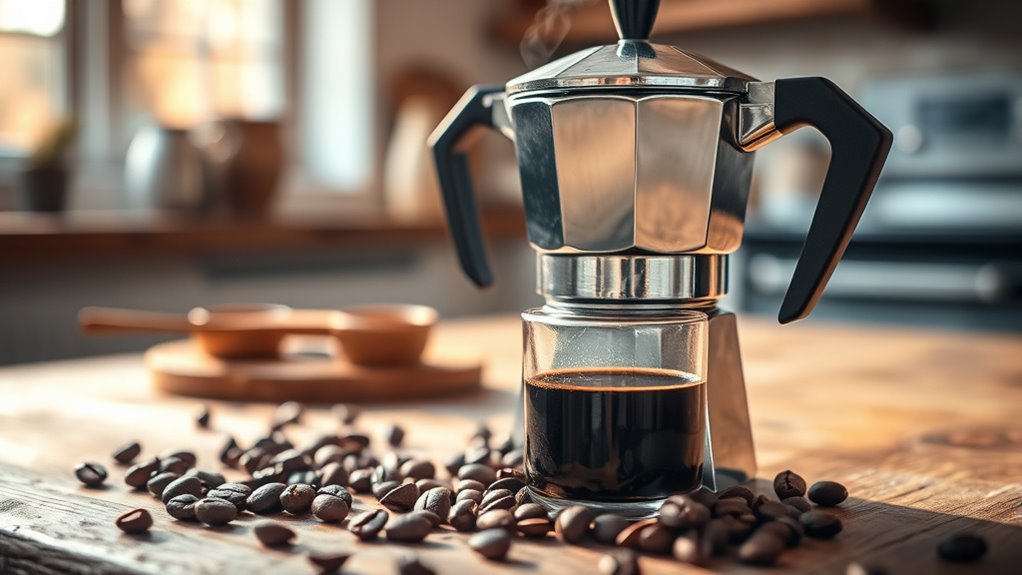
Although a Moka pot doesn’t produce true espresso, it uses steam pressure to push hot water through finely ground coffee. This creates a rich, concentrated brew that closely mimics espresso’s bold flavor.
To start, fill the lower chamber with about 3½ oz of hot water, stopping just below the safety valve. Then, insert the filter basket packed with freshly ground, high-quality coffee.
Heat the pot over medium heat to prevent scorching, and watch for the upper chamber to gurgle or hiss. This signals that the brewing is complete. Remove the pot from heat immediately to avoid over-extraction.
Pour the concentrated coffee into cups. Make sure the top chamber is sealed tightly and use fresh grounds to get the best pressure and flavor with your classic pressure brewing.
While a Moka pot lacks precise control over extraction time, paying attention to brewing cues helps avoid bitterness and ensures a balanced cup.
Brew Quick Espresso Shots With an AeroPress
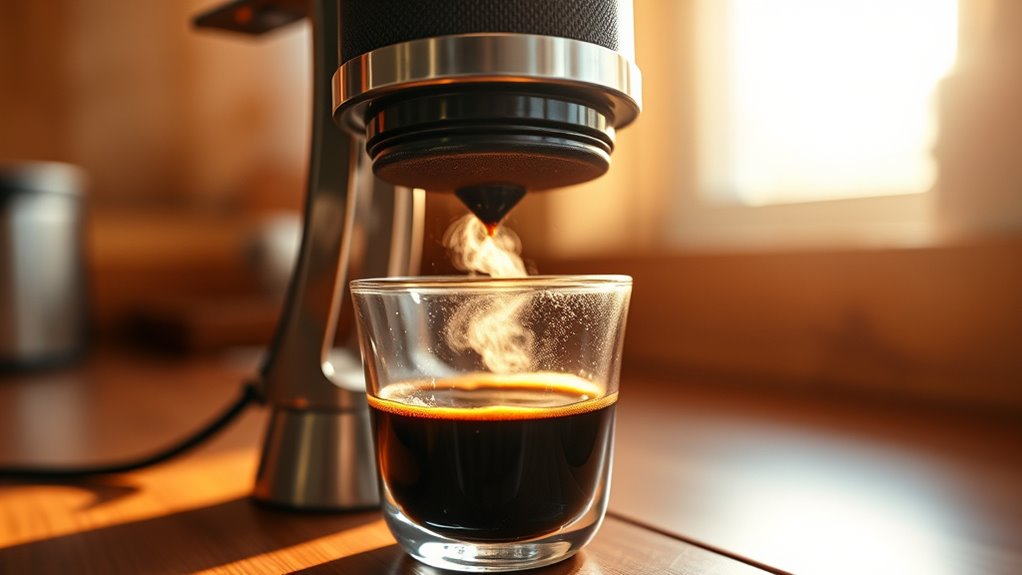
If you enjoyed the concentrated flavor from a Moka pot but want an even quicker method, the AeroPress offers a convenient way to brew espresso-style shots at home.
It uses pressure from a plunger to force hot water through finely ground coffee, producing a rich, concentrated brew in just 1-2 minutes.
To make your shot, use about 2 tablespoons of finely ground coffee, resembling salt granules.
Use roughly 2 tablespoons of finely ground coffee, similar in texture to salt granules, for your shot.
Heat 3.5 ounces of water to around 200°F for ideal extraction.
Stir the coffee and water mixture thoroughly before pressing.
Press the plunger firmly to extract a dense, espresso-like shot.
Feel free to experiment with water temperature and pressure to customize the flavor.
Using freshly ground, high-quality beans really boosts the final cup, giving you an espresso experience without a machine.
Regularly maintaining your equipment by removing mineral buildup helps preserve flavor and performance.
Use Portable Manual Espresso Makers for On-the-Go Coffee
While traditional espresso machines demand electricity and counter space, portable manual espresso makers let you craft rich, concentrated shots wherever you go. These compact devices use hand-powered pumping, spring-loaded mechanisms, or compressed air to generate the critical 9 bars of pressure needed for authentic espresso extraction.
You simply add finely ground coffee and pre-heated water into dedicated compartments, then manually pump or press to force the water through the grounds. This process mimics traditional espresso preparation, delivering a strong, flavorful shot without a bulky machine.
Perfect for travel or outdoor use, these makers give you café-quality espresso on demand, eliminating dependence on electricity or cafés. With portability and precision combined, they’re an excellent solution for espresso lovers on the move. Many portable espresso makers require you to use finely ground coffee with a salt-like consistency to ensure optimal extraction and flavor.
Create Strong Espresso-Style Coffee With a French Press
When you want a strong, espresso-style coffee without a machine, a French press offers a simple yet effective solution. Start by preheating your French press with hot water to maintain the ideal brewing temperature.
Use a medium-fine grind and add about 2 tablespoons of coffee per 4 ounces of hot water.
Bloom the grounds with a splash of water, then steep for 4 minutes.
Press the plunger slowly to separate grounds from the concentrated coffee.
To maximize your brew, keep a few things in mind.
Maintain consistent water temperature throughout brewing and use precise measurements for coffee and water.
Bloom the grounds to release flavors before the full steeping.
Press the plunger evenly to avoid sediment in your cup.
Serve immediately in a small cup to enjoy a rich, espresso-style coffee.
It’s a simple way to get that bold flavor without any fancy equipment.
Using a digital scale to measure coffee and water by weight helps ensure brew ratio consistency for better flavor control.
Frequently Asked Questions
How Fine Should Coffee Grounds Be for Homemade Espresso?
You should grind your coffee to a very fine texture, like salt or powdered sugar. This guarantees ideal extraction and rich flavor.
But be careful not to go too fine. Otherwise, you might clog your machine or get too much pressure during brewing. It’s all about finding that sweet spot!
Can You Froth Milk Without an Espresso Machine?
Yes, you can froth milk without an espresso machine by heating it first. Then, use a French press, handheld frother, or shake it vigorously in a jar. These methods create creamy, textured foam for your drinks.
It’s pretty simple once you get the hang of it. Just pick the method that works best for you and enjoy your frothy milk!
What Water Temperature Is Best for Brewing Espresso at Home?
You should brew espresso with water heated between 195°F and 205°F. Staying within this range guarantees balanced extraction, avoiding sourness or bitterness.
This way, your espresso tastes rich, aromatic, and perfectly smooth every time you pull a shot. It’s all about getting that sweet spot just right.
How Do You Clean a Moka Pot or Aeropress Properly?
You clean your Moka pot by rinsing it with warm water and avoiding soap. If you have stubborn stains, soak the parts in a water-vinegar solution. This helps keep your pot in great shape without damaging the metal.
For the AeroPress, fully disassemble it before cleaning. Gently scrub all the parts to remove any coffee residue. If needed, soak the pieces to make cleaning easier and keep everything working smoothly.
Can I Use Regular Coffee Beans for Espresso Without a Grinder?
You can use regular coffee beans without a grinder by crushing them finely with a mortar and pestle. But, honestly, getting a consistent espresso grind that way is pretty tough.
A better option is using pre-ground espresso coffee. It’s designed for proper extraction and brings out the best flavor.
Conclusion
You don’t need a fancy machine to enjoy rich, bold espresso. Choose the right beans for depth, brew with a moka pot for classic pressure, or press quickly with an AeroPress for convenience. You can even carry a manual maker for travel or steep strong with a French press for simplicity.
Each method delivers distinct flavors, and each approach fits your lifestyle. Plus, every choice brings you closer to perfect espresso at home, precise, powerful, and perfectly crafted by you.