You should aim for an espresso yield between 36 to 50 grams from an 18-gram dose, measured by weight, not volume. This helps guarantee consistent extraction and flavor balance.
Precise control of dose, grind size, and extraction time helps you maintain this yield. It also prevents under- or over-extraction issues.
Adjust your brew ratio depending on the roast type to optimize taste. Mastering these fundamentals sets a solid foundation.
And if you explore them further, you’ll find how to perfect every shot.
Espresso Yield: What It Means and Why It Matters
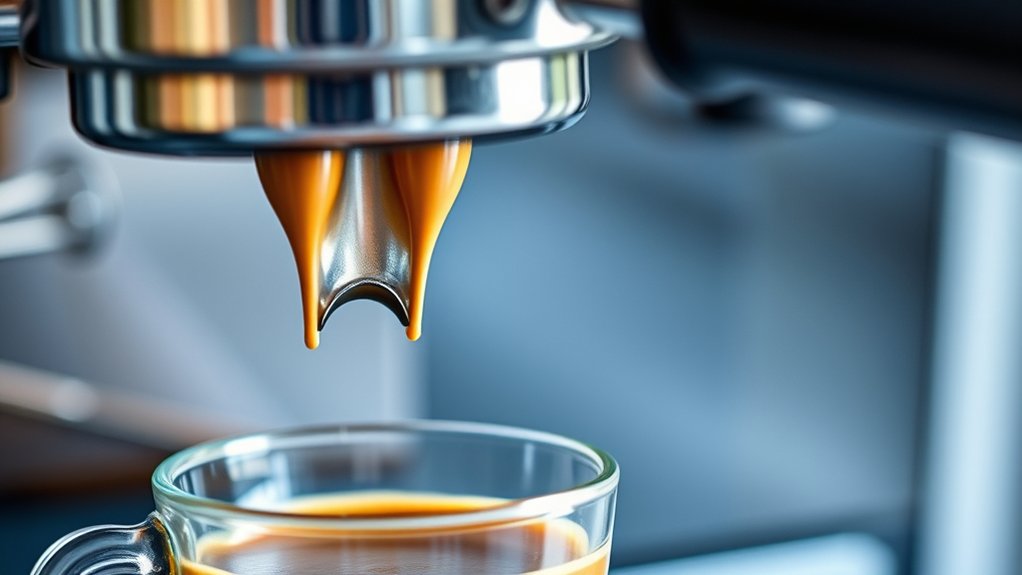
Espresso yield is the total weight of liquid espresso extracted from a specific coffee dose, typically measured in grams. Understanding this measurement is vital because it directly influences the espresso’s strength, flavor balance, and consistency.
Espresso yield defines the liquid weight extracted, shaping the shot’s strength, flavor, and consistency.
You’ll often work with common yield ratios like 1:2 or 1:2.5, meaning if you start with 18 grams of coffee, your target yield would be 36 to 45 grams of espresso. Maintaining consistent yield guarantees every shot delivers uniform sensory characteristics, avoiding under- or over-extraction.
By adjusting variables such as grind size, dose, or extraction time, you control the yield and, consequently, the espresso’s profile.
Accurately managing yield allows you to replicate your desired taste profile shot after shot, ensuring precision in every cup you pull.
Use a timer to measure extraction with the goal of 25-30 seconds for consistent results.
Measuring Espresso Yield Accurately
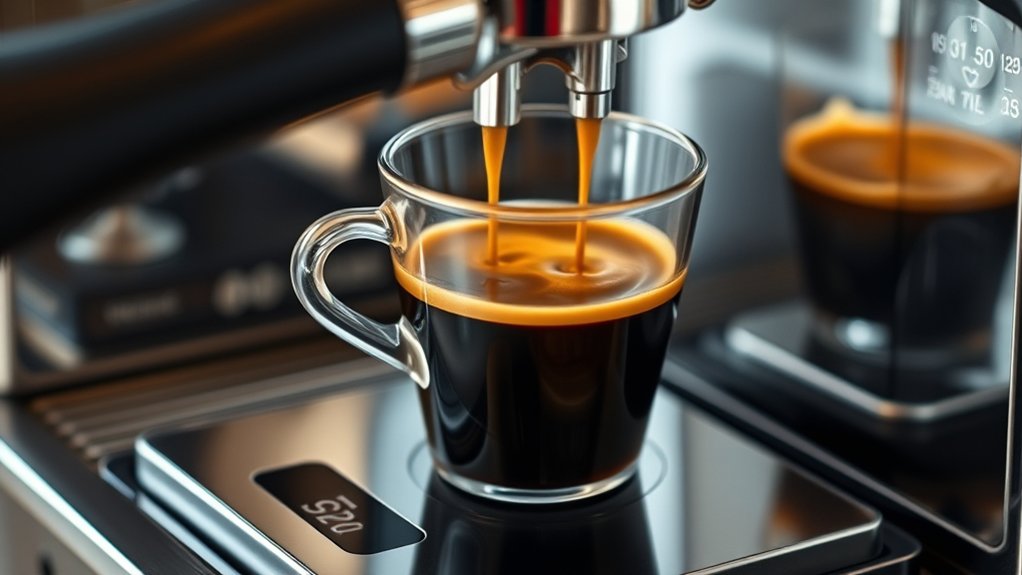
You should always measure espresso yield by weight, not volume. That’s because crema can mess with the liquid volume readings. Using a digital scale under your cup ensures precise, consistent measurements every time. And this consistency? It’s super important for keeping your flavor profile and strength just the way you like it.
Grind size affects extraction and shot timing, so consistent measurements help you make accurate grind adjustments. Proper dose adjustments also influence extraction balance, helping prevent under- or over-extraction.
Weight Versus Volume
Although many home baristas rely on volume measurements, weighing your espresso yield delivers greater accuracy and consistency by eliminating the variability caused by crema and bubbles. Crema fluctuates shot to shot, skewing volume readings and causing inconsistent results.
Using a digital scale beneath your cup allows you to measure espresso precisely in grams, ensuring you hit your target brew ratio every time, and it helps you control the espresso extraction ratio with confidence.
A typical double shot should weigh between 36 to 50 grams, depending on strength preferences and recipe parameters. Weight measurements enable you to dial in recipes accurately, troubleshoot extraction issues, and reproduce consistent shots with confidence.
Impact of Crema
Measuring your espresso yield by weight removes the uncertainty introduced by the crema layer. Crema, made up mostly of air and oils, inflates the espresso’s visual volume but adds very little to its actual mass. So, if you only go by volume, changes in crema thickness or color can trick you into thinking your yield is inconsistent.
Using a scale ensures you’re capturing the true mass of your espresso output, eliminating variability caused by crema. This kind of precision is super important when dialing in brew ratios because it gives you a solid basis for adjusting dose and yield to hit the flavor profile you want.
In the end, weighing your espresso offers a repeatable, accurate way to deal with crema’s tricky visual effects. That means you get precise control over your extraction parameters every time.
Consistent Yield Measurement
How can you guarantee your espresso shots stay consistent from pull to pull? The key is measuring yield by weight, not volume. Using a scale, zeroed with your cup in place, ensures you capture only the espresso’s liquid mass, eliminating errors from cup weight or crema variability.
This precision lets you replicate shots exactly and fine-tune brew ratios for ideal extraction. Even small yield fluctuations affect flavor strength and mouthfeel, so consistent measurement is critical for quality control.
Understanding Dose vs. Yield in Brew Ratios
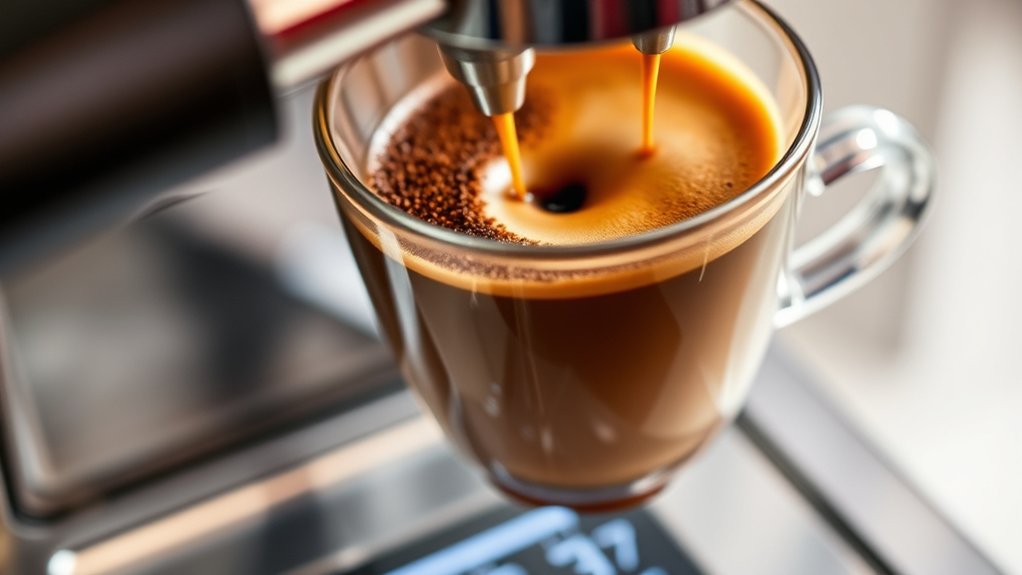
You need to measure your dose precisely because even small changes can significantly affect the extraction. Yield can vary depending on factors such as grind size, tamp pressure, and water flow. So, keeping an eye on it helps you stay consistent.
Understanding how dose and yield work together in your brew ratio is super important if you want to control the strength and flavor of your espresso.
Dose Measurement Accuracy
Why does dose measurement accuracy matter so much in espresso brewing? Even small variations in the amount of coffee grounds can greatly alter extraction quality.
You should weigh your dose precisely, typically 7 to 10 grams for a single shot and 16 to 18 grams for a double, to guarantee consistent results.
Accurate dosing minimizes variability and helps you maintain control over flavor balance and extraction strength. Using a scale to measure the dose alongside the yield (the espresso’s extracted weight) gives you precise control over brew ratios.
This is essential if you want to replicate your shots every time.
If you don’t measure accurately, you risk under- or over-extracting your espresso. That leads to undesirable taste profiles and inconsistent strength.
Yield Impact Factors
What determines the strength and balance of your espresso shot? It’s the ratio of dose to yield, where dose is the weight of coffee grounds, and yield is the weight of liquid espresso extracted. Measuring yield by weight rather than volume accounts for crema and density variations. This gives you consistent, precise control.
Even with the same dose, fluctuations in yield can drastically shift flavor, body, and overall balance. To optimize your brew ratio, you must manage external factors like roast level, grind size, and extraction time. These directly impact yield.
Maintaining consistent yield guarantees predictable shot quality and lets you fine-tune your espresso with accuracy during dialing in. Understanding this interplay is essential for mastering espresso strength and balance. It really makes a difference in how your shot turns out!
How Low and High Espresso Yields Affect Flavor
Although dialing in your espresso yield might seem straightforward, the balance between low and high yields is essential to defining your shot’s flavor profile.
Low yields, around a 1:1 to 1:1.5 ratio, deliver a concentrated, intense espresso with enhanced sweetness and richness. But they also risk over-extraction, which introduces bitterness and harsh, burnt notes.
Low yields yield intense, sweet espresso but risk over-extraction, causing bitterness and burnt flavors.
On the other hand, high yields, such as 1:3 to 1:4 ratios, produce a lighter, more diluted shot showcasing clarity and subtle flavors. Yet, these can suffer from under-extraction, resulting in sourness, weak body, and reduced complexity.
To get that perfectly balanced espresso, aim for yields typically between 36g and 50g for a double shot. Just be sure to adjust carefully to avoid extremes that can undermine flavor integrity and extraction quality.
Controlling Espresso Yield With Time and Grind
Since espresso yield hinges on both extraction time and grind size, mastering these variables is essential for achieving your desired shot profile. Extraction time directly affects yield: shorter times produce less liquid, longer times produce more, up to your machine’s limit.
Adjusting grind size lets you fine-tune flow rate, controlling yield without altering dose or pressure. A grind that is too fine slows flow, prolonging extraction and risking over-extraction, while a grind that is too coarse accelerates flow, reducing yield.
Maintain a consistent dose and tweak grind size to hit your target yield within the desired time frame, preserving flavor balance. Use a scale and timer to precisely monitor shot weight and duration, preventing under- or over-extraction and ensuring repeatable, high-quality espresso.
Adjusting Espresso Yield for Different Roast Types
When dialing in espresso for different roast types, you need to adjust yield to maximize flavor extraction. Light roasts benefit from higher brew ratios (1:3 to 1:4), which enhance clarity and highlight delicate floral and fruity notes.
Dark roasts require lower yields (1:2 to 1:2.5) to avoid over-extraction and bitterness. This helps promote a balanced, bold flavor. Adjusting yield by roast type ensures you avoid under- or over-extraction, achieving the ideal balance.
| Roast Type | Brew Ratio (Yield) | Flavor Impact |
|---|---|---|
| Light | 1:3 to 1:4 | Enhanced clarity, sweetness |
| Medium | 1:2.5 to 1:3 | Balanced, nuanced extraction |
| Dark | 1:2 to 1:2.5 | Bold, reduces bitterness |
Fixing Common Espresso Yield Problems
If your espresso yield consistently falls outside the target range, you need to systematically identify the root cause by examining variables like dose accuracy, grind size, and extraction time.
Start by ensuring your coffee dose is consistent and calibrated, as variations directly alter yield.
Next, use a precise scale to measure the espresso output in grams and confirm it matches your target ratio.
Finally, adjust grind size to control extraction time. A finer grind slows the shot and increases yield, while a coarser grind speeds it up and reduces yield.
- Calibrate dose using a reliable scale to maintain consistency.
- Measure yield precisely after extraction to verify target ratios.
- Modify grind size to balance extraction time and desired yield.
Making these adjustments step by step helps you get a stable, balanced espresso yield every time.
Frequently Asked Questions
What Equipment Is Best for Measuring Espresso Yield Precisely?
You should use a digital kitchen scale that measures in grams to precisely measure espresso yield.
Placing it under your cup lets you track the weight in real time, ensuring consistent brew ratios. It also accurately accounts for crema density variations.
This way, you get a much clearer picture of your espresso output every time.
How Does Water Temperature Affect Espresso Yield and Flavor?
You’ll reveal coffee’s soul by controlling water temperature. Higher temps extract more, but you risk bitterness. Lower temps preserve subtlety but yield less.
Keep it steady between 93-96°C for balanced, rich espresso. This range gives you consistent yield and flavor every time.
Can Espresso Yield Impact Caffeine Content Significantly?
Yes, espresso yield impacts caffeine concentration. Higher yield dilutes caffeine per milliliter, while lower yield concentrates it.
However, total caffeine depends mostly on coffee dose. So, changes in yield affect potency more than the absolute caffeine content.
What Role Does Tamping Pressure Play in Espresso Yield?
Tamping pressure controls flow, extraction, and yield. You’ll create uniform density, prevent channeling, and regulate water resistance.
This ensures consistent espresso volume and flavor by applying steady, precise tamping pressure with every shot. It’s all about being consistent and careful with your tamp.
How Often Should I Calibrate My Espresso Machine for Consistent Yield?
You should calibrate your espresso machine every 1 to 2 weeks to maintain consistent yield. Adjust for water temperature, pressure, and filter wear, especially after maintenance or filter changes. Using a scale for precise measurement really helps keep things on track.
It might seem like a lot, but regular calibration makes a big difference. You’ll get better shots and less waste that way. So, don’t skip it!
Conclusion
Just like a skilled conductor shapes a symphony, you control espresso yield to orchestrate flavor. Mastering the balance between dose and yield lets you craft shots that sing with clarity or dance with richness.
Remember, adjusting grind and time tunes your espresso’s voice. And thinking about the roast type helps keep the performance pure.
With precise measurement and mindful tweaks, you’ll avoid common pitfalls. This way, you’ll brew espresso that consistently hits the perfect note.