You want to dial in a precise espresso extraction ratio to control flavor and strength. Typically, it’s around 1:2, meaning 18 grams of coffee yields 36 grams of espresso. This ratio balances extraction and prevents sour or bitter notes.
It ensures a rich, smooth shot. Keeping brew time between 25–35 seconds helps you hit your desired profile. Maintaining consistent temperature and pressure is important too.
Mastering these details lets you create perfectly tailored ristretto, normale, or lungo shots with ease and consistency. It’s all about finding what works for your taste and sticking to it.
What Is the Ideal Espresso Extraction Ratio?
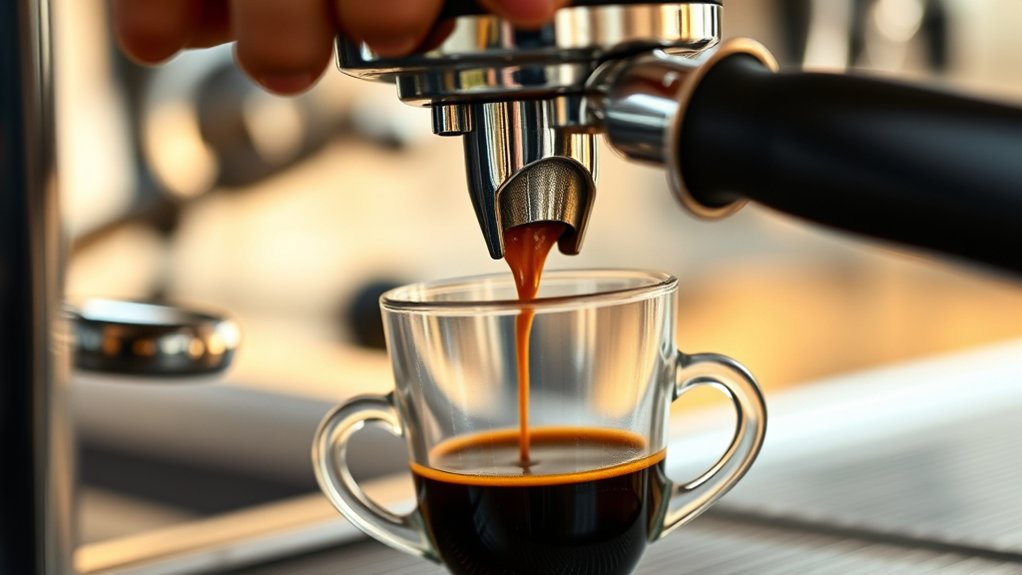
Although personal taste plays a role, the ideal espresso extraction ratio generally falls between 1:1 and 1:2, depending on the shot style you prefer.
The ideal espresso extraction ratio ranges from 1:1 to 1:2, tailored to your preferred shot style.
If you like your espresso thick and concentrated, a ristretto shot with a 1:1 to 1:1.5 ratio will deliver that intense, syrupy profile. This style often benefits from a shorter extraction time to avoid over-extraction and bitterness.
For a classic espresso experience, aim for a 1:2 ratio. This balances strength and clarity perfectly.
While lungos extend beyond this range, typically using 1:3 to 1:4 ratios, they produce a more diluted shot and aren’t part of the ideal espresso range.
By maintaining a precise coffee-to-water ratio within these parameters, you guarantee consistent extraction.
This helps preserve the quality and character of every shot you pull.
To achieve this, it is essential to control variables such as grind size and tamping pressure to maintain consistent shot timing and flavor.
How Brew Ratios Affect Espresso Flavor and Texture
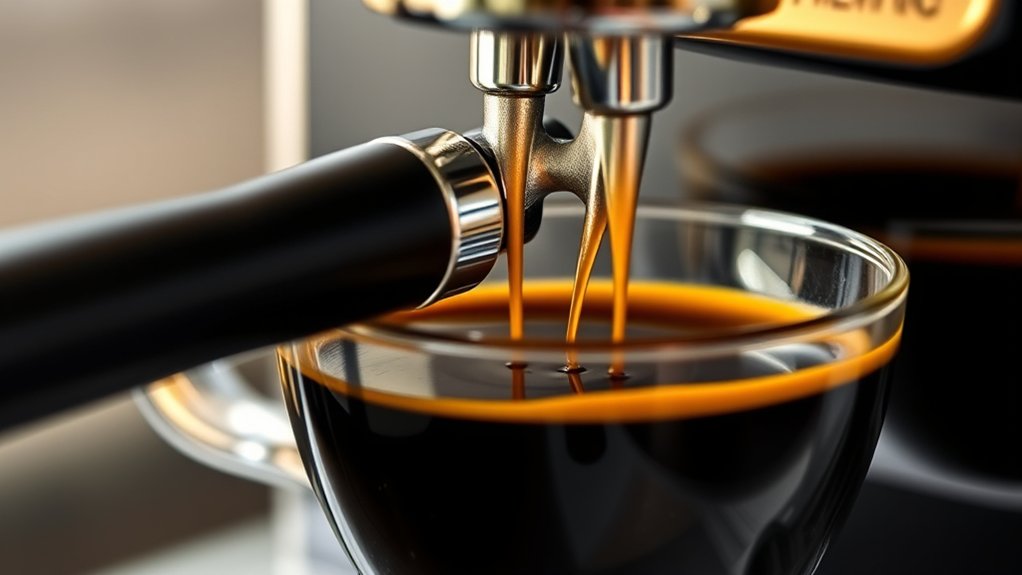
When you adjust the brew ratio in your espresso, you directly shape its flavor and texture. You control everything from viscosity to taste intensity. A 1:1 ratio gives you a thick, rich shot bursting with intense flavor.
On the other hand, a 1:3 ratio produces a lighter, milder espresso with less body. Your chosen ratio influences the balance of salts, acids, sugars, and bitters. This balance defines the espresso’s mouthfeel and overall experience.
| Brew Ratio | Flavor & Texture Impact |
|---|---|
| 1:1 | Intense, viscous, full-bodied |
| 1:2 | Balanced, rich, smooth |
| 1:3 | Light, mild, less concentrated |
| >1:3 | Watery, weak, thin |
Mastering this lets you craft espresso exactly how you like it.
Measuring Coffee and Espresso by Weight for Accuracy
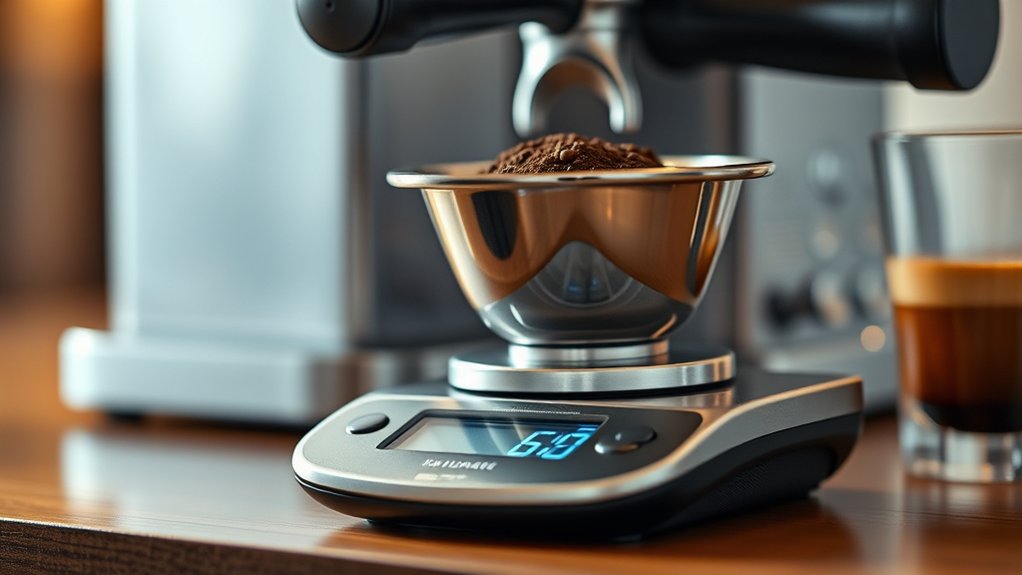
You’ll get the most consistent espresso by measuring both coffee grounds and liquid output by weight rather than volume. That’s because density and crema can easily skew measurements.
Using a digital scale with 0.1-gram accuracy means you can hit precise brew ratios every time. This kind of control lets you fine-tune extraction variables and replicate your favorite recipes with confidence.
Precision Using Scales
Since small variations can drastically alter espresso quality, measuring coffee grounds and espresso output by weight is essential for precision. Using a digital scale with at least 0.1-gram accuracy lets you consistently dose grounds and track liquid yield. This ensures ideal extraction and flavor every time.
Here’s why scales matter:
- You maintain consistent brew ratios, typically around 1:2 coffee to liquid, for a balanced taste.
- You eliminate variability from grind size and tamping pressure that volume measurements can’t account for.
- You achieve reproducible flavor profiles by controlling every variable with precision.
Using a scale might seem like a small step, but it makes a big difference in your espresso game. It’s all about dialing in consistency so your coffee tastes just right, cup after cup.
Weight Versus Volume
How do you guarantee your espresso tastes exactly the same every time? By measuring both the coffee grounds and the extracted espresso by weight, not volume. Volume measurements can mislead you. They don’t account for crema or variations in coffee density, which change with grind size and tamping pressure.
A typical double shot uses about 18 to 20 grams of coffee grounds and yields 36 to 40 grams of espresso liquid. Using a scale helps you hit these precise numbers consistently. This gives you direct control over the coffee-to-water ratio.
This weight-based approach leads to reliable, repeatable flavor profiles and brewing precision. Skip volume measurements. Weighing your coffee and espresso is the key to mastering extraction accuracy and getting the ideal espresso extraction ratio every single time.
Consistent Extraction Control
Measuring both your coffee grounds and espresso yield by weight gives you precise control over the brew ratio, which directly affects extraction consistency. When you weigh both components, you reduce variability caused by grind size, tamping pressure, and shot volume.
To master consistent extraction control, focus on these key steps:
- Use a scale accurate to 0.1 grams for precise measurement.
- Weigh coffee grounds before brewing and espresso output immediately after extraction.
- Calculate the brew ratio (e.g., 18g coffee to 36g espresso for 1:2) to maintain consistency.
How Brew Time and Ratios Influence Espresso Extraction
Although dialing in your espresso may seem straightforward, the interplay between brew time and coffee-to-water ratios plays a crucial role in shaping your shot’s flavor profile. You typically use 18-20 grams of coffee to yield about 36 grams of espresso, aiming for a 1:2 ratio.
Brew time, ideally 25–35 seconds, controls extraction. Too short leads to under-extraction, and too long pulls bitterness. Adjusting these variables balances salts, acids, sugars, and bitters, influencing taste and mouthfeel.
| Brew Time (sec) | Ratio (Coffee:Water) | Extraction Result |
|---|---|---|
| < 25 | 1:2 | Under-extracted, sour |
| 25–35 | 1:2 | Balanced, complex |
| > 35 | 1:2 | Over-extracted, bitter |
Why Temperature, Pressure, and Brew Ratios Matter for Espresso
You can’t really separate temperature, pressure, and brew ratios when you’re aiming for the perfect espresso. Temperature controls how flavors dissolve, while pressure influences extraction speed and intensity.
Then, brew ratios determine the balance of taste compounds.
When you understand how these factors work together, it’s easier to craft a shot with the ideal strength, body, and complexity. Each element plays its part, and tweaking one can change the whole experience.
Temperature’s Role In Extraction
When you control temperature precisely, around 200°F (93°C), you open the ideal window for extracting espresso’s complex flavors without tipping into bitterness. Temperature directly influences the solubility of acids, sugars, and bitters, shaping your espresso’s flavor balance and mouthfeel.
Here’s why temperature matters in extraction:
- The perfect range (195–205°F/90–96°C) dissolves desirable compounds without over-extracting bitter elements.
- Higher temperatures speed extraction but risk bitterness if uncontrolled.
- Stability in temperature ensures consistent extraction, complementing your brew ratio for ideal strength.
Pressure Impact On Flavor
How does pressure shape the flavor of your espresso? Maintaining a steady 9 bars during extraction optimizes solubility, which directly impacts flavor clarity and body. When pressure is consistent, it works in tandem with temperature, usually between 195°F and 205°F, to control how quickly coffee compounds dissolve.
Push pressure too high and you risk over-extraction, introducing bitterness that masks nuanced flavors. Too low and extraction remains underwhelming, leaving your espresso weak and sour.
Precise pressure control ensures the right balance, influencing espresso strength, intensity, and the luscious crema on top.
Brew Ratio Importance
Although pressure and temperature set the stage, the brew ratio plays a crucial role in defining your espresso’s flavor, body, and strength. Typically around 1:2, this ratio directly controls how much coffee solubles dissolve into your shot.
You’ll want to pay attention to these three key reasons why brew ratio matters:
- It balances extraction. Too little coffee or water causes sourness or bitterness.
- It guarantees consistency, letting you replicate your favorite flavors every time.
- It works with temperature and pressure to pull out the right mix of acids, sugars, and bitters.
How to Use a Standard Espresso Recipe and Brew Ratios
Since consistency is key to mastering espresso, using a standard recipe with precise brew ratios will help you achieve balanced flavor every time.
Start by dosing 18 grams of coffee grounds and aim to extract 36 grams of espresso, maintaining a 1:2 brew ratio. Keep your brew time between 25 to 35 seconds to optimize extraction and flavor balance.
Dose 18 grams of coffee and extract 36 grams within 25-35 seconds for balanced espresso.
Make sure your machine’s temperature is around 200°F (93°C) and pressure stays at 9 bars during the pull.
If your shot extracts too quickly, try adjusting to a finer grind. On the other hand, if it’s too slow, go coarser.
Once you dial in the ideal flavor, stick with the same recipe and parameters. This disciplined approach guarantees repeatability and consistent espresso quality with every shot you pull.
It really makes a difference in your daily espresso routine.
Adjusting Brew Ratios for Ristretto, Normale, and Lungo Shots
When you adjust brew ratios for ristretto, normale, and lungo shots, you directly influence the espresso’s intensity and flavor profile. Each shot style demands a specific coffee-to-water ratio to highlight its unique characteristics.
- Ristretto (1:1 to 1:2) Use less water for a concentrated, syrupy espresso with intense flavors.
- Normale (1:2 to 1:3) Balance water and coffee to achieve a harmonious mix of strength and complexity.
- Lungo (1:3 to 1:4) Add more water for a larger, milder shot with a lighter mouthfeel.
Mastering these ratios lets you control extraction and taste precisely. This way, your espresso matches your preferred intensity and flavor every time.
Easy Tips to Keep Your Espresso Shots Consistent Using Brew Ratios
To keep your espresso shots consistent, you need to focus on maintaining precise brew ratios and timing. Start by using a standard ratio like 1:2, which means 18 grams of coffee to 36 grams of espresso, as your benchmark. Always measure both your coffee grounds and espresso output with a scale to guarantee accuracy.
Keep your brew time between 25 and 35 seconds. This range optimizes extraction for your chosen ratio. If your shot pulls too fast (under 20 seconds) or too slow (over 35 seconds), just adjust your grind size to keep things balanced.
Finally, record your brew parameters and stick to them. Doing this helps you replicate the perfect shot every time. Over time, consistency becomes a reliable habit instead of just a lucky accident.
Frequently Asked Questions
What Equipment Is Best for Measuring Espresso Extraction Ratios?
You’ll want a precision digital scale with a tare function, a calibrated portafilter or dosing cup, and a reliable timer.
Some machines with built-in flow meters can help, but these basics guarantee consistent, accurate espresso extraction ratios every time.
Having the right gear makes all the difference when you’re aiming for that perfect shot. It’s not just about the machine—precision tools are key.
Can Grind Size Impact the Ideal Espresso Extraction Ratio?
Yes, grind size directly impacts your ideal espresso extraction ratio. You’ll need to adjust it to control flow rate and extraction balance. Finer grinds slow water, coarser ones speed it up, changing how much coffee dissolves.
It’s all about finding that sweet spot. When the grind is too fine, water struggles to pass through, leading to over-extraction. Too coarse, and you risk under-extraction because water flows too quickly. So, dialing in your grind size helps you nail the perfect shot every time.
How Do Different Coffee Bean Varieties Affect Extraction Ratios?
Like tuning an instrument, you’ll adjust extraction ratios for each coffee variety. Arabica needs a gentler touch with higher ratios. Robusta, on the other hand, demands less water to avoid bitterness.
This way, you make sure each bean’s unique flavor sings perfectly. It’s all about finding that sweet spot for every type you brew.
Does Water Quality Influence the Espresso Extraction Ratio?
Yes, water quality influences your espresso extraction ratio by affecting solubility and extraction efficiency. Using balanced mineral water prevents scale buildup and guarantees consistent extraction. So, your shot delivers ideal flavor and crema every time.
It’s pretty important to pay attention to what’s in your water. Too many minerals can mess with the taste and your machine’s health. On the other hand, water that’s too soft might lead to under-extraction, leaving your espresso weak.
How Often Should I Recalibrate My Espresso Machine for Ratios?
You should recalibrate your espresso machine every 1-3 months, or whenever you notice changes in shot volume, taste, or extraction time.
It’s a good idea to recalibrate after maintenance, descaling, or replacing key components. This helps keep your ratios precise and your espresso tasting great.
Staying on top of recalibration ensures you get consistent results every time. So, don’t wait too long between checks!
Conclusion
Remember, “the devil is in the details” when dialing in your espresso extraction ratio. By carefully balancing coffee-to-water ratios, brew time, temperature, and pressure, you control flavor, texture, and consistency.
Whether you’re aiming for ristretto, normale, or lungo, measuring by weight guarantees precision. Keep these factors in check, and your espresso shots will consistently deliver that perfect, rich taste you’re after.
Mastering these details transforms your coffee routine into an art. It’s all about paying attention to the little things that make a big difference.