When you pull an espresso shot, hot water under pressure extracts flavor by dissolving coffee’s acids, sugars, and oils within 25-30 seconds. You control extraction through grind size, tamping, water quality, temperature, and shot time. Too fast leaves sour notes, too slow brings bitterness.
Pre-infusion wets grounds evenly, improving flavor and texture. Mastering these variables reveals espresso’s complexity and balance. Keep exploring, and you’ll uncover how every detail shapes your perfect cup.
How Espresso Extraction Works (The Basics)
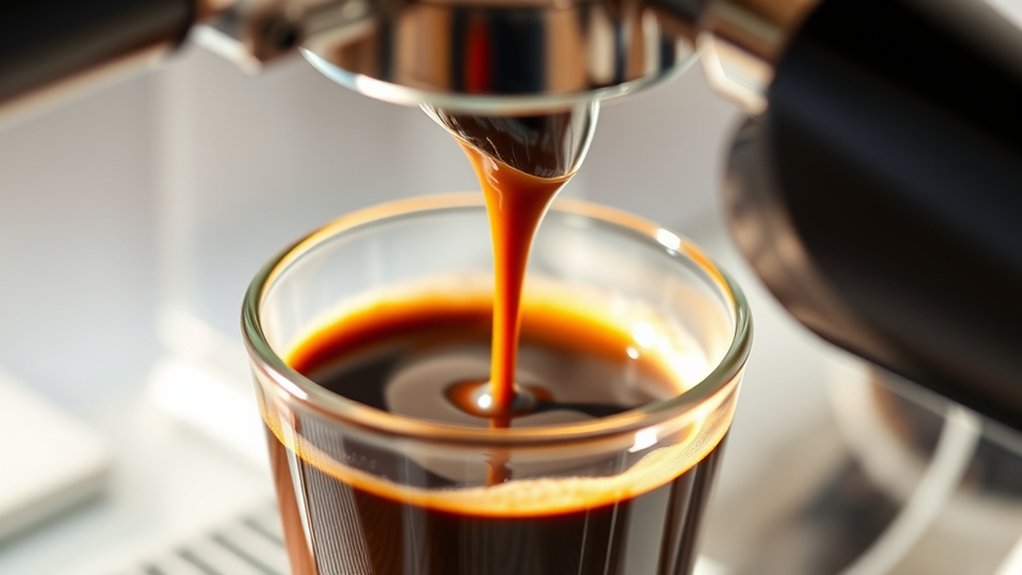
Although espresso extraction might seem straightforward, it’s actually a precise process. Hot water is forced under pressure through finely-ground coffee to dissolve its flavorful compounds. When you pull an espresso shot, you rely on your brewing equipment to control pressure, temperature, and timing, usually between 25 to 30 seconds.
These variables influence how acids, sugars, and oils dissolve, shaping the cup’s balance. Knowing your coffee bean origins helps you adjust grind size and extraction time because different beans release flavors uniquely.
The process unfolds in stages: pre-infusion wets the coffee puck, dissolution releases bright flavors, and final extraction draws out oils that add body.
Mastering these basics guarantees you highlight your coffee’s character without bitterness. This way, every espresso shot becomes a precise expression of the beans and equipment you use. It’s all about getting that perfect balance and flavor in every cup.
Why Water Quality and Brew Temperature Matter for Espresso Extraction
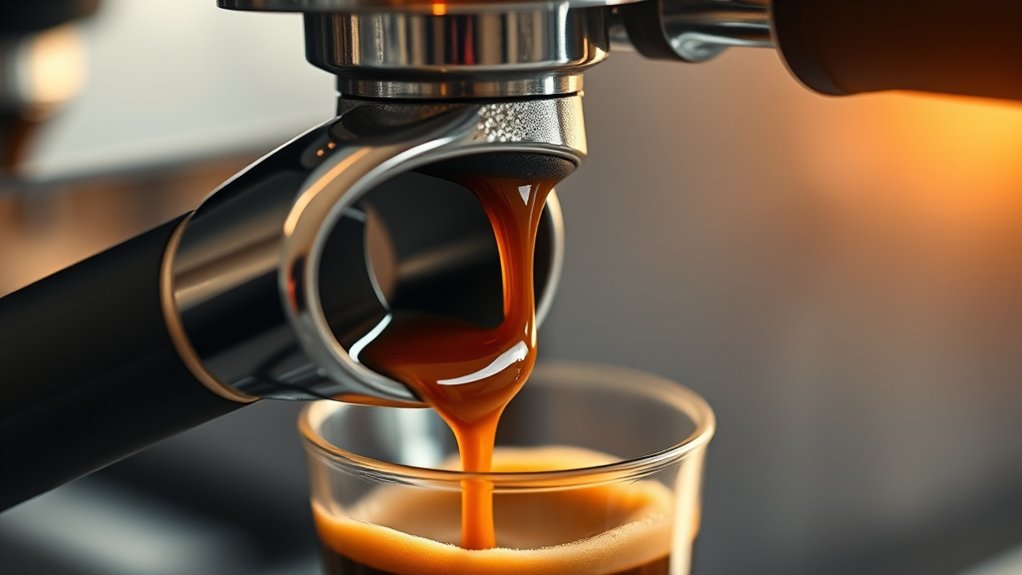
You can’t overlook water quality when pulling espresso. Minerals like calcium and magnesium play a vital role in extracting flavor and clarity.
Plus, keeping your brew temperature between 195°F and 205°F makes sure you’re dissolving the right compounds without risking under- or over-extraction.
When you put these two together, they really shape the balance and richness of your shot.
Impact Of Water Minerals
How do water minerals shape the taste and quality of your espresso? Water mineralization plays a pivotal role in extraction by influencing how well water dissolves coffee compounds.
Maintaining the right mineral balance, typically between 40 and 125 ppm, ensures your espresso extracts flavors fully and cleanly.
If your water is too pure, like distilled water, it lacks minerals that help draw out those vibrant coffee notes. This can result in a flat, dull cup.
On the other hand, hard water with too many minerals can cause scale buildup in your machine. That buildup messes with temperature stability and extraction consistency.
Brew temperature does affect extraction, but its impact is closely tied to the water’s mineral content. Using water with the proper mineralization supports balanced extraction.
This makes your espresso taste richer and more nuanced, without causing equipment issues.
Optimal Temperature Ranges
Water mineral content sets the stage for how temperature influences your espresso extraction. Ideal brew temperatures range between 195°F and 205°F (90°C to 96°C), maximizing desirable compound solubility without pulling bitter notes.
Proper water mineralization, typically with TDS between 40-125 ppm, ensures acids, sugars, and aromatics extract efficiently, producing a vibrant shot.
If your water’s too cool, extraction slows, leaving sour or weak espresso. Too hot, and you risk over-extraction with burnt flavors.
Maintaining temperature stability throughout the shot prevents channeling and uneven extraction, preserving clarity and balance.
Effects On Flavor Balance
Although temperature and mineral content might seem like minor details, they play an essential role in shaping your espresso’s flavor balance. Water quality, especially mineral content between 40-125 ppm, affects how well your coffee extracts acids and sugars. These acids and sugars highlight the coffee bean freshness.
If minerals are too low or high, your espresso can taste flat or overly bitter. Brew temperature, ideally between 195°F and 205°F, controls solubility rates. Too hot or cold, and you end up with sour or bitter shots.
Using consistent temperature and properly mineralized water with quality brewing equipment guarantees the best extraction. This helps preserve the nuanced flavors of fresh beans.
Paying close attention to these factors helps you pull balanced, flavorful espresso shots every time.
How Roast Level Affects Espresso Extraction

You’ll notice that roast level directly impacts how quickly your espresso extracts and the flavors it highlights.
Lighter roasts need more time and a finer grind to really bring out their bright, complex notes.
On the other hand, darker roasts extract faster and can turn bitter if you overdo it.
So, understanding this balance is key.
It helps you adjust your grind and timing just right for a perfect shot every time.
Roast Level Extraction Speed
Because roast level substantially affects solubility, it directly shapes how quickly your espresso extracts. Coffee bean density decreases as roast color darkens, making darker beans more soluble and faster to extract.
Lighter roasts, being denser, require longer extraction times and finer grinds to reveal their flavors. Over-roasting speeds up extraction but risks burnt notes due to carbonized sugars and oils.
| Roast Level | Coffee Bean Density | Extraction Time (seconds) |
|---|---|---|
| Light | High | 25-30+ |
| Medium | Medium | 22-28 |
| Dark | Low | 20-25 |
Adjust your grind and timing based on roast level to optimize extraction speed and avoid over- or under-extraction. It’s all about finding that sweet spot!
Flavor Profile Variations
When you adjust extraction times based on roast level, you reveal distinct flavor profiles in your espresso. Achieving flavor harmony and maximizing aroma development requires understanding roast solubility differences.
Here’s how roast level affects your extraction:
Lighter roasts need longer extraction times, usually 30 seconds or more, to fully release their complex acids and fruity notes.
On the other hand, darker roasts extract faster, typically within 25 seconds, because they’ve higher solubility and more oil content.
But be careful—over-extracting dark roasts can lead to bitterness and burnt flavors, which messes with the flavor harmony.
Balancing your extraction time is key to capturing the ideal aroma and the unique, nuanced flavors each roast offers.
How Grind Size Shapes Espresso Flavor
Although it might seem subtle, adjusting your grind size dramatically shapes the flavor of your espresso. Grind size determines how long water interacts with coffee grounds, directly affecting extraction time and flavor balance.
Finer grinds increase surface area, allowing water to extract more soluble compounds, enhancing sweetness and body. But too fine a grind risks over-extraction, causing bitterness and potential portafilter blockage.
On the other hand, coarser grinds speed up water flow, often leading to under-extracted, sour espresso.
By consistently dialing in your grind size, you control extraction precision, striking the ideal flavor balance between sweet, bitter, and sour notes.
Mastering this adjustment is key to crafting espresso shots that highlight your coffee’s best characteristics every time.
How Pressure and Tamping Impact Your Espresso Shot
Mastering tamping pressure lets you control how water flows through your coffee puck. This directly shapes the extraction speed and flavor of your espresso. Tamping consistency and applying the right pressure are key to getting a balanced shot.
Here’s how they impact your espresso: Applying consistent tamping pressure, around 30 pounds, ensures uniform resistance and prevents channeling. Too much pressure slows water flow too much, causing over-extraction and bitterness.
On the other hand, too little pressure lets water rush through, which results in under-extraction and sour notes.
Even tamping creates a compacted coffee bed. This helps build ideal pressure and leads to a balanced extraction. So, getting your tamp just right makes all the difference in your shot.
How Shot Time Changes Espresso Flavor and Aroma
Since espresso shot time directly controls how much flavor and aroma compounds are extracted, adjusting it lets you fine-tune your coffee’s profile. Espresso shot timing plays a critical role: shorter shots under 20 seconds yield sour, underdeveloped flavors, while shots over 30 seconds risk bitterness from over-extraction.
The sweet spot between 25-30 seconds balances acidity, sweetness, and bitterness, enhancing aroma complexity. Decaffeination effects can alter extraction rates, so adjusting shot time is essential for consistency.
| Shot Time | Flavor Profile |
|---|---|
| < 20 seconds | Sour, underdeveloped |
| 25-30 seconds | Balanced, complex |
| > 30 seconds | Bitter, over-extracted |
| Varies (Decaf) | Adjust timing carefully |
Mastering shot timing sharpens your espresso’s flavor and aroma.
How Pre-Infusion Improves Espresso Flavor and Texture
Adjusting shot time shapes the balance of flavors in your espresso, but controlling how water initially interacts with the coffee grounds can elevate your extraction even further. Pre-infusion benefits your shot by gently wetting the puck under low pressure, which reduces channeling and promotes even extraction.
Fine-tuning water interaction with grounds through pre-infusion enhances extraction and balances espresso flavors.
Here’s how pre-infusion enhances flavor and texture:
- It activates the bloom phase, releasing CO2 to prevent uneven extraction.
- It allows grounds to expand and settle, stabilizing the coffee bed.
- Gradual resistance buildup improves water flow during main infusion.
- This uniform extraction results in richer, clearer flavors and a smoother mouthfeel.
Troubleshooting Espresso Extraction Problems
When your espresso tastes sour or thin, it’s likely under-extracted. This means the shot pulled too quickly and didn’t dissolve enough sugars and balanced compounds. To fix this, try adjusting your grind size finer to slow the water flow. You can also increase the water temperature or brew time.
On the other hand, if your shot tastes bitter and hollow, it’s probably over-extracted. In that case, coarsen the grind or reduce the brew time to bring back the flavor balance.
Troubleshooting also means checking for common equipment issues like inconsistent water pressure or clogged filters. These problems can throw off your extraction.
Good barista training focuses on keeping a consistent grind size, precise timing, and regular machine maintenance. When you master these basics, you’ll consistently pull a well-balanced espresso that really shows off the coffee’s true flavor.
Frequently Asked Questions
Can I Use Alternative Milks to Alter Espresso Extraction?
You can paint your espresso canvas with alternative milk textures, transforming its flavor profile. These milks don’t change extraction itself but adjust taste and mouthfeel.
This lets you craft a personalized coffee experience with every cup you brew. It’s all about what you enjoy and how you want your coffee to feel. So go ahead, experiment, and find your perfect blend!
How Does Espresso Machine Maintenance Affect Extraction Quality?
Your espresso machine’s maintenance directly impacts extraction quality. Consistent cleaning routines prevent buildup, which can mess with the flavor of your shots. Plus, precise machine calibration guarantees the ideal pressure and temperature every time.
If you neglect these, you’ll end up with off-flavors and weak shots. So, staying diligent with your machine care is key to pulling the perfect espresso. It’s really worth the effort!
What Is the Role of Espresso Basket Size in Extraction?
Think of basket size like a race track’s width. Too narrow, and your grind consistency and tamp pressure can cause bottlenecks. This can lead to under-extraction or bitterness.
Choosing the right size balances flow and flavor perfectly. It’s all about finding that sweet spot where everything works together smoothly. That way, your espresso comes out just right every time.
Does Bean Origin Influence Espresso Extraction Techniques?
Yes, bean origin influences espresso extraction techniques because different origins yield unique flavor profiles. You’ll adjust grind size, temperature, and extraction time to highlight those distinct tastes. This way, your espresso captures the bean’s true character.
It’s all about bringing out the best in each coffee. So, knowing where your beans come from helps you tweak the process just right. That’s how you make every shot taste amazing.
How Do Seasonal Changes Impact Espresso Extraction Consistency?
Seasonal shifts are like nature’s rhythm, causing climate variability that challenges your extraction stability. You’ll need to adjust grind size and dose carefully to keep your espresso’s balance consistent, no matter how the weather dances outside.
It’s all about paying attention to those subtle changes and tweaking your technique. That way, your espresso stays just right, every single time.
Conclusion
By understanding espresso extraction’s key elements, from water quality and grind size to pressure and shot time, you gain true control over your shot’s flavor. You might think dialing in one factor alone guarantees perfection, but the truth is, it’s the balance of all variables that crafts a great espresso.
Experiment thoughtfully, and you’ll discover how each adjustment shapes your cup. Master this harmony, and you’ll consistently pull espresso shots that delight your palate every time.